
Lieferung heute & morgen

Qualitätsgarantie

Willkommens-Angebote freischalten: KOSTENLOSE Lieferung | Bis zu 80 % RABATT | Kostenlose 30-Tage-JoyPlus-Testphase
App herunterladen
A precise digital kitchen scale is the foundation for successful recipes and mindful eating. However, the market is filled with models whose marketing claims often hide more than they reveal. Certain design flaws and inaccurate sensors can render a device useless after a short time, leading to wasted, expensive ingredients. This guide will show you what to look for to avoid bad buys and find a reliable household scale.
Many consumers focus on flashy designs or supposedly smart features, overlooking fundamental flaws. Two common problems often lead to disappointment:
To make an informed decision, you should check three core technical features. These define the functionality and longevity of a digital kitchen scale.
Accuracy is specified in grams (g) and describes the smallest unit of weight a scale can measure. For most applications, especially as a scale for baking, an increment of 1 gram is the standard. Models with lower accuracy (e.g., 2 g or 5 g) are unsuitable for precise recipes. Look for "1 g increments" in the product specifications.
The maximum load capacity determines how much weight the scale can handle before its sensors are damaged. For everyday use, 5 kilograms (kg) is usually sufficient. This allows you to easily weigh ingredients in heavy bowls or small pots. However, if you regularly make large batches of dough or prepare entire meals, a model with a higher capacity of 10 kg or more might be a better choice.
A kitchen scale with a tare function is standard today and absolutely essential. It allows you to reset the display to zero after placing a container on it, so only the ingredient is weighed. This is crucial for weighing multiple ingredients consecutively in the same bowl, which saves time and reduces washing up. Check that the tare button is easily accessible and simple to use.
Depending on your intended use, different models will suit your needs. Here are some recommendations tailored to specific user profiles.
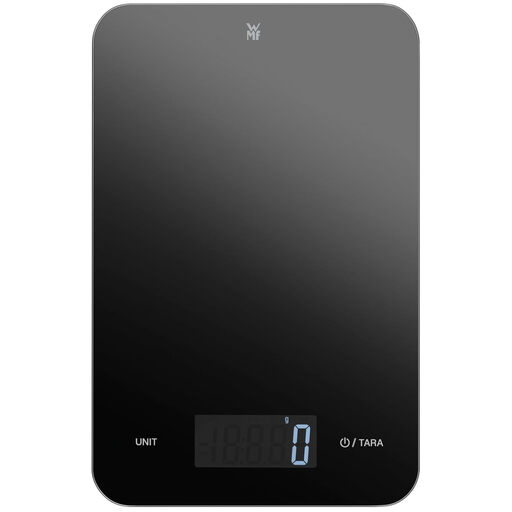
Why This Fits Their Persona: Ideal for quality-conscious cooks seeking a reliable, durable, and stylish device for daily use. The scale blends seamlessly into modern kitchens.
The seamless weighing surface made of safety glass is joint-free and very easy to clean, preventing food residue from getting trapped.
Precise 1 g increments with a capacity of up to 5 kg. Features a tare function and an auto-off function to save battery life.

Why This Fits Their Persona: Perfect for users who closely monitor their nutrition, count calories, or follow diet plans. The app connectivity offers significant added value over a basic scale.
Instead of relying on unreliable estimates, the scale, in conjunction with the app and its food database, provides objective nutritional information.
Analyses 19 nutrients via an app with an extensive database. The scale is rechargeable via USB-C, making battery changes obsolete.
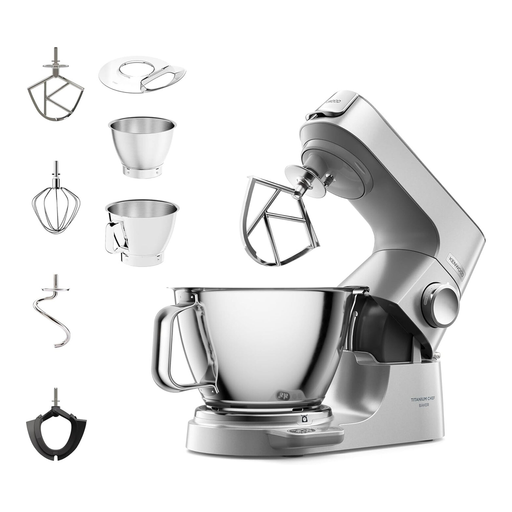
Why This Fits Their Persona: For anyone who takes baking seriously and is looking for an all-in-one solution. This kitchen machine combines kneading, mixing, and weighing in one device, saving space and steps.
Instead of using a separate, potentially inaccurate scale, the EasyWeigh scale is directly integrated. Ingredients are weighed in the mixing bowl, which minimises sources of error.
Integrated weighing directly in the bowl. Powerful 1200-watt motor and extensive accessories for versatile baking projects.
We have compiled a complete, up-to-date list of products that fully meet these strict selection criteria and German safety regulations.
The tare function, also known as the add-and-weigh function, allows you to reset the scale's display to zero after placing an empty container (e.g., a bowl) on it. When you then add ingredients to the container, the scale shows only the weight of the ingredients. This is extremely practical for weighing multiple ingredients consecutively in the same bowl.
Most digital household scales offer a measurement accuracy of 1 gram. This is sufficient for almost all cooking and baking recipes. For very specific applications, such as weighing yeast or spices in tiny amounts, there are precision scales with an accuracy of 0.1 g or even 0.01 g. However, for normal kitchen use, a 1 g increment is the established standard.
Modern digital kitchen scales are factory-calibrated and generally do not require manual recalibration by the user. To ensure accuracy, always place the scale on a hard, flat, and stable surface. Avoid carpets or uneven countertops. If you have doubts about its accuracy, you can check it with a reference weight (e.g., a full, unopened 1-litre carton of water or milk, which should weigh 1 kg).