
Lieferung heute & morgen

Qualitätsgarantie

Willkommens-Angebote freischalten: KOSTENLOSE Lieferung | Bis zu 80 % RABATT | Kostenlose 30-Tage-JoyPlus-Testphase
App herunterladen
When it comes to safety-critical fasteners on vehicles like cars, motorcycles, or bicycles, precision is essential. Tightening bolts and nuts to exact manufacturer specifications not only prevents material damage but is also crucial for operational safety. A digital torque wrench provides the necessary accuracy and control that mechanical models often cannot guarantee to the same extent.
This article serves as a guide. It explains the most important criteria for selecting the right tool and presents a selection of models with different features to provide you with a solid basis for making an informed decision.
Choosing the right tool depends on your specific application. The following points will help you evaluate the relevant features.
The required torque range, measured in Newton-metres (Nm), is the most important selection criterion. A torque wrench for a bicycle needs a lower range (e.g., 2–20 Nm) for delicate carbon or aluminium components, while a torque wrench for a car, used for tasks like tightening lug nuts, requires a much higher range (e.g., 40–200 Nm).
Analyse the most common jobs you plan to perform and check the manufacturer's torque specifications. The drive size (e.g., 1/4", 3/8 inch, or 1/2") determines which sockets you can use. A 3/8-inch drive is a versatile standard for many jobs on motorcycles and cars.
An electronic torque wrench is distinguished by its high precision. An accuracy of ±2% to ±3% is considered a good standard for precise work. Pay attention to the manufacturer's accuracy specifications, which are often listed separately for clockwise and counter-clockwise tightening.
Modern devices also offer various alert features that indicate when the target torque has been reached:
This combination is particularly advantageous in noisy workshops or poorly lit work areas.
Depending on your existing equipment and needs, several options are available:
Here is a selection of tools that stand out for their specific features and applications.
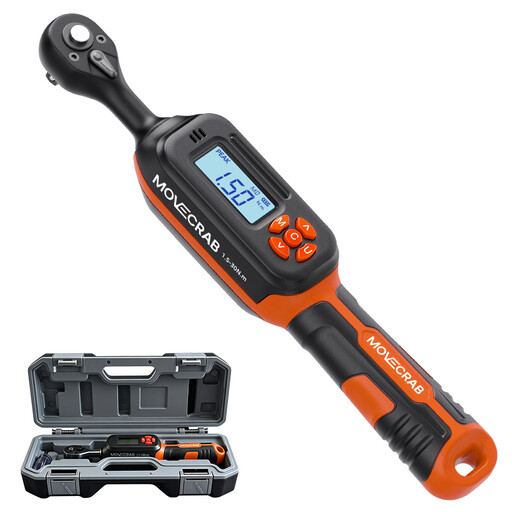
Why it stands out: This model combines high accuracy of ±2% with a triple-alarm system. The combination of vibration, an audible signal, and an LED display ensures that reaching the target torque is reliably perceived under all working conditions—whether in a noisy workshop or a quiet environment.
Features:
Who it's for: Users looking for a precise 3/8-inch drive torque wrench for work on motorcycles, cars, or bicycles who value unmistakable feedback.
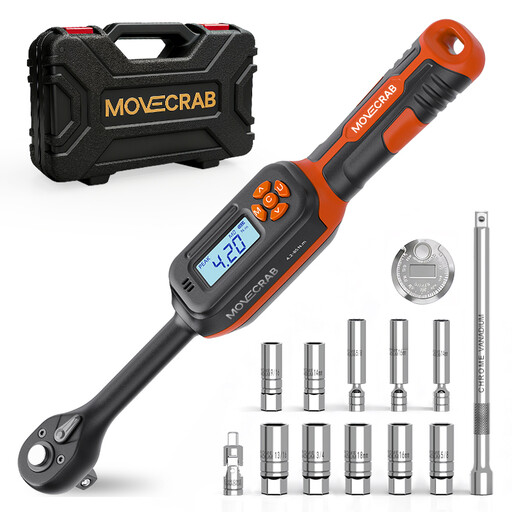
Why it stands out: This 14-piece torque wrench set offers a complete solution for various maintenance tasks, especially for changing spark plugs. The included sockets are made of heat-treated chrome vanadium steel, which promises excellent durability in high-torque applications.
Features:
Who it's for: DIY mechanics and professional technicians who need a comprehensive kit for precise work on cars or motorcycles and can benefit from an organised set in a carrying case.
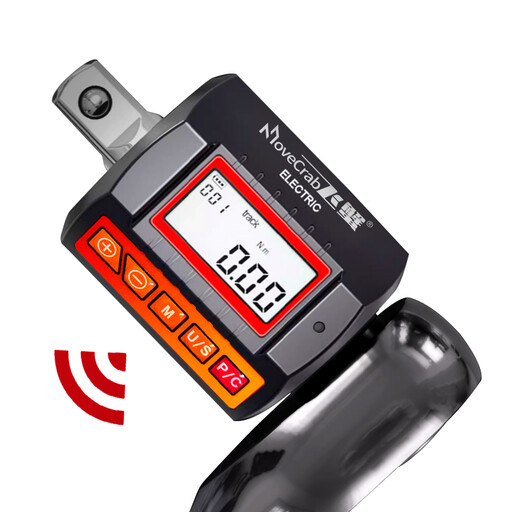
Why it stands out: The digital torque adapter is an extremely flexible solution. It upgrades existing 1/2" ratchets into a precise digital measuring instrument. Thanks to the included adapters for 3/8" and 1/4", it is compatible with a wide variety of sockets and covers a broad range of applications.
Features:
Who it's for: Users who already have a good selection of ratchets and sockets and are looking for a cost-effective, space-saving way to perform precise torque measurements on bicycles, motorcycles, and cars.
If the models presented here don't exactly meet your requirements, you may find the right tool in our broader selection. Discover more digital torque wrenches in our category.
Calibration is a process that ensures the tool's accuracy. It is recommended to have digital torque wrenches checked and adjusted periodically (e.g., annually or after approx. 5,000 cycles) by a professional service provider with certified equipment. Attempting to self-calibrate without proper measuring devices can lead to inaccurate results.
These two modes serve different purposes.
This is strongly discouraged. A torque wrench is a precision measuring instrument designed for the controlled tightening of fasteners. Applying high force to loosen stuck bolts, especially with jerky movements, can damage the internal measuring mechanism and compromise its calibration. For loosening, robust tools like a lug wrench, an impact wrench, or a standard ratchet with a breaker bar should be used.