
Lieferung heute & morgen

Qualitätsgarantie

Willkommens-Angebote freischalten: KOSTENLOSE Lieferung | Bis zu 80 % RABATT | Kostenlose 30-Tage-JoyPlus-Testphase
App herunterladen
Choosing the right disinfectant can be overwhelming. With a vast array of sprays, wipes, and cleaners on the market, finding the perfect product for your needs is a challenge. Often, well-intentioned purchases don't deliver the desired results because crucial details were overlooked. This guide will help you avoid common pitfalls and make an informed decision for a hygienic home.
Effective hygiene protection starts with the right product selection. Many consumers invest in products that fail to live up to their potential. Here are three typical mistakes to avoid:
To ensure you find the right product for your requirements, you should check three core parameters. These will help you objectively evaluate a product's performance and scope of application.
The product format is crucial for practicality and ease of use in daily life. Each variant has specific advantages and disadvantages:
The ingredients determine which types of germs a product is effective against. Manufacturers usually state the efficacy spectrum on the packaging:
Common active ingredients include alcohols (ethanol, propanol), quaternary ammonium compounds (e.g., benzalkonium chloride), lactic acid, or active chlorine (sodium hypochlorite). The choice depends on whether you want to specifically remove bacteria and viruses or ensure general household hygiene.
Always read the label. The contact time is the most important factor for successful disinfection. It indicates how long the surface must remain wet for the product to work. You will also find important safety information and details on material compatibility there. For products like Sagrotan Disinfection, this is clearly declared.
To make your decision easier, we have matched some products based on typical user profiles.
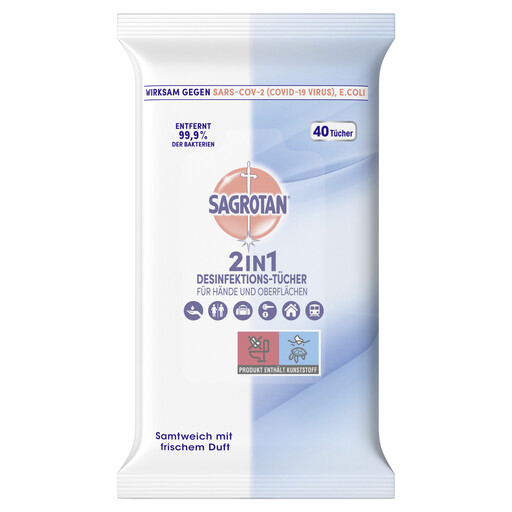
Why This Fits Their Persona: Ideal for parents or anyone needing a quick, hassle-free solution for home and on the go. The wipes are ready to use for cleaning hands or surfaces like high chairs, toys, or door handles.
This product is explicitly formulated for 2-in-1 use on both hands and surfaces, thus avoiding the trap of using an unsuitable surface cleaner on skin. The packaging is resealable, which prevents the wipes from drying out.
Combined use for hands and surfaces; practical, compact packaging for on-the-go use.
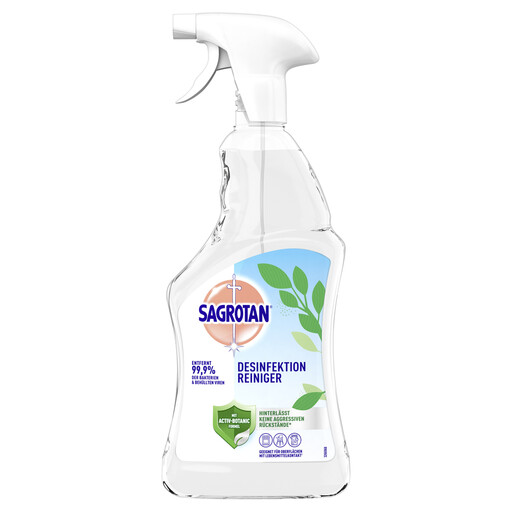
Why This Fits Their Persona: Perfect for households that place a high value on hygiene in the kitchen and children's areas. The spray is suitable for cutting boards, high chairs, refrigerators, and other sensitive areas.
This product is a specialist, not a vague "all-purpose weapon." It clearly lists which surfaces it is suitable for and where it should not be used (e.g., marble, wood). The instruction to rinse surfaces that come into contact with food ensures safe use.
Targeted for sensitive areas like kitchens and nurseries; clear instructions on material compatibility.
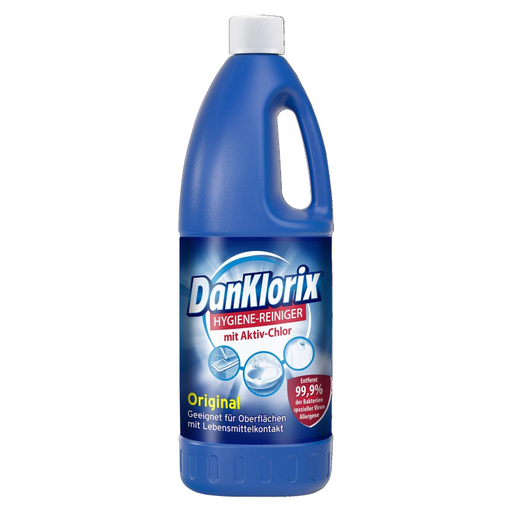
Why This Fits Their Persona: Suitable for deep cleaning and disinfection throughout the house, especially for floors, bathrooms, drains, and laundry disinfection. This product is aimed at users who need a powerful solution for stubborn dirt, mould, and germs.
This product clearly positions itself as a powerful, chlorine-based cleaner, not a gentle, everyday product. The extensive warning labels ensure that the user is informed about correct and safe handling (e.g., dilution, gloves) and that material damage is avoided.
Broad efficacy spectrum against bacteria, germs, and mould; also removes stubborn stains and discolouration.
We've compiled a complete, up-to-date list of products that fully meet these strict selection criteria and German safety regulations.
The required contact time varies depending on the product and the microorganisms being targeted. It can range from 30 seconds to over an hour. For effective disinfection, it is essential to follow the instructions on the product label precisely and to keep the surface wet for the specified duration.
No, this is not recommended. Disinfectants for surfaces often contain ingredients that can be too harsh for the skin and cause irritation. For hand disinfection, only use products that are explicitly designated for that purpose. Some products, like special 2-in-1 disinfectant wipes, are formulated for both applications and are labelled accordingly.
A conventional cleaner is primarily used to remove visible dirt, dust, and grease from surfaces. A disinfectant, on the other hand, is specifically formulated to kill microorganisms such as bacteria, viruses, and fungi. Many products described as hygiene cleaners combine both functions. They clean the surface while also reducing the germ count, provided they are used correctly according to the instructions.