
Lieferung heute & morgen

Qualitätsgarantie
App herunterladen
Kategorien
Choosing a dog bed is a functional decision that should be based on your pet's specific needs. A dog spends a significant portion of its day resting or sleeping. Therefore, a proper sleeping area is crucial for their recovery and overall well-being. The choice of a model depends on factors like the dog's size and sleeping habits, its intended location (indoors or outdoors), and the material's durability and maintenance requirements. This guide analyses the technical criteria to consider when selecting a dog bed.
The choice of the right dog bed is based on objective parameters. A systematic analysis of the following points will lead to a well-informed decision.
The material determines durability, comfort, and ease of care.
The shape of the bed should match the dog's sleeping habits.
A bed that is too small restricts freedom of movement, while one that is too large may not offer the desired sense of security. Measure your dog in a stretched-out position from the tip of its nose to the base of its tail and add 15 to 25 cm to determine the required length or diameter of the sleeping surface. For very large breeds, a special dog bed for large dogs with a reinforced construction and a sufficiently sized sleeping area is necessary.
Based on the criteria above, we present three models that stand out for their specific technical features and applications.
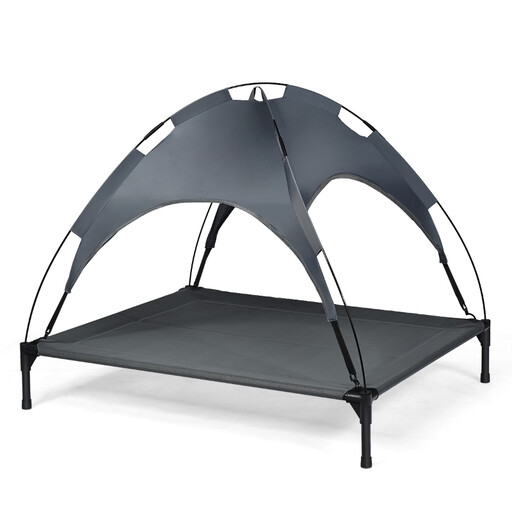
Why We Recommend It: This model combines an elevated dog bed with a removable sun canopy. The design is engineered for outdoor use, offering protection from direct sunlight and light rain, while the elevated position ensures ventilation.
Key Features:
Ideal For: Owners of small to medium-sized dogs (up to 50 kg) looking for a robust and weatherproof sleeping solution for the garden, balcony, camping, or beach.
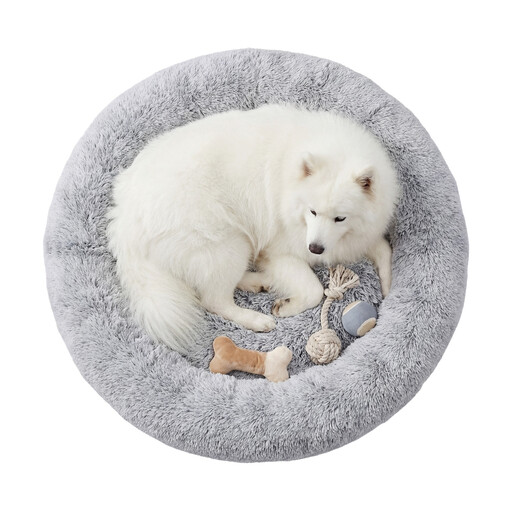
Why We Recommend It: With a diameter of 140 cm, this round dog bed offers an exceptionally large sleeping area. It is specifically designed as a dog bed for large dogs or for multiple smaller pets. The donut shape with its soft filling is intended to promote a calming effect.
Key Features:
Ideal For: Owners of large dog breeds or multi-pet households who need an extra-spacious and comfortable bed with easy-care properties.
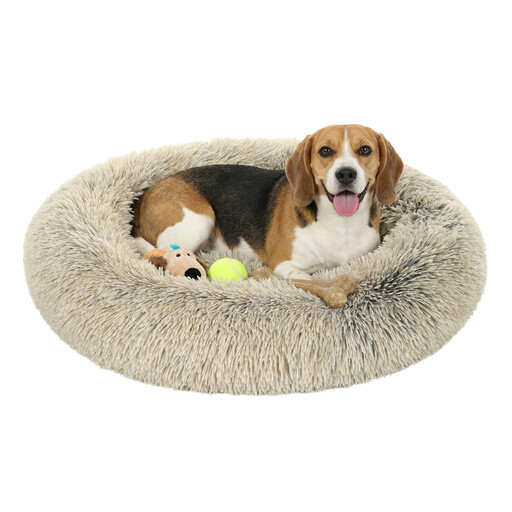
Why We Recommend It: This model is a classic interpretation of the donut dog bed for small to medium-sized dogs. It focuses on comfort with its long-pile plush and practical handling thanks to the removable central cushion.
Key Features:
Ideal For: Owners of small and medium-sized dogs who are looking for a soft, secure, and easy-to-clean bed for indoor use.
If these models don't meet your specific requirements, you can find a wider selection of designs and sizes in our Dog Bed House category.
1. How often should a dog bed be washed? The cleaning frequency depends on usage, the dog's coat type, and any allergies. As a general guideline, it is recommended to wash the cover of a washable dog bed every one to two weeks. The filling should be aired out regularly.
2. What size dog bed does my dog need? Measure your dog in its preferred sleeping position. If it stretches out, measure from its nose to the base of its tail. Add 15-25 cm to this measurement to get the minimum required length or diameter of the sleeping surface. For a round dog bed, the inner diameter is the crucial measurement.
3. What is the advantage of an elevated dog bed? An elevated dog bed lifts the dog off the ground. This has several benefits: it improves air circulation, which provides cooling in the summer. It protects against cold and damp surfaces and reduces contact with dirt and parasites. For older dogs, the elevated design can also make getting in and out easier.