
Lieferung heute & morgen

Qualitätsgarantie

Willkommens-Angebote freischalten: KOSTENLOSE Lieferung | Bis zu 80 % RABATT | Kostenlose 30-Tage-JoyPlus-Testphase
App herunterladen
As a Joybuy Product Recommendation Officer, I see countless dog owners facing an overwhelming selection of chew toys every day. A dog's natural need to chew is undeniably important—it serves as a tool for stress relief, engagement, and dental care. Yet, the market is flooded with products whose marketing promises often fall short in practice. This guide is designed to help you navigate the common pitfalls and make an informed decision.
Before we dive into the selection criteria, it's important to understand the most common marketing traps that lead to frustration and wasted money.
To avoid a bad purchase, you should focus on objective, verifiable features. The following three points are crucial for making the right choice.
The material is the most important factor for safety and longevity. Each has specific properties:
The correct size isn't a suggestion—it's a safety requirement. The toy must be large enough that it cannot be fully taken into the mouth and swallowed. Manufacturers often provide weight recommendations, which offer a good guideline. Also, consider your dog's individual chewing strength. A chew toy for large dogs must be made from a more resilient material than a chew toy for puppies, whose jaws are still developing.
A good chew toy can do more than just withstand the urge to chew. Look for functional benefits that meet your dog's needs:
Based on the criteria above, we have selected a few products from our range that are suitable for specific profiles.
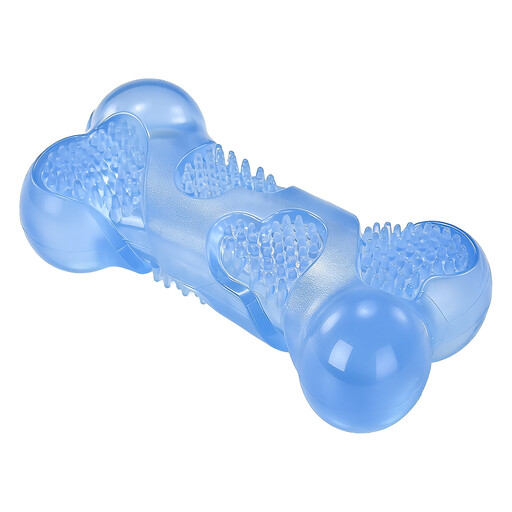
Why This Fits Their Persona: Teething puppies need a toy that soothes their sensitive gums while still holding up to sharp puppy teeth. This model is specifically designed for this phase.
It bypasses the "one-size-fits-all" trap by being explicitly designed for puppies and small dogs. The soft latex material is a deliberate choice for sensitive jaws, not an imprecise "plastic."
The soft, flexible latex material massages itchy gums. The integrated squeaker provides extra mental stimulation and fun.
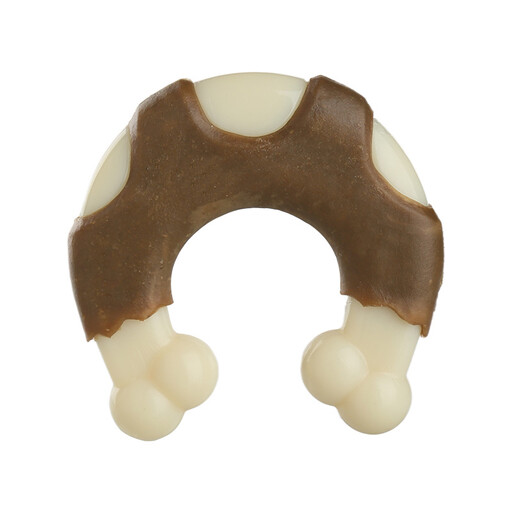
Why This Fits Their Persona: Owners of medium to large dogs with a strong urge to chew need a durable dog toy that can withstand heavy use without failing immediately.
Instead of the vague promise of "indestructibility," this product relies on a transparent material combination: durable cowhide and a reinforced nylon core. This is an honest statement about its robustness.
The dual-material construction offers varied chewing experiences and high resilience. The ergonomic horseshoe shape is easy for dogs to grip and hold.
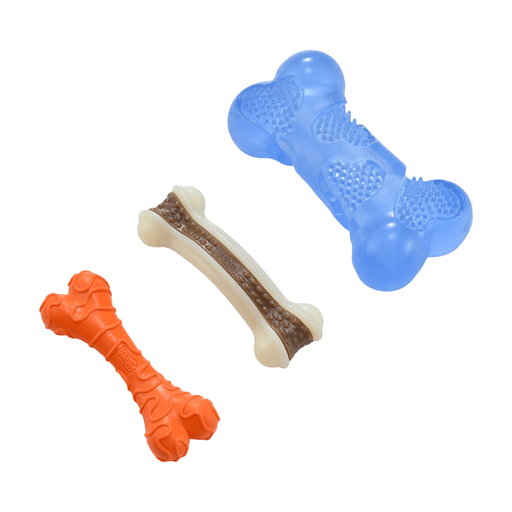
Why This Fits Their Persona: For dogs that quickly lose interest and need a combination of play and dental care. This set offers variety and functional benefits.
Instead of a single, simple toy, this set provides a thoughtful solution to boredom. The materials (Nylon, TPR) and functions (teeth-cleaning nubs, edible core) are clearly declared.
The set includes three different toys, which keeps things engaging. The combination of nylon bristles and soft TPR nubs supports dental cleaning, while the edible core creates an extra incentive.
We've compiled a complete, up-to-date list of products that fully meet these strict selection criteria and all relevant safety standards.
1. How often should you replace a dog's chew toy? There's no fixed timeline. Inspect the toy regularly for signs of wear and tear. Replace it if it has cracks, if pieces have broken off, or if it has become small enough to be swallowed. Frayed surfaces on nylon toys are normal, but sharp edges or loose pieces are a sign that it's time for a replacement.
2. Is rawhide chew toy safe for dogs? Rawhide can be a safe activity for many dogs, provided it is given under supervision. Dogs that tend to bite off and swallow large pieces should avoid rawhide, as this can lead to digestive blockages. Choose products with traceable origins and watch your dog, especially with a new product.
3. What material is suitable for a very strong chewer? For dogs with extremely strong bite force, toys made of solid Nylon are often a great choice. Some products made from natural rubber or TPR, specifically designated as heavy-duty, can also be suitable. Look for product descriptions that explicitly target "strong" or "aggressive" chewers and avoid soft materials like latex or plush for unsupervised chewing.