
Lieferung heute & morgen

Qualitätsgarantie

Willkommens-Angebote freischalten: KOSTENLOSE Lieferung | Bis zu 80 % RABATT | Kostenlose 30-Tage-JoyPlus-Testphase
App herunterladen
The selection of dog treats on the market can be overwhelming. Many dog owners are looking for rewards that not only taste great but also contribute to their four-legged friend's health. The challenge is to distinguish products with high-quality ingredients from those with unnecessary fillers, sugar, or artificial additives.
This guide serves as a reference. As your Joybuy Product Recommendation Officer, I have gathered information to provide you with a factual basis for your purchasing decision. The goal is to help you find suitable and appropriate dog snacks for your loyal companion.
To make an informed decision, a few basic criteria are helpful. Key quality features can already be identified from the declaration on the packaging.
A short and understandable ingredient list is often a sign of a high-quality product. Look for a high meat content, which should be listed first. Terms like "meat and animal by-products" can indicate lower-quality components, whereas a precise description like "chicken breast fillet" signifies transparency. For dogs with dietary sensitivities, grain-free dog treats are a good choice to avoid potential allergens. Likewise, sugar-free dog snacks or those without artificial preservatives should be preferred.
Protein is an essential nutrient for muscle development and the overall vitality of a dog. Protein-rich dog treats can be a valuable addition to the daily food ration, especially for active dogs. The crude protein content, listed in the analytical constituents, provides information on this. A high value derived from high-quality sources like muscle meat or fish is a positive attribute.
Not every snack is suitable for every situation. Small, soft, and low-calorie training treats for dogs are ideal for frequent rewards during training without significantly impacting the daily calorie balance. In contrast, long-lasting chews for dogs provide enrichment and can support dental care through mechanical abrasion. The choice should therefore be tailored to the specific occasion.
Based on the criteria mentioned above, we have compiled a selection of products that stand out for their specific properties.
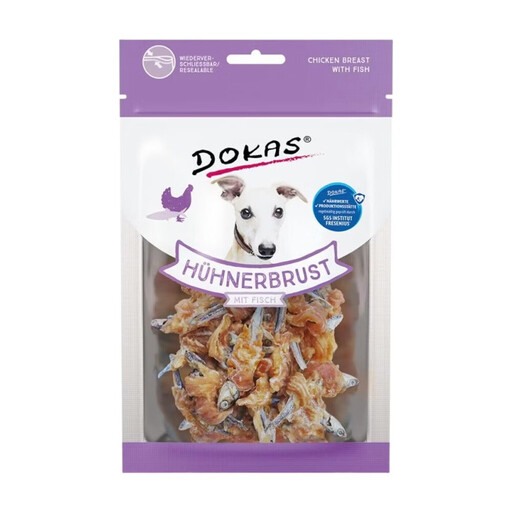
Why it stands out: This product combines two high-quality protein sources – chicken breast and fish. The exceptionally high protein content makes it a particularly nutritious snack.
Benefits:
Who it's for: Ideal for dog owners looking for an especially protein-rich reward snack, whose dogs enjoy the taste of fish and chicken.
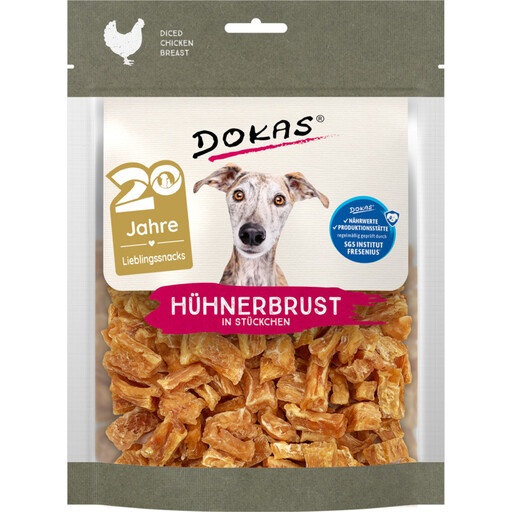
Why it stands out: These chicken treats for dogs consist of 93% chicken breast and are characterized by a minimalist recipe. According to the manufacturer, the meat comes from humanely raised animals without the use of antibiotics.
Benefits:
Who it's for: A great choice for owners who value a simple, meat-based reward and appreciate transparent sourcing of ingredients. Especially suitable for dogs with sensitivities to grain or soy.
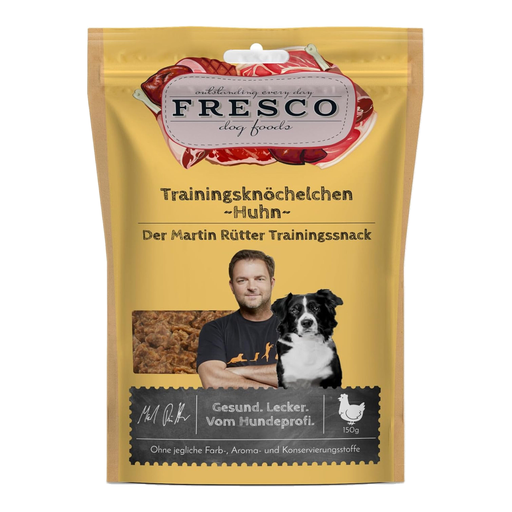
Why it stands out: These Martin Rütter treats were specifically designed as a training reward. They are based on a single protein source (monoprotein) and are well-tolerated by many dogs due to their composition.
Benefits:
Who it's for: Perfect for dog owners and trainers looking for effective and well-tolerated training treats for dogs of all sizes and ages.
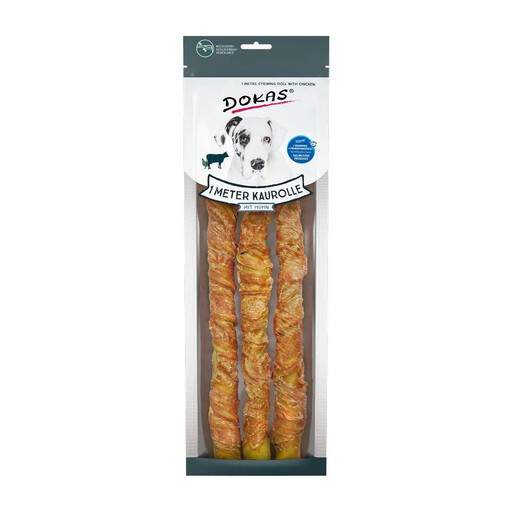
Why it stands out: This chew for dogs offers long-lasting enrichment. The combination of rawhide and chicken breast fillet encourages chewing and can help strengthen the jaw muscles.
Benefits:
Who it's for: For owners of adult dogs who are looking for a robust and durable chew snack for enrichment and to support dental care.
Haven't found the right product for your dog yet, or are you looking for more alternatives, especially poultry-based ones? You can find a wider range of products in our Chicken Treats category. There, you can compare more options based on your dog's needs.
Healthy dog treats are characterized by a transparent and high-quality composition. Ideally, they have a high meat content from a clearly declared source, contain no added sugars, artificial colours, or preservatives, and are free from unnecessary fillers like grain if the dog is sensitive to it.
As a general guideline, treats should not make up more than 10% of a dog's daily calorie intake. It is important to follow the feeding recommendations on the product packaging and to reduce the amount of main food accordingly to prevent weight gain. The exact amount depends on the dog's size, age, breed, and activity level.
Grain-free dog treats are primarily the better choice for dogs with a diagnosed grain allergy or intolerance. For most dogs, high-quality grain in moderation is not a problem. A high meat content and the absence of sugar and artificial additives are often more significant quality indicators than simply being grain-free.