
Lieferung heute & morgen

Qualitätsgarantie

Willkommens-Angebote freischalten: KOSTENLOSE Lieferung | Bis zu 80 % RABATT | Kostenlose 30-Tage-JoyPlus-Testphase
App herunterladen
A dollhouse is more than just a toy; it's a miniature world where children can be creative, try out social roles, and develop their own stories. However, anyone looking to buy a dollhouse is often faced with a bewildering selection. The packaging makes big promises, but not every model delivers. Before you make a decision, it's important to know the common pitfalls that can lead to disappointment in the playroom.
Common Pitfalls When Buying a Dollhouse:
To make an informed decision that will bring long-term joy, you should check a few key parameters. These will help you objectively assess the quality and play value of a dollhouse.
The material is crucial for durability and safety. The most common options are plastic and wood.
A good dollhouse grows with the child and their ideas.
The child's interests should be the main focus.
To help you get your bearings, we have put together a few models that are tailored to different needs and play preferences.
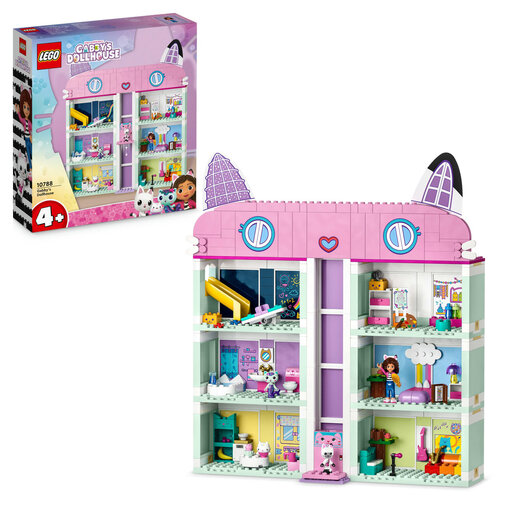
Why This Fits Their Persona: Ideal for children who want to recreate the adventures of Gabby and her friends from the popular series. The set brings the familiar world into the playroom in detail.
The LEGO system bricks guarantee a stable construction that can withstand active play. The set already includes four main characters and numerous accessories, which avoids expensive follow-up purchases and allows for immediate fun.
Combines building and role-playing; promotes fine motor skills and creativity. Includes 8 rooms on 4 floors and a working elevator.
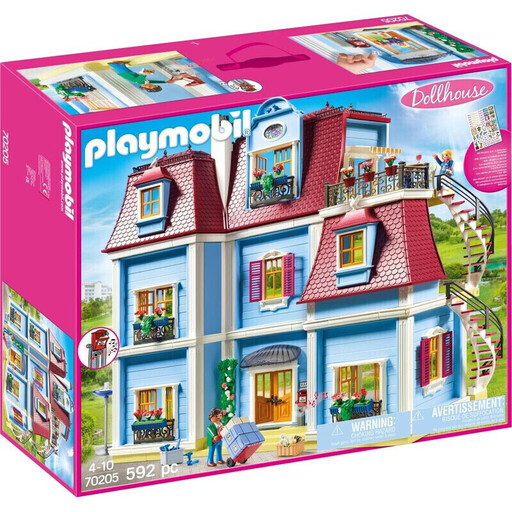
Why This Fits Their Persona: Perfect for children looking for a traditional, large dollhouse for extensive role-playing. With its spacious rooms and classic look, it provides an ideal stage for everyday stories.
The proven PLAYMOBIL quality ensures a robust and durable construction. Although the house is large, it can be flexibly designed with separately available room furnishings (item no. 70206-70211), thus avoiding a rigid play design.
Features a working doorbell and an openable letterbox for realistic play. Reusable stickers allow for individual decoration.
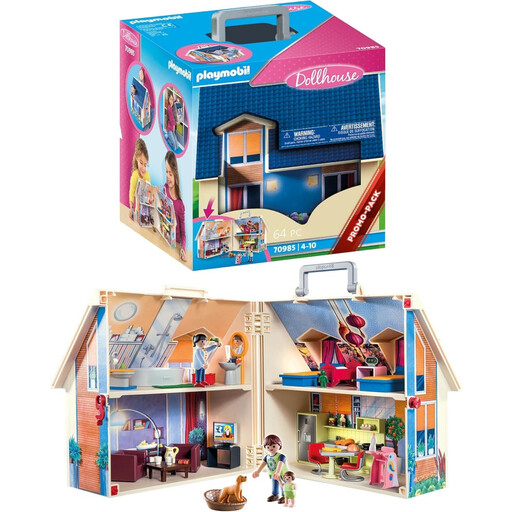
Why This Fits Their Persona: The ideal solution for fun on the go. This dollhouse can be folded up and carried by its practical handle without losing any small parts.
The compact design is nonetheless robust and safely designed for children aged 4 and up. It comes with a complete set of furniture and figures, making it ready to play with immediately without any additional purchases.
All accessories can be stored inside the house. Includes a complete family (mother, father, baby) and a dog for diverse role-playing scenarios.
We have compiled a complete, up-to-date list of products that fully meet these strict selection criteria and German safety regulations.
A dollhouse is generally suitable from the age of about 3 to 4 years. However, the specific model is the deciding factor. For younger children, sets with larger, easy-to-grip parts and a simpler structure are more suitable to minimise the risk of swallowing and to avoid frustration during play. Always pay attention to the manufacturer's age recommendation and check whether the complexity matches your child's motor skills.
The main difference lies in the play concept. A LEGO dollhouse focuses on building and creative design. Children construct the house themselves and can rebuild it at any time. This promotes fine motor skills and spatial reasoning. A PLAYMOBIL dollhouse is a ready-made playset that places a stronger emphasis on role-playing with detailed figures and accessories. The choice depends on whether the child prefers to build and construct or wants to dive straight into imaginative stories.
A good starter set should include a basic configuration that allows for play in the most important rooms, such as the kitchen, bedroom, and bathroom. At least one or two figures should also be included. This allows the child to start playing immediately without any further purchases being absolutely necessary. Modular systems offer the advantage that the dollhouse with accessories can be expanded over time, which increases the long-term play value and adapts the set to the child's growing interests.