
Lieferung heute & morgen

Qualitätsgarantie

Willkommens-Angebote freischalten: KOSTENLOSE Lieferung | Bis zu 80 % RABATT | Kostenlose 30-Tage-JoyPlus-Testphase
App herunterladen
The decision to buy a drone quickly leads to a flood of technical specifications and models. Whether for stunning travel videos, professional aerial photography, or effortless shots for social media, the demands on a camera drone are diverse. This guide is designed to help you understand the key features and make an informed decision. We will outline objective criteria and present a selection of models for various use cases.
To find the right drone for your needs, it's helpful to be familiar with some of the technical and legal frameworks. The following points provide a guide.
Since 2021, EU drone regulations have governed the operation of unmanned aerial vehicles. A crucial criterion is the drone's take-off weight.
drone under 250g, offer the easiest entry point. An online test (the so-called "small drone license") is generally not required for operation. However, registration as an operator with your national aviation authority is still usually necessary. They are ideal for travel and hassle-free use.Before your first flight, always check the latest regulations on the EASA website or that of your national aviation authority.
A drone with a 4K camera is now a common standard for high-quality footage. However, other factors also determine image quality.
A drone with long flight time gives you more creative freedom and confidence when executing your shots.
Based on the criteria mentioned, we have compiled a selection of drones for different needs and budgets.
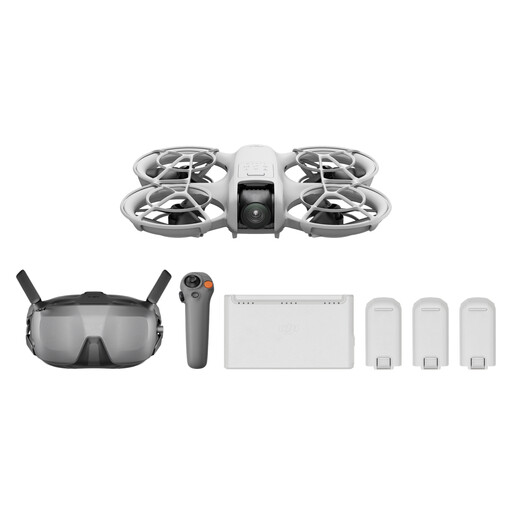
Why it stands out: The DJI Neo is extremely portable, weighing only 135 grams, and falls into the regulation-friendly C0 class. Its strength lies in its ease of use, with features like hand launch and creative shooting modes.
Advantages:
Who is it for? This drone for beginners is ideal for newcomers, travellers, and content creators looking for a simple, lightweight drone for spontaneous shots and social media content.
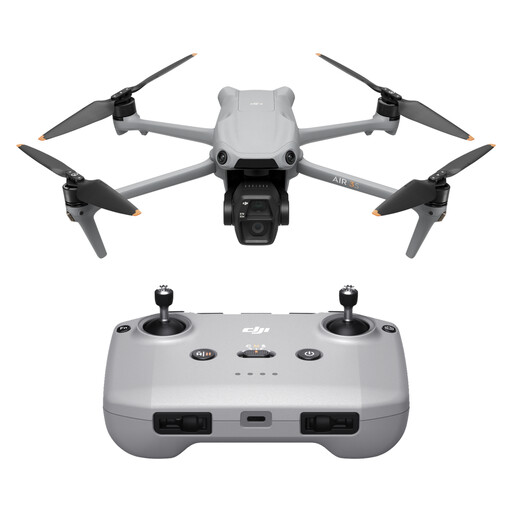
Why it stands out: The DJI Air 3S positions itself as a high-performance all-rounder drone. Its dual-camera system, featuring a large 1-inch CMOS sensor on the main camera, delivers high image quality, even in challenging light conditions.
Advantages:
Who is it for? The DJI Air 3S is aimed at ambitious amateur photographers and videographers who want high image quality and versatile capabilities for travel and landscape photography, without having to jump straight to a professional drone model.
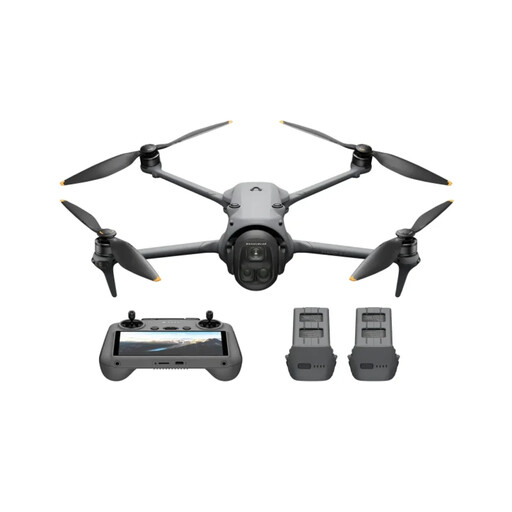
Why it stands out: The DJI Mavic 4 Pro is a flagship model designed for professional demands. The triple-camera system, featuring a 100MP 4/3 CMOS Hasselblad main camera, sets the standard in aerial photography.
Advantages:
Who is it for? This professional drone is the choice for professional filmmakers, photographers, and commercial operators who require uncompromising image quality, maximum flight performance, and the utmost reliability for their projects.
If our selection doesn't include the right model for your specific requirements, you can find more options in our comprehensive category, from entry-level models to specialised systems.
Discover more models in our Camera and Photography category.
In many regions, such as the EU, drone operators must register with the national aviation authority and label their drone with the provided e-ID. For drones weighing 250g or more, the EU Competency Certificate (A1/A3) is required. Furthermore, valid liability insurance is legally mandatory. Always be aware of local no-fly zones, such as near airports, hospitals, or over crowds of people.
For beginners, drones under 250g like the DJI Neo are a great choice. They require less regulatory effort and often offer user-friendly automatic functions that make getting started easier. Important features include intuitive controls, a robust design, and safety functions like an automatic return-to-home feature.
Yes, a 4K camera is a very worthwhile feature today. It delivers sharp, detailed videos that not only look great on large screens but also offer more flexibility in post-production (e.g., cropping sections of the image without losing quality). 4K resolution is also increasingly the standard for publishing on video platforms and social media.