
Lieferung heute & morgen

Qualitätsgarantie

Willkommens-Angebote freischalten: KOSTENLOSE Lieferung | Bis zu 80 % RABATT | Kostenlose 30-Tage-JoyPlus-Testphase
App herunterladen
By Joybuy Product Recommendation Officer, July 28, 2026
The joy of a new dog toy is often short-lived. Many dog owners know the feeling: the toy advertised as "extremely durable" barely survives the first day with an enthusiastic chewer. This is not only frustrating and costly, but it can also pose safety hazards for your dog. Choosing the right toy requires more than a glance at the packaging. It's about understanding the materials, construction, and the real benefits for your dog.
This guide will help you navigate common purchasing traps and make an informed decision that benefits both your dog and your wallet.
Before we dive into the selection criteria, it's crucial to understand the most common reasons for buyer's remorse. Marketing promises can be misleading, and not every tough-looking toy lives up to its claims.
To avoid these pitfalls, you should base your choice on objective criteria. Three parameters are of central importance.
The material is the most important factor for both durability and safety. Look for precise material specifications.
A good toy should not only be durable but also serve a purpose. It can act as a toy to combat boredom and provide mental stimulation for your dog.
The toy's size must be appropriate for your dog's size and age. A toy that is too small can be swallowed, while one that is too large or heavy can be unwieldy for small dogs. Pay attention to the manufacturer's weight and size recommendations. The shape should allow the dog to grip and chew the toy safely without parts breaking off easily.
Here are a few recommendations based on the objective criteria above, suitable for different types of dogs.
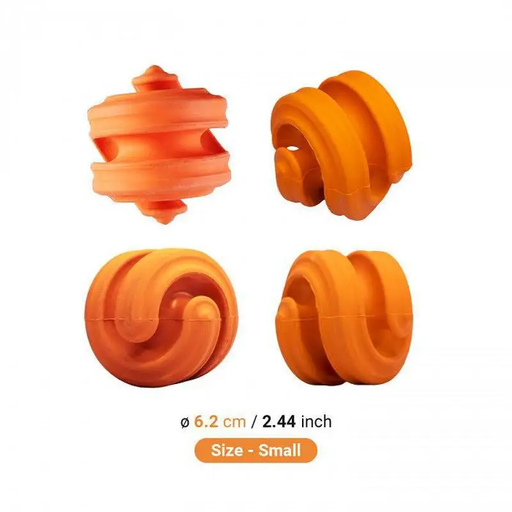
Why It's a Great Fit: Ideal for dogs up to 15 kg (33 lbs) who enjoy both chewing and a mental challenge. The geometric shape creates unpredictable bounces, and the hollow centre can be filled with treats, making it an effective puzzle toy.
It sidesteps the "indestructible" myth with a clear material specification (durable natural rubber) and a specific weight recommendation. It's designed for a particular type of dog, not as a one-size-fits-all solution.
Combines a durable chew toy with the function of a treat dispenser, significantly extending engagement time and preventing boredom.
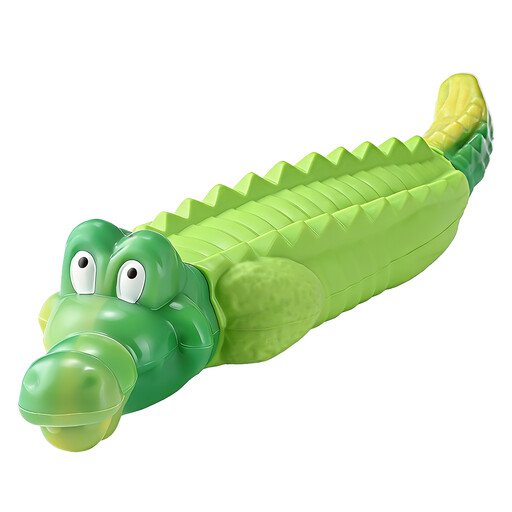
Why It's a Great Fit: This toy was specifically developed for the needs of medium to large dogs. The dual-layer construction, featuring a hard nylon core and a flexible natural rubber outer layer, offers superior bite resistance.
It addresses the one-size-fits-all trap by being clearly positioned for large breeds. The description of its dual-layer structure is a concrete technical specification, not an empty marketing promise.
The combination of a hard core and a softer outer layer ensures longevity without excessively irritating the gums. A thoughtfully designed chew toy that earns its "bite-resistant" label.

Why It's a Great Fit: This ball is designed for interactive play. Its lightweight, high-elasticity construction provides a great bounce, making it perfect for fetch and chase games outdoors. The woven structure is abrasion-resistant.
It isn't marketed as a pure chew toy but as an interactive one. The description makes it clear that it's intended for games of fetch and moderate chewers, which is an honest definition of its use case.
The inflatable design makes the ball lightweight and portable. It can be easily deflated and packed for travel, making it highly convenient for active dog owners.
We have compiled a complete, up-to-date list of products that fully meet these strict selection criteria and all relevant safety regulations.
1. How often should you inspect and replace dog toys? It's recommended to check every toy for cracks, loose parts, or significant wear before and after each use. Once a toy is damaged, it should be discarded immediately to prevent your dog from swallowing pieces. The lifespan heavily depends on the material and the intensity of use.
2. Is a harder toy always better for powerful chewers? Not necessarily. Extremely hard materials like antlers or very hard plastic can lead to tooth fractures. A good chew toy should have a certain amount of "give" or flexibility. Materials like dense natural rubber or a dual-layer construction offer a resistant yet safer alternative.
3. How do you clean durable dog toys, especially treat dispensers? Most toys made of natural rubber or TPR can be easily cleaned with warm water and mild soap. For treat-dispensing balls, it's crucial to thoroughly remove all food residue to prevent bacterial growth. An old toothbrush can help reach difficult spots. Make sure the toy is completely dry before its next use.