
Lieferung heute & morgen

Qualitätsgarantie

Willkommens-Angebote freischalten: KOSTENLOSE Lieferung | Bis zu 80 % RABATT | Kostenlose 30-Tage-JoyPlus-Testphase
App herunterladen
By the Joybuy Product Recommendation Officer, July 28, 2026
A reliable electric cooler is an indispensable companion for many—whether for camping, long-haul trips in a lorry or RV, or simply keeping provisions chilled on a family outing. However, the market is crowded and confusing, and many products fail to deliver on their advertising promises. Before you make a decision, it's crucial to understand the common pitfalls that can lead to a poor purchase.
This guide will help you understand the technical features and make an informed choice that perfectly matches your needs.
Many buyers are swayed by advertising claims that conceal important technical limitations. Pay close attention to these three points to avoid disappointment:
To make the right choice, you should focus on objective technical parameters rather than marketing promises.
This is the most important technical distinction.
A good portable cooler should be versatile.
The size should be based on your needs.
Also, look for robust construction, sturdy carrying handles, and a well-sealed lid to keep the cold inside.
Here are some models tailored to specific use cases that avoid the pitfalls mentioned.
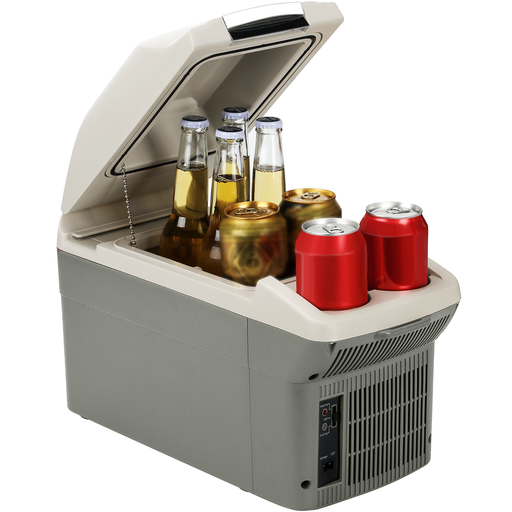
Why This Fits Their Persona: Ideal for individuals who need a compact solution for their commute or for short outings. The cooler fits on a car seat and keeps drinks and lunch cool or warm for several hours.
This model is a thermoelectric cooler. It is clearly positioned for keeping already-chilled items cool and doesn't create the false expectation of freezer-level performance. It's an honest solution for a specific, short-term use case.
Compact, vehicle-friendly design with a seatbelt guide and cup holders. It offers both cooling and warming functions and can be powered by 12V DC and 230V AC.
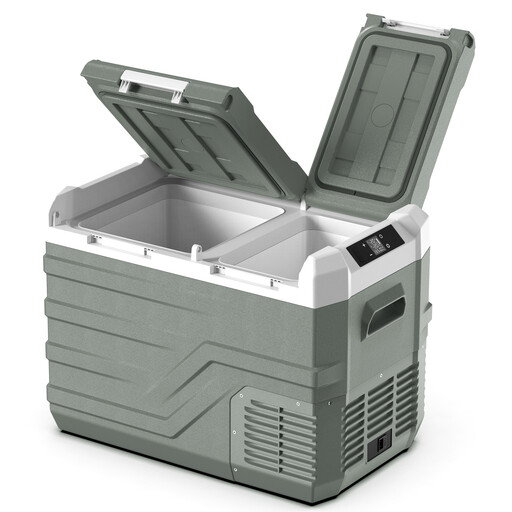
Why This Fits Their Persona: Perfect for multi-day camping trips or road trips. The compressor technology ensures reliable cooling even in hot weather, and the dual-zone function allows for simultaneous cooling and freezing.
This model bypasses the "relative cooling" trap with its powerful compressor technology. The integrated three-stage battery monitor reliably prevents the vehicle's battery from being drained.
Independently controlled dual zones (cooling/freezing from -20°C to 20°C). Flexible operation with 12/24V DC and 100-240V AC. Low operating noise (rated at <45 dB by the manufacturer).
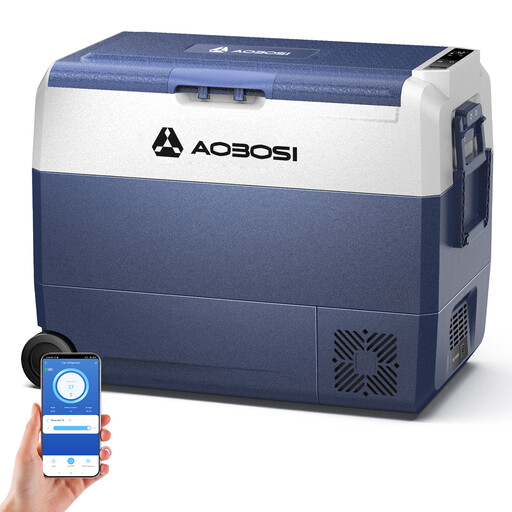
Why This Fits Their Persona: With a 60-litre capacity, this cooler offers ample space for a family's weekly groceries or for long-term provisions in a lorry or RV. The app control allows for convenient monitoring and adjustment.
This model addresses the pitfall of insufficient volume. It is a fully-fledged mobile refrigeration solution with powerful compressor performance, ensuring reliable cooling down to -20°C, making it more than just a supplementary cooler.
Large 60-litre usable volume. Convenient temperature control and monitoring via a Wi-Fi app. Supports 12/24V DC and 100-240V AC for universal use.
We have compiled a complete, real-time list of products that fully satisfy these strict selection criteria and UK safety regulations.
The power consumption of a compressor cooler depends on its size, the set temperature, the ambient temperature, and the quality of its insulation. Most models have a rated power consumption of about 45 to 60 watts. However, thanks to good insulation and efficient compressors, the unit does not run continuously. Many models feature an ECO mode that further reduces consumption. On average, you can expect a consumption of about 0.5 to 1 kWh per 24 hours.
Yes, without a proper protection feature, any electric cooler can drain a car battery. Therefore, it is essential to look for an integrated, multi-stage battery monitor. This feature is standard on high-quality compressor coolers. You can set the voltage level at which the cooler should shut off, ensuring your vehicle always has enough power to start.
A "dual-zone" cooler has two separate compartments whose temperatures can be controlled independently. This allows you to use one compartment as a refrigerator (e.g., at 4°C) and the other simultaneously as a freezer (e.g., at -18°C). This is particularly useful for longer trips, allowing you to transport both fresh food and frozen goods.