
Lieferung heute & morgen

Qualitätsgarantie

Willkommens-Angebote freischalten: KOSTENLOSE Lieferung | Bis zu 80 % RABATT | Kostenlose 30-Tage-JoyPlus-Testphase
App herunterladen
A new electric kettle might seem like a simple purchase. But behind the shiny exteriors and marketing promises, there are often pitfalls that lead to frustration and unnecessary expense. From materials that affect the taste of your water to design flaws that complicate daily life, choosing the right appliance requires more than a quick glance at the price tag. As your Joybuy Product Recommendation Officer, I'll help you identify the crucial features and make an informed decision.
Before we turn to recommended models, it's important to understand the typical problems that only become apparent after a few weeks of use.
To avoid these traps, you should focus on three core aspects that determine the quality, safety, and longevity of an electric kettle.
The interior of your kettle is crucial for pure taste and hygiene.
The power, measured in watts, determines the boiling speed. A good benchmark is 2200 watts, which represents an efficient compromise between speed and energy consumption. The capacity should suit your household:
Modern kettles offer more than just heating water. Two functional areas are particularly relevant:
Based on the criteria above, we have identified a few models that are well-suited for different user profiles.
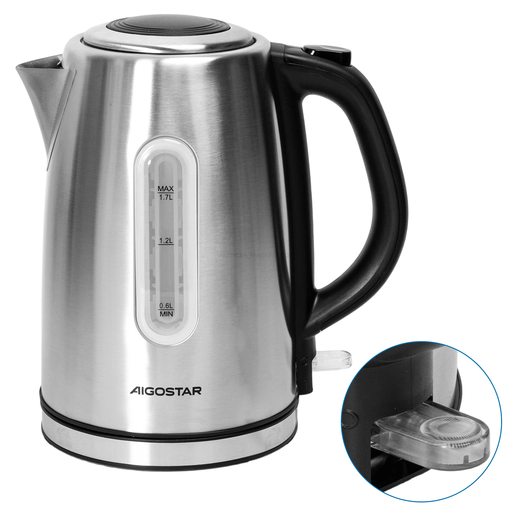
Why This Fits Their Persona: This model focuses on the essentials: a large 1.7-litre capacity, a robust stainless steel body, and all the necessary safety features. It's a workhorse for daily use in a busy household, without any superfluous or failure-prone extras.
The interior is made entirely of food-grade stainless steel, avoiding the material trap. The simple design facilitates cleaning and prevents heavy limescale buildup.
Large 1.7-litre capacity; Comprehensive safety features (boil-dry and overheat protection); Durable stainless steel interior.
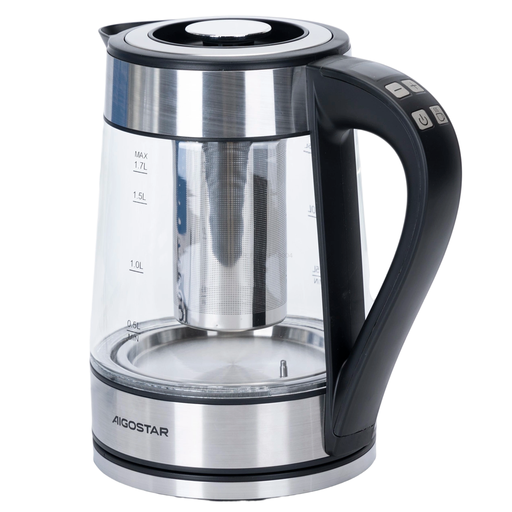
Why This Fits Their Persona: For anyone who takes their tea or coffee seriously. The precise temperature control, integrated tea filter, and glass body make this appliance the ideal choice for discerning connoisseurs who value control and aesthetics.
This model solves the problem of a one-size-fits-all temperature. Instead of just boiling water, it heats it precisely to the desired degree, enabling the preparation of delicate teas and bypassing the performance illusion.
13-level temperature control; Integrated, removable tea filter; Keep-warm function and digital temperature display.
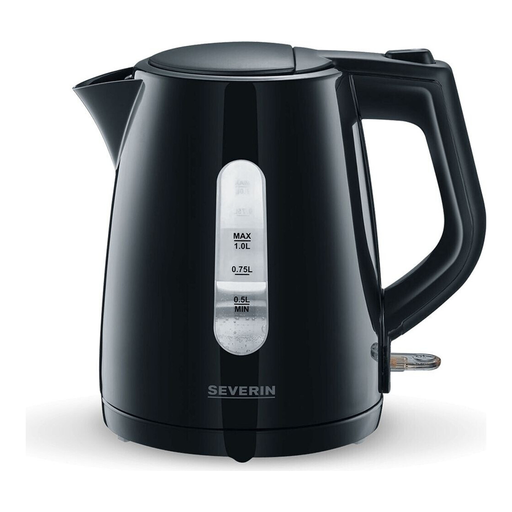
Why This Fits Their Persona: With its compact 1-litre capacity, this **black kettle** is perfect for kitchens with limited space or for individuals who usually only need water for one or two cups. It's simple, efficient, and space-saving.
It avoids the energy waste that comes from running an oversized kettle for small quantities. The simple, functional design minimises the risk of defects and makes it easy to handle.
Compact 1-litre capacity; Powerful 2200 watts for rapid heating of small amounts; Cordless 360° base for easy handling.
We have compiled a complete, up-to-date list of products that fully meet these strict selection criteria and safety standards.
The frequency of descaling depends on the water hardness in your area. With hard water, it is advisable to descale the kettle every one to two months; with soft water, less often. Use commercial, citric acid-based descalers or a mixture of water and vinegar essence (in a 1:1 ratio). After letting it sit, pour out the solution and boil the appliance several times with clean water to remove any residual taste.
Both materials have their merits. A glass kettle offers an appealing look and allows you to see the level of limescale at any time. A stainless steel kettle, on the other hand, is significantly more robust and resistant to impacts. In terms of taste neutrality, both materials are equivalent when of high quality. The choice is ultimately a matter of personal preference between aesthetics and maximum durability.
An electric kettle is one of the most energy-efficient ways to heat water. A typical 2200-watt appliance takes about three minutes to boil one litre of water. This corresponds to an energy consumption of approximately 0.11 kilowatt-hours (kWh). Assuming an electricity price of 40 cents per kWh, the cost per boil is about 4.4 cents. This is generally more economical than heating water on an electric stove.