
Lieferung heute & morgen

Qualitätsgarantie

Willkommens-Angebote freischalten: KOSTENLOSE Lieferung | Bis zu 80 % RABATT | Kostenlose 30-Tage-JoyPlus-Testphase
App herunterladen
Choosing an electric toothbrush is a deliberate step towards improving your daily oral hygiene. However, with the vast array of technologies, features, and models on the market, the choice can be overwhelming. This guide is designed to provide you with objective information and clear guidance to help you find a model that meets your individual needs. As your Joybuy Product Recommendation Officer, I have analysed relevant product features to provide you with an informed basis for your decision.
To find the right electric toothbrush, it's helpful to understand a few basic features and technologies. The following points are important considerations when making your selection.
The cleaning technology is the heart of any electric toothbrush. The two predominant systems are:
Both technologies can deliver a thorough clean when used correctly. The choice often comes down to personal preference for the brushing sensation.
Modern devices offer intelligent support for an optimised brushing routine. An electric toothbrush with pressure control is particularly beneficial for people with sensitive gums. A sensor warns you with a visual or haptic signal if you apply too much pressure, helping to prevent gum damage.
An electric toothbrush with an app provides personalised, real-time feedback. The app connects to the toothbrush via Bluetooth and visualises which areas of your mouth have been sufficiently cleaned and which still need attention. This can lead to a lasting improvement in brushing habits and ensure full coverage of all tooth surfaces, similar to a professional-level clean at home.
Most electric toothbrushes come with various cleaning programmes tailored to specific needs. Standard modes often include "Clean" (for daily cleaning), "Sensitive" (for gentle cleaning), and "Gum Care" (for gum massage). Models marketed as a toothbrush for whiter teeth also offer a "White" or "Polish" mode, which targets the removal of surface stains.
Battery life is a practical consideration, especially for travellers. While some models last up to two weeks on a full charge, others offer a runtime of several weeks or even months.
Based on the criteria mentioned, we have compiled a selection of models with different specialities.
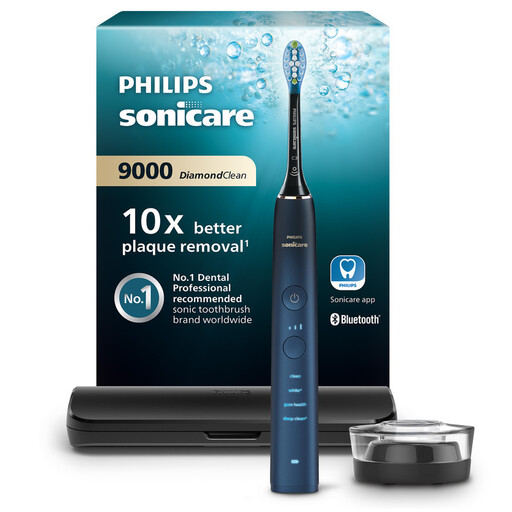
Why it stands out: The Philips Sonicare DiamondClean 9000 uses proven sonic technology with up to 62,000 brush movements per minute. It combines high-performance cleaning with smart features like pressure control and app connectivity for progress tracking.
Pros:
Best for: Users seeking a powerful sonic toothbrush with customisable settings and app-guided feedback to improve their brushing technique.

Why it stands out: This model is notable for its extensive accessory package and exceptionally long battery life. With six included brush heads and a battery that lasts up to 75 days, it offers excellent everyday usability and great value for money.
Pros:
Best for: Budget-conscious users who want a functional electric toothbrush with a long battery life and a generous supply of replacement brush heads.

Why it stands out: The Oral-B iO Series 10 represents Oral-B's most advanced technology, featuring a magnetic drive and the innovative iO Sense charging station. This station provides real-time feedback on brushing coverage, duration, and pressure, without needing to open the app.
Pros:
Best for: Tech enthusiasts who want the ultimate in guided cleaning and real-time feedback for a near-professional clean at home.
The models presented here cover a range of different user profiles. If your ideal toothbrush isn't among them, there are many other options to discover with various features and at different price points.
Browse our entire collection to find the perfect device for you. Explore our full range of toothbrushes
Most manufacturers recommend replacing the brush head every three months. Many brush heads feature indicator bristles that fade to signal when a replacement is due. Regular replacement is crucial to maintain consistently high cleaning performance.
Electric toothbrushes can whiten teeth by removing surface stains caused by coffee, tea, or other foods more effectively than many manual toothbrushes. Special "White" or "Polish" modes are designed to maximise this effect. This is a process of stain removal, not a chemical bleaching process.
There is no one-size-fits-all answer to this question. Both technologies are highly effective at removing plaque, and studies confirm the high efficacy of both systems. Ultimately, the choice is a matter of personal preference. Some users prefer the gentle vibration of sonic technology, while others appreciate the feeling of mechanical cleaning from oscillating-rotating heads.