
Lieferung heute & morgen

Qualitätsgarantie

Willkommens-Angebote freischalten: KOSTENLOSE Lieferung | Bis zu 80 % RABATT | Kostenlose 30-Tage-JoyPlus-Testphase
App herunterladen
An electric tyre inflator can come in handy when you need to top up your tyres before setting off, while travelling or in an emergency. However, cordless inflators, mains-powered models and portable compressors vary considerably in power, runtime and ease of use. A headline figure such as “150 PSI” alone doesn’t tell you whether a tyre inflator will suit your vehicle in everyday use.
A 150 PSI tyre inflator may have a high theoretical maximum pressure. However, the pressure recommended for car tyres by the vehicle manufacturer is usually considerably lower. For everyday use, you should also consider:
A high maximum pressure is not a reliable indicator of fast inflation. Bicycle tyres, balls and motorbike tyres also have different requirements from car tyres.
With a cordless inflator, the mAh figure isn’t the only thing that matters. Voltage, charging time, temperature and actual runtime under load are also relevant. A cordless tyre inflator is flexible, but you’ll need to charge it before longer journeys. Battery performance may be lower in cold weather.
If you regularly need to top up several car tyres, a 12 V car compressor with a long cable may be a better choice. It draws power directly from the 12-volt socket, so there’s no battery to charge in advance. When using it, the vehicle’s engine should be running if the instruction manual recommends this.
A device can be suitable for car, motorbike and bicycle tyres if it comes with the right adapters. Before buying, check:
A built-in digital tyre pressure gauge makes it easier to check your tyres. Look for the available units — PSI, BAR and kPa — and a clear accuracy specification. Set the pressure to suit your vehicle, using the information on the door-frame sticker, inside the fuel flap or in the owner’s manual.
An automatic shut-off stops inflation once the set pressure has been reached. This reduces the risk of taking your eye off the tyre while it’s being inflated. Even so, you should check the pressure afterwards with a separate, suitable gauge, particularly if the vehicle manufacturer’s recommended pressure differs from the pump’s default setting.
Cordless inflators are ideal if you want to use a pump without needing a power socket. They’re compact and can also be used for bicycles, balls and motorbikes. Check the charging time, battery capacity, runtime and how many tyres you can inflate on a charge.
A 12 V car compressor is handy for keeping in your vehicle. Its reach depends on the cable length. Make sure the vehicle’s socket and fuse can handle the power draw. For electric cars, the pump won’t automatically run off the high-voltage battery. The key thing is whether your vehicle has a suitable 12-volt socket.
An integrated LED light can be useful when connecting the pump at the roadside, in the garage or at a campsite. Some models also offer a flashing or SOS mode. However, the light is no substitute for a high-visibility vest, a warning triangle or a safe position away from traffic.
A mini air pump is handy for its compact size. However, smaller casings can mean lower airflow and shorter continuous operating times. If you need to inflate several completely flat car tyres, check the manufacturer’s guidance on runtime and cooling particularly carefully.
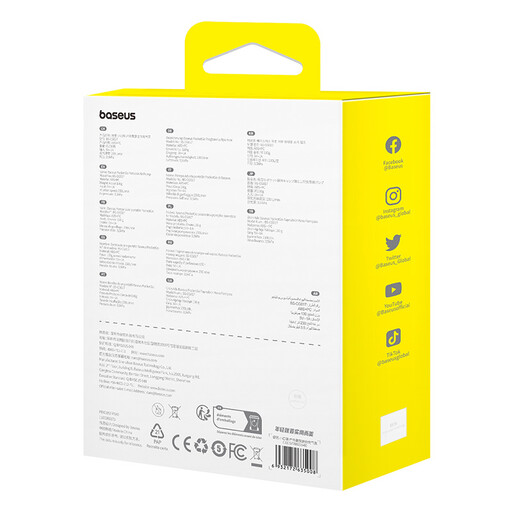
Why this product suits this user: At around 130 g, with a stated airflow of 230 L/min, this compact model is designed for easy transport and occasional top-ups.
Its low weight makes it easy to carry. Before buying, check whether the stated pressure of 3.5 kPa is sufficient for the tyre you intend to use it with.
Very lightweight and compact; designed for use on the go, according to the product details.

Why this product suits this user: This cordless tyre inflator offers five inflation modes, stated pressure accuracy of ±0,05 BAR and automatic shut-off when it reaches the set pressure.
The modes for cars, motorbikes, bicycles, balls and custom settings help reduce user error. The battery needs to be charged via USB-C before use.
19-cylinder design, five operating modes and supplied nozzles for different uses.
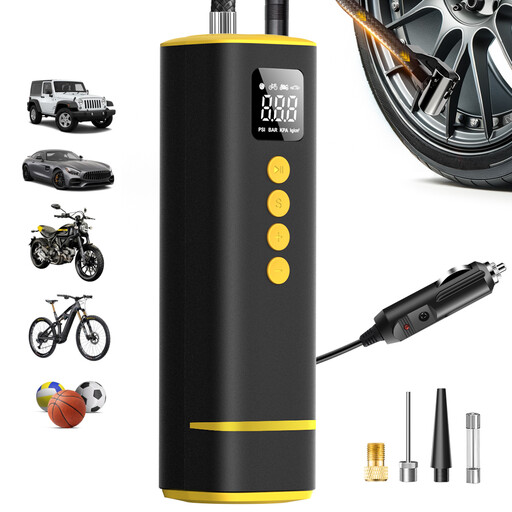
Why this product suits this user: This portable, corded compressor runs from a 12-volt socket and, according to the product details, has an extended power cable for car, motorbike and bicycle tyres.
Mains power means you don’t have to rely on a charged battery. Before longer periods of use, however, check the guidance on cooling time and the load capacity of the 12-volt socket.
Maximum pressure of 150 PSI according to the product details, plus an extended cable for reaching different parts of the vehicle.
We’ve put together a complete, regularly updated list of products that meet these strict selection criteria and fully comply with the safety regulations in force in the EU.
Check your tyre pressure when the tyres are cold wherever possible, as heat can affect the reading. Set the pressure recommended by the vehicle manufacturer and attach the hose straight onto the valve. If a tyre is completely flat, first check for any visible damage. An inflator is no substitute for a repair.
To help your inflator last longer:
The correct pressure depends on the vehicle, tyre size and load. Always follow the vehicle manufacturer’s guidance on the door frame, inside the fuel flap or in the owner’s manual. The maximum pressure shown on the tyre sidewall is not automatically the recommended pressure for driving.
It depends on the battery capacity, tyre pressure, outside temperature and length of use. Product details often give an approximate runtime or the number of tyres the pump can inflate. Make sure the pump is fully charged before a long journey. If you regularly inflate several car tyres, a 12-volt model may be a better choice.
A 12-volt compressor draws power from the vehicle’s socket while it’s running. Follow the manufacturer’s guidance on whether to keep the engine running, to avoid unnecessarily draining the starter battery. Battery-powered models draw power from a USB charger or mains adapter while charging. Running costs are usually low; charging time and battery life are more important considerations.