
Lieferung heute & morgen

Qualitätsgarantie

Willkommens-Angebote freischalten: KOSTENLOSE Lieferung | Bis zu 80 % RABATT | Kostenlose 30-Tage-JoyPlus-Testphase
App herunterladen
Acquiring a high-end espresso machine is often just the first step on the journey to excellent coffee. However, that excitement can quickly turn to disappointment when the result in your cup fails to impress—despite using expensive beans. Often, the problem isn't the machine itself, but the accessories. Many coffee enthusiasts invest in equipment that shines with marketing promises but suffers from fundamental functional flaws.
Two common pitfalls, in particular, lead to frustration and unnecessary expense:
This guide will show you which technical parameters truly matter when buying barista accessories and how to find the right tools for your needs.
To noticeably improve the quality of your coffee, you should focus on a few crucial technical features. These form the foundation for reproducible, high-quality results.
The most important component for good espresso is freshly and uniformly ground coffee. A high-quality manual coffee grinder or electric model is distinguished not just by its burr material, but above all, by its stability.
Look for a dual-bearing central axle. This design prevents the burr set from wobbling during grinding and ensures a very uniform particle size distribution. Burrs made of hardened stainless steel, precision-machined using CNC technology, offer excellent durability and sharpness. Brands like TIMEMORE coffee grinder have established themselves in this area through their superior build quality.
For preparing espresso, the exact ratio of coffee grounds to the final beverage (brew ratio) is critical. A coffee scale with a timer is an indispensable tool for this. The crucial criteria are:
With portafilter accessories, it all comes down to precise fit and material. A puck screen, for example, is a fine metal disc placed on top of the tamped coffee grounds in the portafilter. It helps distribute water more evenly and reduces channelling (water channels in the coffee puck). The exact diameter is critical here—a 58.5 mm screen typically fits perfectly in professional 58 mm baskets.
Similarly, with a milk pitcher for latte art, the spout design is more important than the mere volume. A sharp, well-defined spout allows for a controlled flow of milk, which is necessary for pouring intricate patterns. Manufacturers like MHW-3BOMBER develop special spout shapes for this purpose, tailored to the needs of baristas.
Based on the quality criteria mentioned, we have compiled a selection of products suitable for different user profiles and their specific requirements.
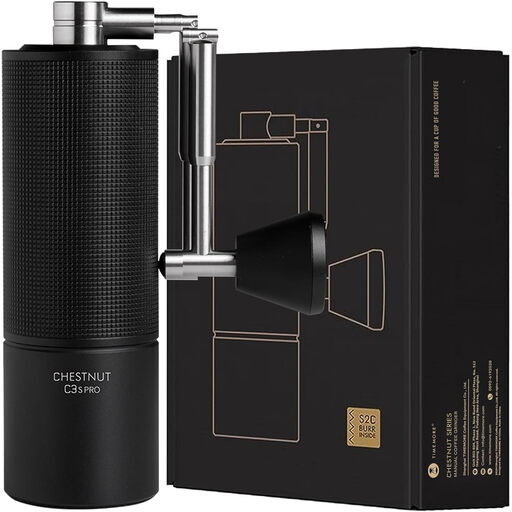
Why This Fits Their Persona: Ideal for users who want full control over their grind from the start without investing in an expensive electric grinder. The manual operation helps develop a deeper understanding of the coffee-making process.
The grinder bypasses the pitfall of unstable burrs with a robust all-metal construction and a dual-bearing central axle. This ensures a high level of grind consistency typically found only in more expensive models.
Precise grind adjustment with approx. 36 steps; CNC-machined 38 mm stainless steel burrs; compact design with a foldable handle, ideal for home and travel.
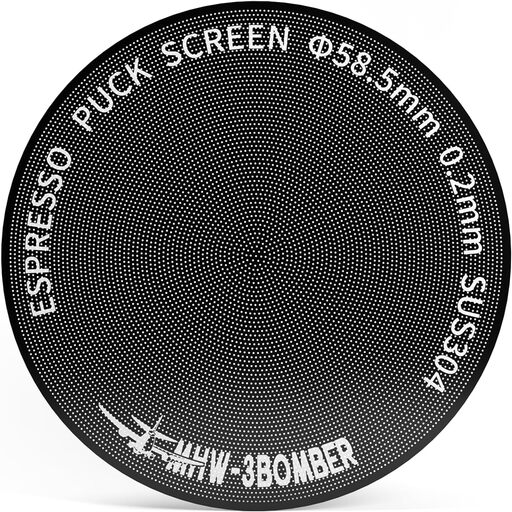
Why This Fits Their Persona: For users looking to optimise the extraction process and eliminate channelling. This tool is a small but effective upgrade for a visibly better and more even extraction.
Standard accessories often overlook the subtleties of water distribution. This ultra-thin screen solves the problem at its source by homogenising the water flow across the entire surface of the coffee puck.
Only 0.2 mm thick, so the coffee dose doesn't need to be adjusted; promotes even extraction and keeps the brew group clean; made from durable, titanium-coated stainless steel.
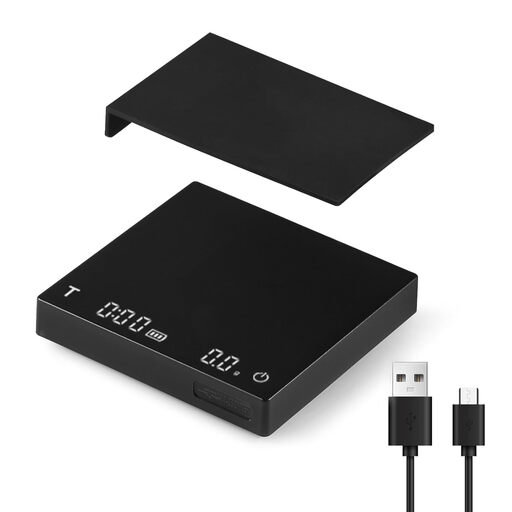
Why This Fits Their Persona: Perfect for users who appreciate an optimised, data-driven workflow. Smart features like auto-timing and high precision support a modern, efficient brewing process.
This scale solves the problem of inaccurate and slow measurements. With 0.1g precision and a smart auto-timing function that starts the timer upon liquid contact, it eliminates the most common sources of error in weighing.
0.1 g accuracy and a measuring range up to 2000 g; auto-timing function; compact design that fits on most espresso machines; rechargeable battery via USB-C.
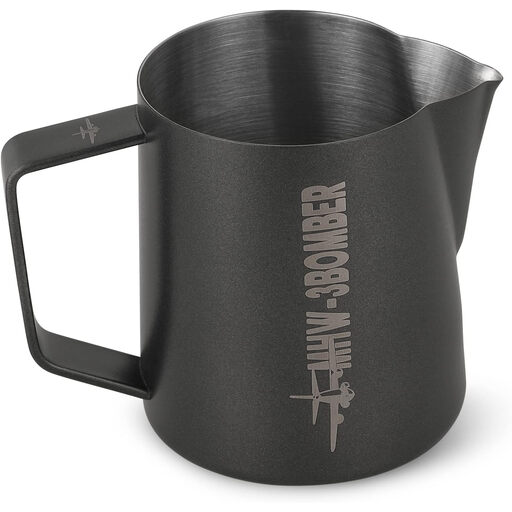
Why This Fits Their Persona: Designed for anyone looking to improve their latte art skills. The pitcher provides the necessary control to progress from simple hearts to more complex patterns like rosettas.
It bypasses the trap of poorly designed standard milk pitchers. The patented spout design allows for a precise and controlled milk flow, which is essential for pouring detailed patterns.
Patented 'crocodile' spout design for high pouring control; made from food-grade 304 stainless steel; ergonomic handle for various grip techniques.
We have compiled a complete, up-to-date list of products that fully meet these strict selection criteria and German safety regulations.
1. How often should I clean my coffee grinder's burrs? To maintain consistent flavour quality, it is recommended to clean the burrs every one to two weeks to remove old coffee oils and fine particles. On many manual grinders, the burr set can be easily disassembled for this purpose and cleaned dry with a brush. Avoid cleaning with water to prevent corrosion.
2. Is a puck screen really worth it for my portafilter? For espresso enthusiasts aiming for maximum consistency, a puck screen is a worthwhile investment. It improves water distribution, reduces channelling, and leads to a higher, more even extraction. A positive side effect is that the machine's brew group stays cleaner, reducing cleaning effort.
3. What size milk pitcher is suitable for a beginner? For home use, a milk pitcher with a volume between 350 ml and 500 ml is ideal. A 350 ml pitcher is well-suited for a single cappuccino, while a 500 ml model provides enough volume for two cappuccinos or a large latte macchiato. The larger version also gives beginners a bit more room for error when frothing milk.