
Lieferung heute & morgen

Qualitätsgarantie

Willkommens-Angebote freischalten: KOSTENLOSE Lieferung | Bis zu 80 % RABATT | Kostenlose 30-Tage-JoyPlus-Testphase
App herunterladen
The search for the right facial sunscreen can quickly become complex. The market is vast, and marketing claims don't make the decision any easier. However, daily sun protection is a fundamental step in any skincare routine to protect the skin from UV-induced aging and damage. This guide will help you identify the key features and avoid common purchasing pitfalls, so you can find a product that truly fits your needs.
One of the most common misconceptions concerns water resistance. A product labelled "water-resistant" does not offer unlimited protection while swimming or sweating. The protective effect is time-limited and requires regular reapplication. Another common pitfall is focusing solely on a high Sun Protection Factor (SPF). While SPF indicates protection against UVB rays, protection from UVA rays, which penetrate deeper into the skin and contribute to skin aging, is equally important.
To make an informed decision, you should consider three core parameters. These will help you objectively evaluate the performance and suitability of a facial sunscreen.
Effective sun protection must offer broad-spectrum coverage, shielding against both UVB and UVA rays.
The texture and ingredients are crucial for comfort and skin compatibility. An unsuitable formulation will rarely be used daily.
Modern sunscreens often offer more than just UV protection. A tinted sunscreen can even out minor imperfections and serve as a base for makeup. Products with antioxidants like Vitamin C or E provide additional protection against environmental stressors.
Based on objective product features, we have compiled some options for different requirements.
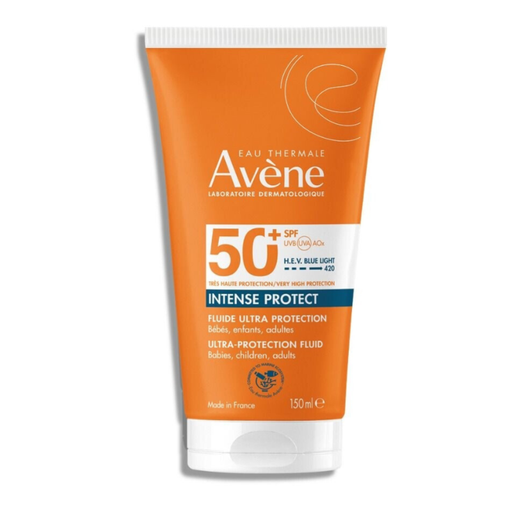
Why this product is a good fit: The formulation was specifically developed for sensitive skin and, according to the manufacturer, is also suitable for babies from 6 months, pregnant women, and after dermatological procedures. It offers very high broad-spectrum protection that also covers high-energy visible (HEV) blue light.
The product avoids the risk of potential irritation by being free of fragrances and silicones, and by using a reduced number of sun filters.
According to the manufacturer, the lightweight fluid texture absorbs in three seconds, provides up to eight hours of hydration, and leaves no white cast.
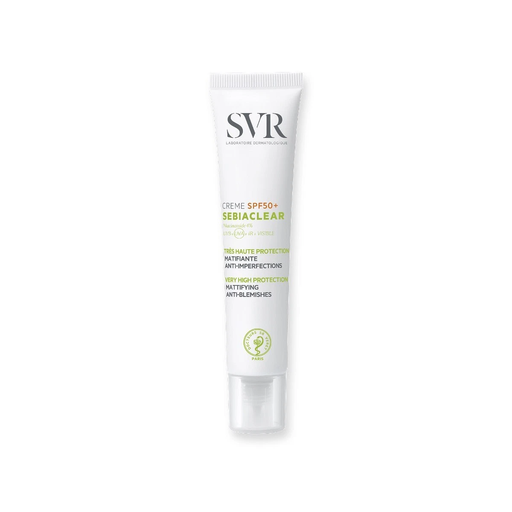
Why this product is a good fit: This cream is specifically designed for oily and acne-prone skin. It combines high UV protection with sebum-regulating and anti-inflammatory active ingredients like niacinamide and azelaic acid to reduce shine and blemishes.
The non-comedogenic and lightweight formulation avoids clogging pores and the heavy, greasy feeling that many sunscreens leave on oily skin.
The product offers a matte finish and is water-resistant, making it a practical option for daily use and sports activities.
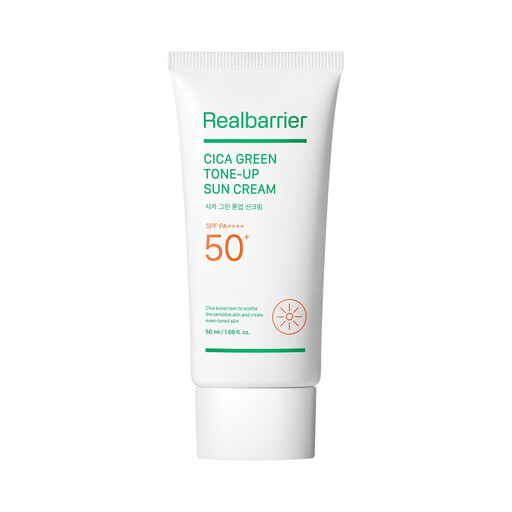
Why this product is a good fit: This Korean sunscreen combines very high UV protection (SPF 50+ PA++++) with a colour-correcting function. The subtle green tint helps to visually neutralise redness and creates a more even complexion.
Instead of leaving a visible white cast, the cream uses its green tint to balance out redness, making it an excellent makeup primer.
The formulation contains Centella Asiatica extract (Cica), known for its skin-soothing properties, as well as MLE technology to strengthen the skin barrier.
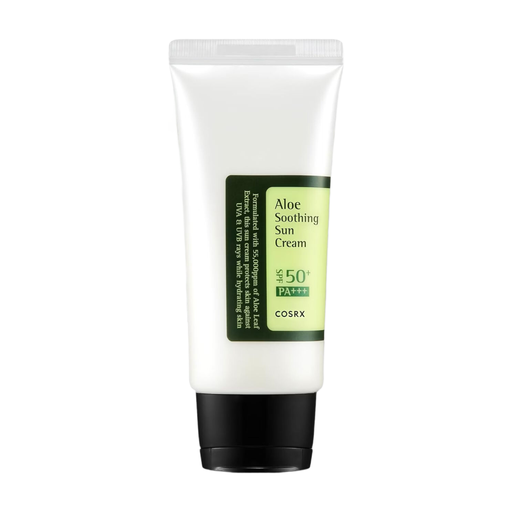
Why this product is a good fit: This sunscreen is enriched with aloe vera extract, an ingredient known for its moisturising and soothing properties. It is well-suited for skin that is prone to dryness and needs an extra dose of nourishment.
Unlike some sunscreens that can dry out the skin, this cream provides intense hydration without leaving a greasy feeling.
The lightweight texture absorbs quickly without leaving a white film and is suitable for all skin types according to the manufacturer, making it a versatile product.
We have compiled a complete, up-to-date list of products that fully meet these strict selection criteria and German safety regulations.
1. How much sunscreen should you use on your face? For sufficient protection on the face and neck, the "two-finger rule" is often recommended. This involves applying two strips of sunscreen to your index and middle fingers. Using too little significantly reduces the level of protection.
2. Can facial sunscreen replace a daily moisturiser? This depends on the product and your skin type. Many modern sunscreens, especially those for dry skin, are formulated with nourishing and moisturising ingredients and can function as a daily moisturiser with SPF. For very dry skin, it may still be beneficial to apply a moisturiser first, followed by the sunscreen.
3. What is the difference between chemical and mineral filters? Chemical (or organic) filters absorb UV radiation and convert it into heat. They are often found in lightweight, transparent formulations. Mineral (or inorganic) filters like zinc oxide and titanium dioxide work primarily by reflecting and scattering UV rays. They are considered very well-tolerated and are particularly suitable for sensitive skin, but some formulations may leave a slight white cast.