
Lieferung heute & morgen

Qualitätsgarantie

Willkommens-Angebote freischalten: KOSTENLOSE Lieferung | Bis zu 80 % RABATT | Kostenlose 30-Tage-JoyPlus-Testphase
App herunterladen
The search for the right facial sunscreen can be overwhelming. Many products promise high protection but leave behind a greasy film, a visible white cast, or feel heavy on the skin. The result: sunscreen is applied irregularly, if at all, compromising the skin's protection.
This guide will help you avoid the common pitfalls of buying sunscreen and make an informed decision. We focus on the objective criteria that truly matter for daily use, so you can find a sunscreen that integrates seamlessly into your skincare routine.
To make the right choice, you should focus on a few crucial technical features. These determine the protective effect, comfort on the skin, and skin compatibility.
The Sun Protection Factor (SPF) indicates how well a product protects against UVB rays, which are responsible for sunburn. An SPF 50 facial sunscreen already offers a high level of protection. However, protection against UVA rays is just as important, as they penetrate deeper into the skin and are a major contributor to premature skin aging and the development of dark spots.
Look for products labelled as broad-spectrum protection. In the EU, adequate UVA protection is indicated by a UVA logo (letters in a circle) on the packaging. This ensures that the UVA protection is at least one-third of the stated SPF.
The product name often gives a clue about the texture and the resulting feel on the skin. Choosing the right formulation is crucial for comfort in daily use.
Modern formulations often combine different filter types to ensure high protection with a pleasant feel.
Here are some recommendations tailored to different skin needs and application preferences.
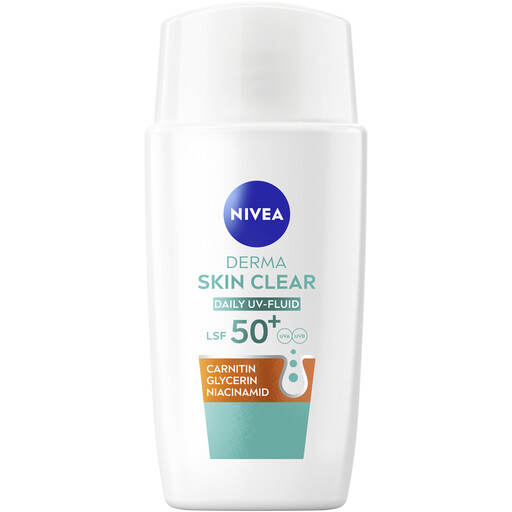
Why This Fits Their Persona: This formula is specifically designed for blemish-prone skin. It combines high sun protection with sebum-regulating ingredients and is ideal for anyone struggling with shine and clogged pores.
The ultra-light, non-comedogenic formula avoids the heavy, pore-clogging feel of unsuitable sunscreens. It absorbs instantly, leaving a mattified finish instead of a greasy film.
Provides an 8-hour mattifying effect and contains niacinamide and salicylic acid to control blemishes. Ideal as a makeup base.
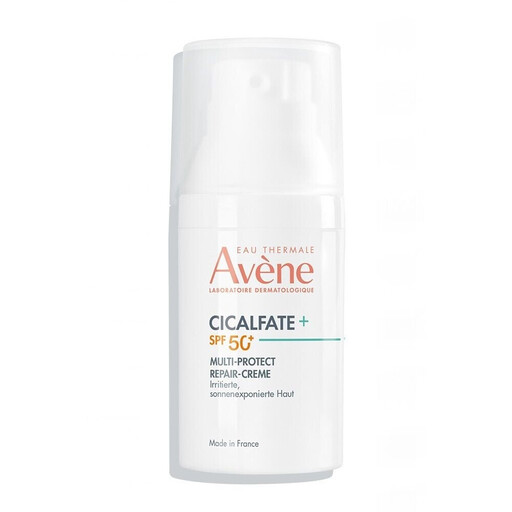
Why This Fits Their Persona: Perfect for skin that is weakened, irritated, or in need of care after dermatological treatments. It combines high protection with active regeneration and soothing.
The fragrance-free, alcohol-free, and silicone-free formula minimises the risk of irritation that can be triggered by unsuitable ingredients in conventional sunscreens on sensitive skin.
Combines very high broad-spectrum protection (SPF50+) with the postbiotic active ingredient C+-Restore, which supports the skin's natural repair process. Non-greasy texture for face and body.
We have compiled a complete, up-to-date list of products that fully meet these strict selection criteria and EU regulations.
1. How much sunscreen is needed for the face? A common recommendation is the "two-finger rule": apply two strips of sunscreen to your index and middle fingers. This amount is generally sufficient for the face and neck to achieve the SPF stated on the packaging. Applying too little significantly reduces the level of protection.
2. Does a day cream with SPF replace a sunscreen? For everyday office life or on days with low sun exposure, a day cream with SPF may be sufficient. However, for extended periods outdoors, a dedicated facial sunscreen is preferable. The reason: people tend to apply less of a day cream than a sunscreen, meaning the stated protection is often not achieved. Additionally, dedicated sunscreens usually offer higher and more stable broad-spectrum protection.
3. Do I need to apply sunscreen on cloudy days or in winter? Yes. Up to 80% of UV radiation can penetrate clouds. UVA rays, in particular, are present at a constant level throughout the year and can also pass through window glass. Since they are a major contributor to skin aging, daily broad-spectrum protection is fundamental to maintaining long-term skin health.