
Lieferung heute & morgen

Qualitätsgarantie

Willkommens-Angebote freischalten: KOSTENLOSE Lieferung | Bis zu 80 % RABATT | Kostenlose 30-Tage-JoyPlus-Testphase
App herunterladen
Finding games and puzzles for children and families may seem straightforward at first. However, the range includes very different products: logic games for children, educational games, board games, magnetic building blocks and children's puzzles are designed for different age groups and play situations. A good buying decision therefore depends less on eye-catching marketing claims and more on specific details such as the recommended age, number of players, materials and storage options.
A game for children aged 6 and over may be too complex for a younger child. Conversely, an older child can quickly lose interest in a puzzle or brainteaser that is too simple. Alongside the recommended age, the number and size of the pieces, reading ability and whether adult support is required are also important.
For young children aged 2 and over, choose particularly large, easy-to-grip puzzle pieces with clear designs. Products containing small parts or magnets should not be given to children under 3.
Terms such as educational game, thinking game or brain training often describe a product's focus, but they are not a substitute for technical details. Check whether the game really suits the intended situation: solo play, playing together with two people, a larger family group or creative play without fixed rules.
A game may look compact but consist of many loosely packaged pieces. For travel, waiting times or holidays, a secure fastening, box or storage bag is useful. With magnetic building blocks, you should also check that all magnets are securely enclosed and that damaged pieces can be removed immediately.
Pay attention to the manufacturer's official age recommendation. For families with children aged 2 and over, first children's puzzles with a small number of sturdy pieces are suitable. From around the age of 6, logic games, simple strategy games and board games with manageable rules may be considered. Teenagers and adults may enjoy a 1000-piece puzzle, more challenging brainteasers or more complex thinking games.
The number of players is also a key consideration:
For plastic toys, smooth edges, clear material information and sound construction are important. With magnetic building blocks, the magnets should be completely enclosed. Swallowed strong magnets can cause serious injuries. Damaged pieces should therefore no longer be used, and products containing magnets should be stored out of the reach of young children.
For games with wooden or plastic pieces, also pay attention to information about small parts and the supervision required. The CE marking is an important indication of European product conformity, but it does not replace checking the specific warnings on the packaging.
A 100-piece children's puzzle requires less space and time than a 1000-piece puzzle for adults. When buying, consider where the game will be played and how the product will be stored afterwards. Magnetic construction toys with 30 pieces are suitable for creating first shapes; sets with 120 pieces allow more complex patterns but require better organisation and supervision.
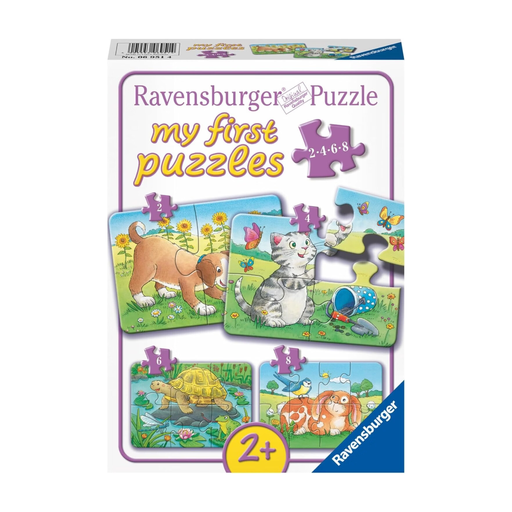
Why this product suits this profile: Four puzzles with increasing levels of difficulty and everyday designs give children aged 2 and over an accessible introduction.
The age recommendation and number of pieces are clearly stated. This reduces the risk of buying a puzzle that is too challenging for a first attempt.
Four designs, sturdy cardboard pieces and a format suitable for solo or shared play.
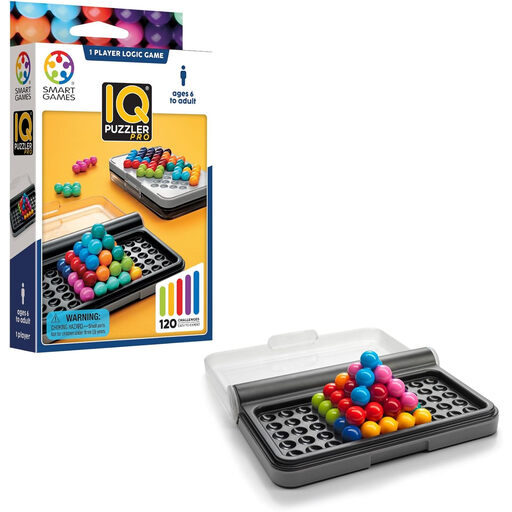
Why this product suits this profile: Children aged 6 and over get a single, compact logic game with 120 challenges across several game modes.
Instead of a vague description as an educational game, the supplier specifies the number of challenges, game modes, materials and number of players.
Solo play, 120 challenges, two- and three-dimensional tasks, plus compact dimensions.
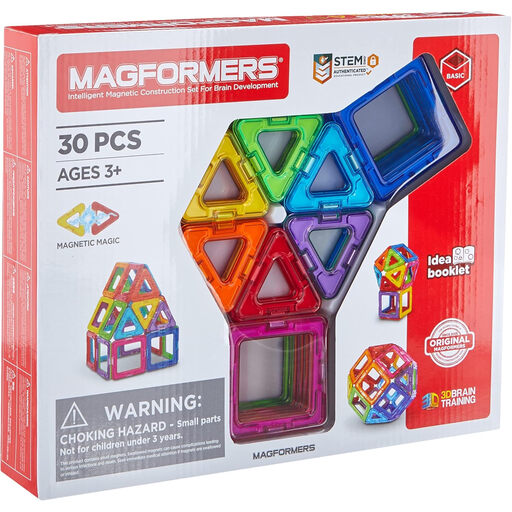
Why this product suits this profile: The set with 30 magnetic building pieces is suitable for children aged 3 and over who want to build their own shapes and constructions again and again.
The number of pieces, materials and warning about strong magnets are specified. Nevertheless, damaged pieces should be checked regularly.
30 pieces, no batteries, 2D and 3D constructions, and reusable play options.
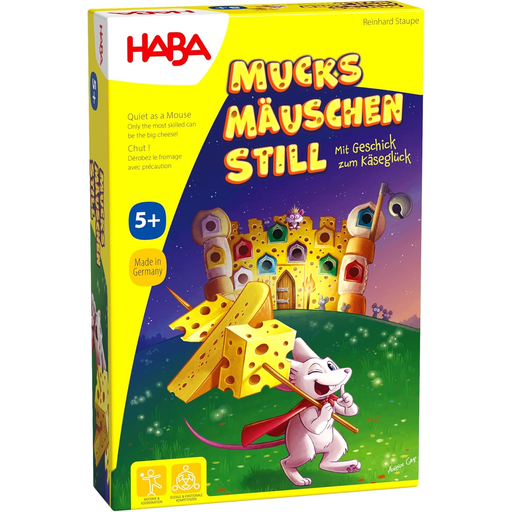
Why this product suits this profile: This dexterity game for 2 to 4 players aged 5 and over can be played without batteries and is designed for short, sociable rounds.
The number of players, age, materials and gameplay are described in specific terms. This makes it easier to assess whether it is suitable for your family game night.
Wood and paper materials, 2 to 4 players, and a game mechanic with a direct, easy-to-understand challenge.
We have put together a complete, regularly updated list of products that fully meet these strict selection criteria and the safety regulations applicable in the EU.
For evenings spent playing together, family board games such as “Noch mal!” or a game collection with several variations are practical choices. If you are looking for a game for train journeys and holidays, look for compact children's travel games with only a few loose pieces. Magnetic building blocks and other construction toys are ideal for creative play.
A 1000-piece puzzle is generally aimed at teenagers and adults. Alongside the design, consider the distribution of colours, piece quality and the available working surface. For children aged 6 and over, a 100-piece children's puzzle with a poster may be a more appropriate challenge.
Simple children's puzzles with large, sturdy pieces and a small number of designs are suitable. Check the age recommendation and the information about small parts. Games with small pieces, strong magnets or complicated rules should not be chosen for this age group.
Lifespan depends on the materials, storage and how the product is used. Cardboard pieces last longer when stored in a dry place and not kept permanently bent. With magnetic building blocks, parents should regularly check for cracks, loose parts or visible magnets. Damaged components should be removed from use.
Compact solo logic games, magnetic games with a storage box and portable guessing games take up little space. For longer journeys, children's travel games with short rounds are also a sensible choice. Before buying, check the packed size, number of pieces and whether the product can be stored safely.