
Lieferung heute & morgen

Qualitätsgarantie

Willkommens-Angebote freischalten: KOSTENLOSE Lieferung | Bis zu 80 % RABATT | Kostenlose 30-Tage-JoyPlus-Testphase
App herunterladen
Rising temperatures and stuffy air in your home or office can significantly impact your concentration and well-being. The right fan provides pleasant air circulation and a cooling effect. However, the selection of models is vast, and the technical differences are not always obvious at first glance.
As your Joybuy Product Recommendation Officer, I've made it my mission to filter through market information and offer you objective guidance. This guide will help you understand the different types of fans and make an informed decision that meets your specific needs for cooling, noise level, and convenience.
To find the right device for your needs, it's helpful to compare a few basic features. The following points provide a framework for your purchasing decision.
The choice of fan type largely depends on the available space and the intended use.
For daily use, ease of operation and noise level are crucial factors.
A single, rigid stream of air is often less pleasant than a uniformly distributed breeze.
Based on the criteria above, we have compiled a selection of models that cover different requirements and applications.
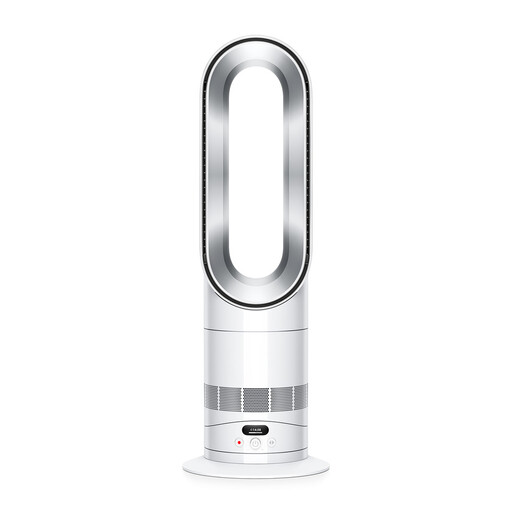
Why this model stands out: The Dyson Hot+Cool HF1 is a multi-function device that combines cooling and heating in a single, bladeless design. Thanks to its year-round usability and advanced airflow technology, it's more than just a seasonal helper.
Pros:
Who is this model for? For users looking for a premium, year-round device who value modern design, safety (due to the bladeless design), and multi-functional features for living spaces or offices.
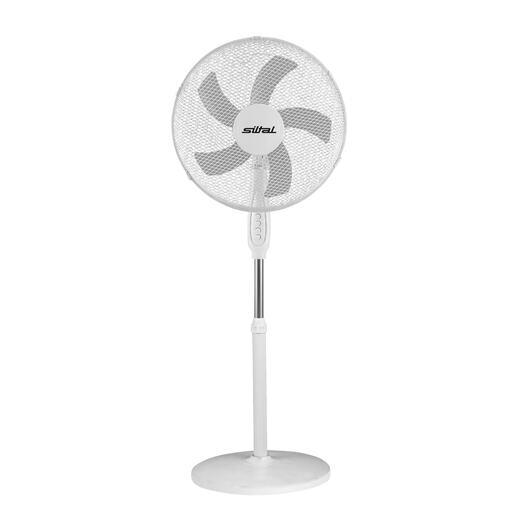
Why this model stands out: The Siltal FS40-2 is a classic pedestal fan that focuses on essential functions. It offers solid cooling performance and simple operation at an accessible price.
Pros:
Who is this model for? For budget-conscious buyers who need a straightforward and reliable cooling solution for medium to large rooms like living rooms, workshops, or shared offices.
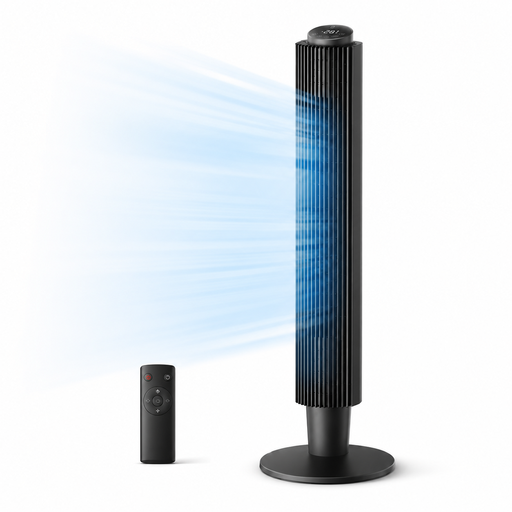
Why this model stands out: This tower fan combines a slim, space-saving design with a variety of convenience features. Its flexible settings and quiet operation make it a versatile companion for everyday life.
Pros:
Who is this model for? Ideal for users looking for a quiet fan for the bedroom or an unobtrusive fan for the home office. Its combination of quiet operation, remote control, and space-saving design fits well into modern living and working environments.
The models presented here cover common use cases. However, if you are looking for other types, designs, or specific features, it's worth taking a look at our extended range.
Discover a wider selection of models in our Air Circulation Fans category.
1. What is the difference between a pedestal fan and a tower fan? A pedestal fan has a large, round rotor head and generates a powerful, concentrated airflow. It is often more powerful but requires more space. A tower fan is tall and slim, draws air in from the side, and blows it out through an elongated opening. It is more space-saving, often quieter, and distributes air vertically, which many find more pleasant.
2. How important is the noise level for a bedroom fan? The noise level is a very important factor for use in the bedroom. People sensitive to noise should choose a model with a noise level below 50 dB on its lowest setting. A special sleep mode that reduces the speed and thus the noise overnight can further enhance sleep comfort.
3. Do I need a fan with a remote control? A remote control is not a must-have, but it is a significant convenience feature. It allows you to adjust the speed, turn oscillation on or off, or activate the timer without having to get up. This is especially practical when the fan is placed in the bedroom or across the living room.