
Lieferung heute & morgen

Qualitätsgarantie

Willkommens-Angebote freischalten: KOSTENLOSE Lieferung | Bis zu 80 % RABATT | Kostenlose 30-Tage-JoyPlus-Testphase
App herunterladen
Finding a bike that can handle both the daily city commute and spontaneous off-road adventures can be a challenge. Conventional bikes often reach their limits, especially when space is tight and the paths aren't always perfectly paved. A fat tire e-bike combines the robustness of wide tires with the assistance of an electric motor, offering a versatile solution for commuters and adventurers alike.
This article serves as your guide. We will introduce various models and explain the key technical features to consider, helping you make an informed decision.
Technical spec sheets can seem overwhelming at first glance. To find the right model for your needs, focus on the following three key areas.
In Germany, e-bikes that assist the rider up to a speed of 25 km/h and do not exceed a nominal continuous power of 250W are classified as Pedelecs. You do not need a license or insurance for these. The battery capacity, measured in amp-hours (Ah) or watt-hours (Wh), is crucial for achieving an extensive e-bike range. For example, a 48V 15Ah battery provides 720Wh of energy. However, the actual range depends on factors like the level of assistance, terrain, rider weight, and outside temperature.
The characteristic fat tires of these bikes, often in a 20-inch format, offer several advantages: they increase stability on loose surfaces like gravel or forest paths and improve ride comfort by absorbing bumps. A folding e-bike is particularly practical for commuters who take their bike on public transport or for campers who want to stow it in their motorhome to save space. Look for a sturdy and easy-to-use folding mechanism.
An all-terrain e-bike should be equipped with reliable brakes. Hydraulic disc brakes generally offer stronger and more precise braking power than mechanical disc brakes, especially in wet conditions. A suspension fork, or even a full suspension system (front and rear), absorbs shocks and ensures a smoother ride on uneven trails, significantly enhancing comfort and control.
Based on the criteria above, we have curated a selection of models that are well-suited for different user profiles due to their specific features.
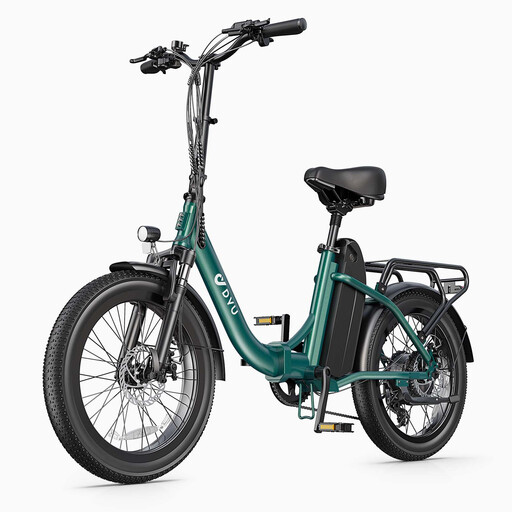
Why it stands out: The DYU C9 is a prime example of a compact folding e-bike. It focuses on portability and urban mobility without sacrificing the benefits of a fat tire bike.
Advantages:
Who is it for? Ideal for urban dwellers and commuters looking for a practical, space-saving, yet robust e-bike for daily use. It's perfectly suited for combining with public transportation.
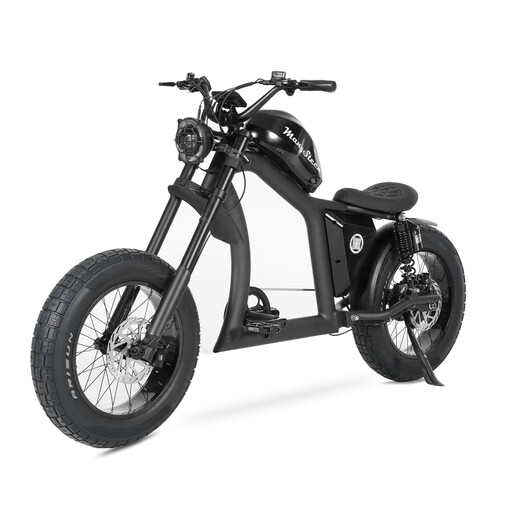
Why it stands out: The Mangosteen FT02 is engineered for comfort and performance. With its dual suspension and hydraulic disc brakes, it's designed for more demanding routes and long tours.
Advantages:
Who is it for? Riders who prioritize maximum comfort and an extensive e-bike range. It's a great choice for long weekend tours, trips into light terrain, and for anyone who values an exceptionally stable and comfortable ride.
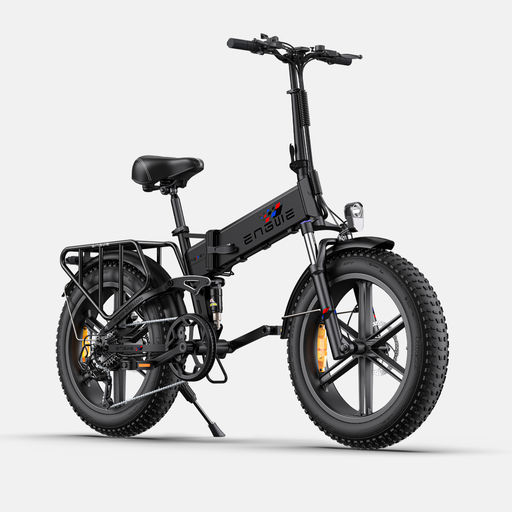
Why it stands out: The Engwe Engine X combines the benefits of a folding mechanism with the off-road capability of a full-suspension fat bike. It's an all-rounder that merges flexibility and performance.
Advantages:
Who is it for? Perfect for users who don't want to compromise. It's ideal for campers, motorhome owners, and commuters who need a versatile all-terrain e-bike that can be made compact when needed.
The models presented here already cover a wide spectrum. However, if you haven't found the perfect bike for your individual needs yet, it's worth taking a look at our entire range.
? Discover More Fat Tire Electric Bike Models Here
The main advantage lies in their versatility. The wide tires provide excellent traction and stability on various surfaces like sand, snow, gravel, or cobblestones. At the same time, the tires act as a natural suspension, increasing ride comfort. The electric motor compensates for the higher weight of the wheels and makes riding easier, especially on inclines.
Yes, as long as they meet the criteria for a Pedelec (Pedal Electric Cycle), they are treated the same as regular bicycles on German roads. This means the motor must have a maximum nominal continuous power of 250 watts and the pedal assistance must only be active up to a speed of 25 km/h. A start-up assist without pedaling is permitted up to 6 km/h. There is no helmet, insurance, or license requirement for such models.
The range varies greatly and depends on the battery capacity (in Wh), the selected assistance level, the terrain (flat or hilly), rider weight, tire pressure, and the outside temperature. Realistic ranges typically fall between 40 and 100 kilometers, depending on the model and conditions. Models with larger batteries (e.g., over 700 Wh) can also support longer tours.