
Lieferung heute & morgen

Qualitätsgarantie
App herunterladen
Kategorien
Hard water, defined by a high concentration of dissolved minerals like calcium and magnesium, is a common reality in many households. The consequences are often visible: limescale deposits on fixtures, increased consumption of cleaning agents, and a potentially tangible impact on skin and hair. A filtered shower head represents a technical solution for modifying water quality directly at the point of use. This article analyses their operating principles, crucial selection criteria, and presents a selection of models based on their technical specifications.
Selecting a suitable model is based on an analysis of four core components: the filtration system, the shower head's material, water flow regulation, and compatibility with existing connections.
The core component of a filtered shower head is its filter cartridge. Various materials are used to reduce specific substances in the water:
A multi-stage filter system that combines several of these materials typically offers more comprehensive filtration performance. This is especially relevant for a shower head for hard water, as it not only mechanically filters limescale particles but also modifies the water's chemical composition.
The durability of a shower head largely depends on the material used. ABS plastic (Acrylonitrile Butadiene Styrene) is a commonly used material known for its high impact resistance and temperature stability. A high-quality chrome plating or polished finish provides additional protection against corrosion and simplifies cleaning. Anti-limescale silicone nozzles prevent the jets from clogging quickly and allow for easy removal of deposits.
A water-saving shower head reduces water consumption without compromising on perceived water pressure. This is often achieved by constricting the water flow in combination with a special nozzle geometry. Smaller, more densely arranged nozzles accelerate the exiting water, which is perceived as a high-pressure shower head. Models that enable water savings of up to 30% can contribute to reducing running costs. Such an eco-shower head is therefore an economically and ecologically sound component for the household.
Most modern shower heads offer multiple spray modes (e.g., Rain, Massage, Jet). The choice is a matter of personal preference. Technically relevant is the compatibility: The standardized G1/2-inch connection is used almost universally, ensuring a simple and tool-free installation on any standard shower hose.
The following products have been selected based on their technical data and range of features.
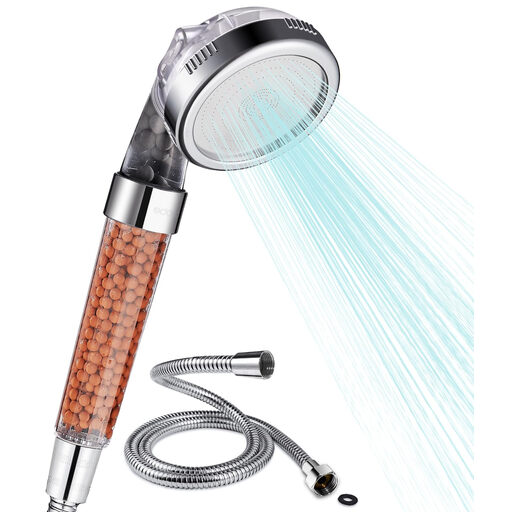
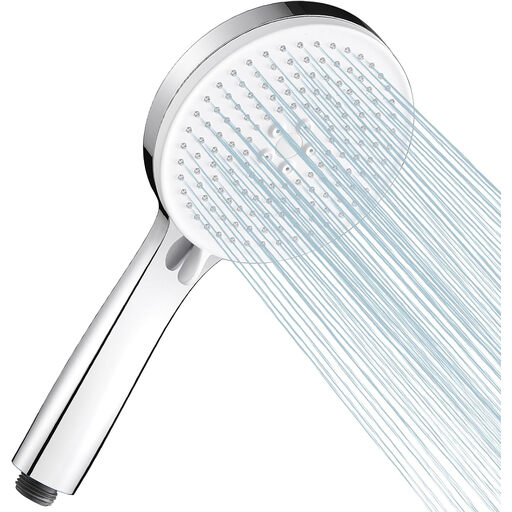
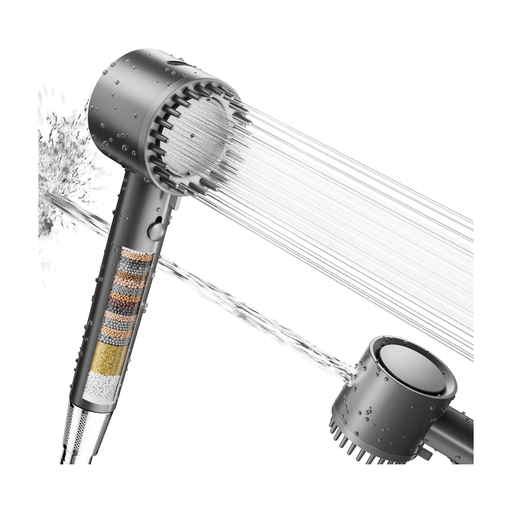
Should the featured models not precisely meet your requirements, or if you are looking for specific accessories like replacement filters or longer hoses, a broader selection of components offers further possibilities. You can find an overview of compatible products in our Hoses and Fittings category.
1. How often does the filter in a shower head need to be replaced? The lifespan of a filter cartridge depends on water hardness and frequency of use. As a general guideline, replacement every 3 to 6 months is recommended. However, you should always refer to the manufacturer's specific guidelines for the respective product.
2. Can a filtered shower head actually increase water pressure? A filter shower head cannot increase the water pressure in your plumbing system. However, by reducing the size of the nozzle openings, the water is accelerated. This effect is subjectively perceived as higher pressure, even though the volume of water flowing through may remain the same or even be reduced.
3. What is the technical difference between a water-saving shower head and a standard model? A water-saving shower head is engineered to reduce the water flow rate (l/min) compared to a standard model. This is achieved through technical adjustments such as an integrated flow limiter or an optimised nozzle arrangement that creates a satisfying shower experience with less water.