
Lieferung heute & morgen

Qualitätsgarantie

Willkommens-Angebote freischalten: KOSTENLOSE Lieferung | Bis zu 80 % RABATT | Kostenlose 30-Tage-JoyPlus-Testphase
App herunterladen
As a Joybuy Product Recommendation Officer, I see every day how challenging it can be to choose the right writing instrument. An unsuitable fineliner set can lead to smudged notes, inconsistent drawings, or ink that bleeds through the page. The goal of this article is to give you clear guidance. We will introduce different types of pens and analyse their features so you can make an informed decision for your specific needs—whether for the office, university, or creative projects.
The selection is vast, but a few criteria are crucial for product satisfaction. Here are three key points to help you choose.
The pen tip largely defines the character of your lines. Pens with different tips in one set offer flexibility for various tasks.
A set that combines several of these options is a particularly worthwhile investment for creative users and individuals with diverse requirements.
The ink is the heart of any pen. The choice between gel and pigment ink depends heavily on the intended use.
Define the primary purpose before you buy.
Based on the criteria above, we have compiled a selection of products that cater to different needs.

What makes it stand out: This set combines functionality with an appealing design. Its special feature is the thermo-sensitive, erasable gel ink. Mistakes can be removed by friction with the integrated eraser at the end of the pen, leaving no residue. The matte, soft surface of the pen body provides a comfortable feel.
Pros:
Who it's for: This set is a great choice for pupils, students, and anyone who likes to keep their notes and planners tidy and error-free. It also makes for a practical gift.
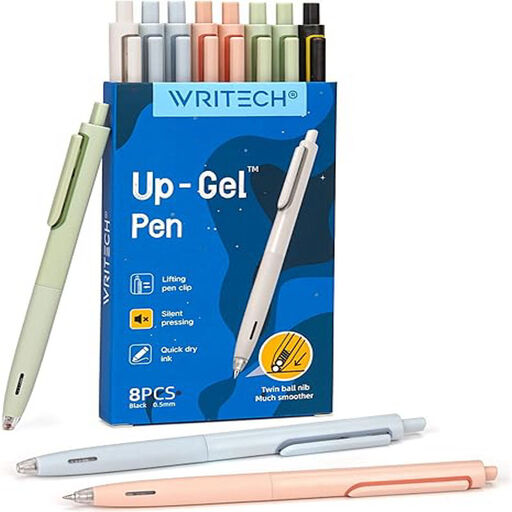
What makes it stand out: The WRITECH gel pens are designed for precision and a quiet work environment. A patented, silent click mechanism prevents distracting noises. The quick-drying ink formula minimises smudging, which is particularly beneficial for left-handers.
Pros:
Who it's for: Perfect for office workers, students, and anyone who values fine lines, fast drying, and silent operation. Especially suitable as pens for journaling and detailed note-taking.
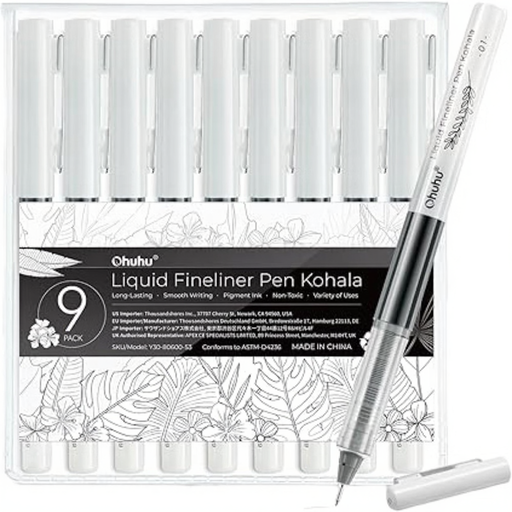
What makes it stand out: This fineliner set is clearly geared towards the needs of artists and illustrators. It includes 9 pens with a wide range of tip sizes, from an ultra-fine 0.15 mm tip to a flexible brush tip. The black pigment ink is waterproof and alcohol-proof.
Pros:
Who it's for: This set is the top choice for illustrators, architects, designers, and hobby artists looking for a versatile and reliable set of drawing pens for sketching, technical drawings, and lettering.
The products featured already cover a broad spectrum. However, if you haven't found the right set for your individual projects yet, there are many more specialised models to discover.
For a wider selection of pens tailored to different creative and organisational needs, check out our Black Drawing Pen category.
1. What is the difference between fineliners and gel pens? The main difference lies in the ink and the tip. Fineliners typically use a dye- or pigment-based ink and have a hard, needle-like fibre tip for precise lines. Gel pens use a thicker gel ink and a ballpoint (rollerball) tip, which often results in a smoother, more gliding writing experience.
2. How do I prevent ink from bleeding through the paper? Bleed-through depends on the ink and paper quality. Pigment inks, like those in the Ohuhu set, are less prone to bleeding because the pigments remain on the surface. Additionally, using thicker paper (over 90 gsm) helps to minimise both ghosting and bleed-through.
3. Are waterproof pens really necessary? That depends on the use case. If you are archiving documents or creating artwork that will be further processed with water-based media (e.g., watercolour) or markers, waterproof pens are essential. They prevent the lines from running and dissolving when they come into contact with moisture. For everyday notes, this feature is generally not a requirement.