
Lieferung heute & morgen

Qualitätsgarantie
App herunterladen
Kategorien
A fire pit serves as a central point of warmth and attraction in any outdoor space. It allows for the safe enjoyment of an open fire during social evenings in the garden or on the patio. Choosing the right model depends on objective criteria such as material, size, shape, and safety features. This guide analyses the technical specifications to provide a solid basis for an informed decision.
The decision for a fire pit should be based on material properties, design, and safety-related features.
Most fire pits on the market are made of steel. This material offers high heat resistance and durability. The type of surface finish is crucial, as it protects the material from corrosion:
Over time, untreated steel develops a characteristic rust patina. While some users find this aesthetically pleasing, it can compromise the material's long-term integrity.
The shape of a fire pit has both aesthetic and practical implications:
The size, indicated by the diameter or side length, determines the maximum capacity for firewood and thus the potential size of the fire and its heat output.
Safety is a non-negotiable aspect when operating an open fire pit.
Some fire pits extend their utility with accessories:
Based on the technical criteria mentioned, we present three models with different strengths.
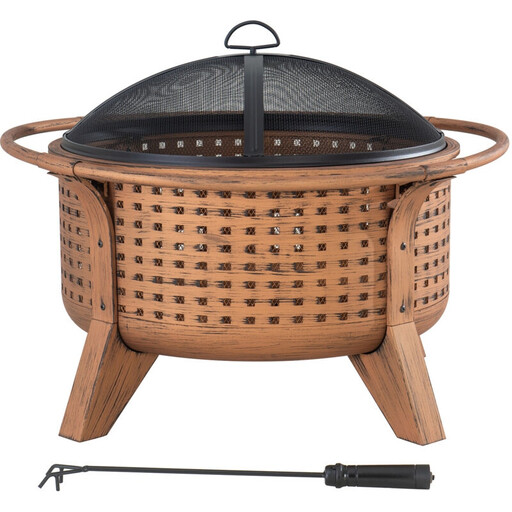
Why we recommend this product: This model stands out for its generous dimensions and deep fire bowl. With an inner diameter of 55 cm and a height of 28 cm, it holds a substantial amount of logs, ensuring a large, long-lasting fire. The lattice design makes it a decorative feature even when unlit.
Pros:
Best for: Users with larger gardens or patios who are looking for a central and high-heat fire pit for gatherings with multiple people.
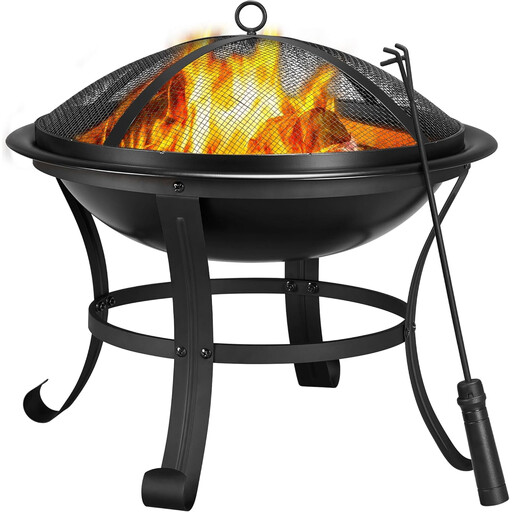
Why we recommend this product: This model's strength lies in its compactness and portability. With a net weight of just 3 kg and a diameter of 54 cm, it is easy to transport, making it suitable for camping trips or smaller outdoor spaces.
Pros:
Best for: Individuals looking for a flexible and straightforward solution for outdoor use, whether on a home patio, in a community garden, or on camping trips.
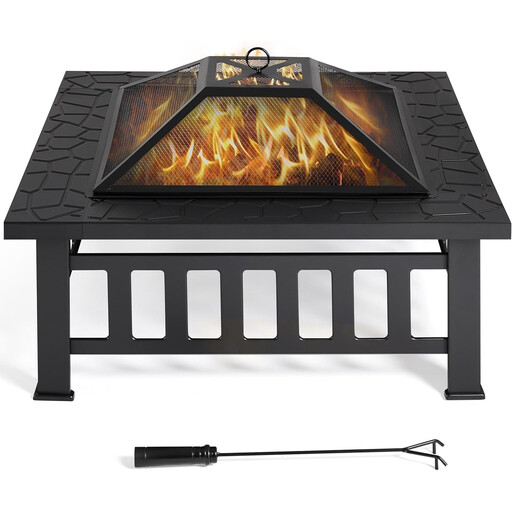
Why we recommend this product: This square model impresses with its multifunctionality and well-thought-out design. The 13 cm wide ledge serves as a practical shelf, while the included waterproof cover ensures the product's longevity.
Pros:
Best for: Homeowners looking for a stationary and versatile fire pit for their garden and patio that both provides heat and serves as a practical centrepiece.
If these suggestions don't include the right model for your specific needs, you can find a wider range of products in our main category. There, you can filter more fire pits by size, material, and features.
Discover our full range of Outdoor Garden Fire Pits here.
1. What is the difference between a fire pit and a fire basket? A fire pit (or fire bowl) is a contained, bowl-shaped structure that safely collects ash and embers. A fire basket, on the other hand, consists of slatted bars that offer a 360-degree view of the fire but may allow small embers to fall out. Fire pits are therefore often considered the safer option for sensitive surfaces.
2. What surface is suitable for a fire pit? Only place a fire pit on a fireproof, level, and stable surface. Suitable options include stone slabs, paving stones, gravel, or a sandy area. Avoid placing it on a lawn, wooden decking, or in close proximity to flammable materials such as garden furniture, plants, or buildings.
3. How do I maintain a steel fire pit? After each use, remove the completely cooled ash to prevent moisture build-up and subsequent rust formation. Clean the bowl with a dry brush. To maximise its lifespan, store the fire pit in a dry place or use a suitable, waterproof cover.