
Lieferung heute & morgen

Qualitätsgarantie

Willkommens-Angebote freischalten: KOSTENLOSE Lieferung | Bis zu 80 % RABATT | Kostenlose 30-Tage-JoyPlus-Testphase
App herunterladen
Whether it's for a family trip to the lake, hauling gear to the campsite, or tackling garden work, moving heavy and bulky items can be a chore. A foldable wagon offers a practical, space-saving solution. Unlike rigid models, it can be compactly folded after use and stored in your car boot, cellar, or cupboard.
This article serves as your guide. We'll outline key selection criteria and present a curated selection of models with diverse features to help you make an informed decision.
The market offers a vast selection of models. To find the perfect collapsible wagon for your needs, you should consider three key aspects: transport capacity, wheel type, and the folding mechanism's ease of use.
The maximum load capacity, specified in kilograms (kg), determines how much weight the wagon can safely handle. For carrying beach essentials or light shopping, models with a capacity of 70 to 100 kg are sufficient. However, if you plan to move heavy garden soil, drink crates, or extensive camping gear, a heavy-duty wagon with a load capacity of over 100 kg is a more practical choice.
The cargo volume, measured in litres (L), indicates the amount of interior space available. A large volume is beneficial for bulky items like camping chairs or tents.
The wheels are crucial for a smooth ride across different surfaces.
A key advantage of these utility carts is their collapsibility. Pay attention to the packed dimensions when folded to ensure the foldable utility cart fits into your intended storage space. A straightforward folding mechanism that can be operated in a few simple steps saves time and frustration. Adjustable handles also enhance comfort by accommodating users of different heights.
Based on the criteria mentioned, we have compiled a selection of models that cater to various needs.
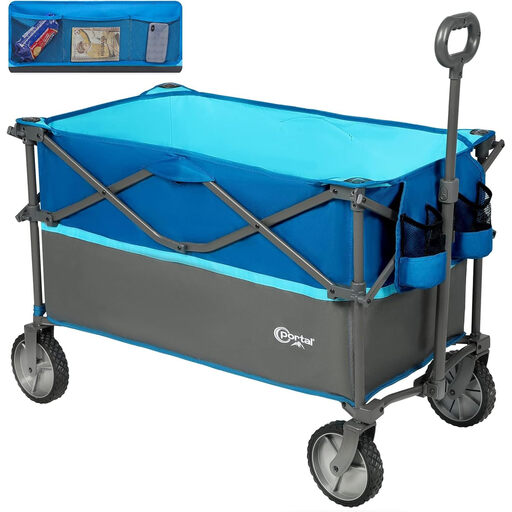
Why this model stands out: This model from Portal combines a high cargo capacity with thoughtful details. With a volume of 228 litres and a load capacity of 120 kg, it is equipped for demanding transport tasks. The robust steel frame and durable polyester fabric ensure longevity.
Advantages:
Who is this model for? Ideal for families and campers who need a versatile and spacious camping wagon for trips, sporting events, or transporting garden tools.

Why this model stands out: This model is distinguished by its exceptionally high load capacity of 200 kg. The powder-coated tubular steel frame is designed for maximum stability. A special feature is the dual front-wheel brakes, which provide extra safety on uneven terrain.
Advantages:
Who is this model for? Suitable for users who regularly transport very heavy loads and prioritise maximum stability and safety, such as for renovation projects, festivals, or bulk shopping trips.
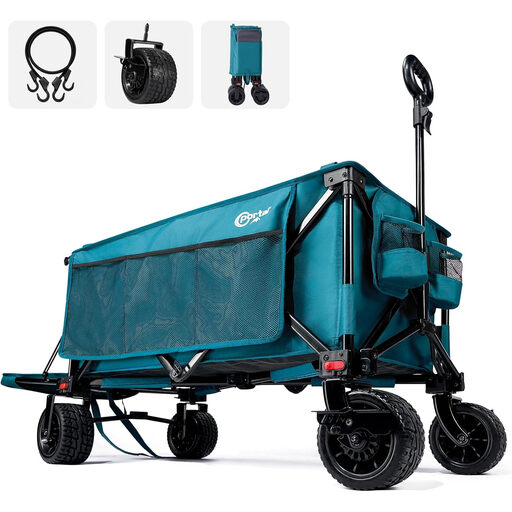
Why this model stands out: This model is designed for maximum volume and all-terrain capability. With a drop-down tailgate, it achieves a cargo volume of up to 300 litres. The wide PU wheels with integrated bearings ensure a smooth ride even on uneven ground, while quick-release fasteners make cleaning the wheels easy.
Advantages:
Who is this model for? The top choice for beachgoers, festival attendees, and anyone who needs to transport bulky and numerous items over soft or uneven surfaces. The large loading area makes it an extremely capable collapsible hand cart.
If none of these models are the right fit, or if you're looking for a different type of transport cart, other alternatives are available. For commercial use or transporting standardised crates, platform trucks are an excellent option.
Explore our full range of platform trucks for more options.
The main difference lies in portability and storage. A foldable wagon can be reduced to a compact size, fitting easily into a car boot or a storage closet. While a rigid hand cart is often more robust, it requires significant permanent storage space and is harder to transport.
Maintenance is generally straightforward. The fabric can be wiped clean with a damp cloth. After use on sandy or muddy ground, the wheels should be rinsed with water to keep the bearings and axles clean. Store the wagon in a dry place to prevent rust from forming on the frame.
Not necessarily. Wide tyres are ideal for soft surfaces like sand or loose soil, as they distribute weight more effectively and prevent sinking. On hard, flat surfaces like asphalt, however, they can have higher rolling resistance and make the wagon feel slightly more cumbersome than one with narrower wheels. The choice, therefore, heavily depends on the primary intended use.