
Lieferung heute & morgen

Qualitätsgarantie

Willkommens-Angebote freischalten: KOSTENLOSE Lieferung | Bis zu 80 % RABATT | Kostenlose 30-Tage-JoyPlus-Testphase
App herunterladen
Chopping onions, herbs, and vegetables is a fundamental yet often time-consuming task in the kitchen. Common challenges include unevenly diced pieces, the risk of cuts, and the significant time spent on meal preparation. The right food chopper can solve these problems by reducing prep time and delivering consistent results.
As your Joybuy Product Recommendation Officer, my mission is to provide you with clear and objective guidance. This article introduces different types of food choppers and explains the key criteria to help you select the right appliance for your needs.
Choosing the right appliance depends on your individual cooking habits and needs. The following points will help guide your decision.
The first fundamental decision is the power source. Manual and electric models each have specific areas of application.
Manual Choppers: Models like a simple vegetable chopper or onion chopper are often operated by a hand crank, pull cord, or by pressing down. They offer a high degree of control over the chop size and require no electricity. They are well-suited for smaller quantities and specific tasks, such as dicing onions or slicing cucumbers. A classic mandoline slicer also falls into this category and is ideal for creating uniform slices.
Electric Choppers: An electric chopper or multi-chopper is powered by a motor and gets the job done at the push of a button. These devices are powerful enough to process harder foods like nuts, carrots, or even meat. They are the right choice for those who regularly prepare larger quantities or are looking for a versatile compact food processor for various tasks.
The material and capacity of the container are crucial for durability, safety, and practicality.
Material: The most common materials for containers are plastic, glass, and stainless steel. For plastic containers, look for the BPA-free label to ensure no unwanted chemicals transfer to your food. Glass containers are hygienic, scratch-resistant, and do not absorb odours or stains. Stainless steel containers are particularly robust and durable, making them ideal for processing large quantities.
Capacity: Capacity is measured in litres (L) or millilitres (ml). For individuals or couples who occasionally process small amounts, a container with a capacity of under 1 litre may be sufficient. Families or those who do meal prep will benefit from larger containers of 2 litres or more.
Easy cleaning and safe handling are essential for daily use. Check if the removable parts of the appliance are dishwasher-safe, as this makes cleanup much easier. Safety features like a non-slip base, a safety lock mechanism (the device only starts when assembled correctly), and a finger guard on manual models minimise the risk of injury.
Based on the criteria mentioned, we have compiled a selection of models that cater to different needs.

Why this model stands out: This manual vegetable chopper is distinguished by its versatility. With six interchangeable stainless steel blades, it offers numerous cutting options, from dicing and slicing to julienne strips.
Advantages:
Who it's for: This model is an excellent choice for home cooks who want precise control over the cut and are looking for a versatile tool for manually preparing salads, French fries, and vegetable dishes.
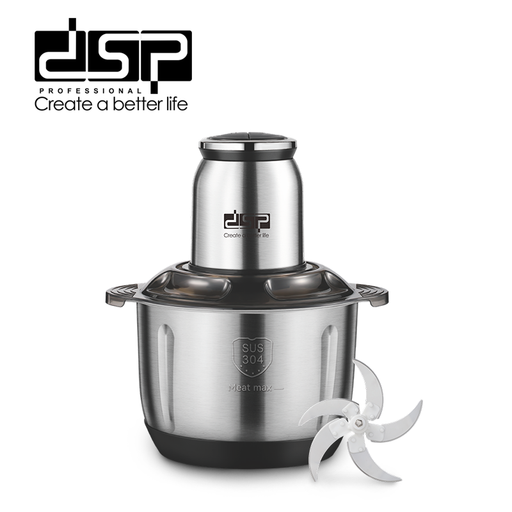
Why this model stands out: The DSP KM4108 is a powerful electric chopper designed for large quantities. Its 5-litre stainless steel bowl and robust motor make it a workhorse in the kitchen.
Advantages:
Who it's for: Ideal for families and anyone who regularly processes large quantities of ingredients, including meat, vegetables, and nuts. A practical all-purpose chopper for demanding tasks.

Why this model stands out: The special feature of this model is its dual-bowl system. With two separate glass bowls (2 L and 0.6 L) and two sets of blades, different ingredients can be processed separately without mixing flavours.
Advantages:
Who it's for: This appliance is ideal for health-conscious consumers and versatile cooks who value material hygiene (glass) and the separate preparation of different foods to prevent flavour transfer.
The models presented here already cover a wide range of needs. However, if you haven't found the right appliance for you, or if you are interested in other alternatives like specialised fruit slicers or other multi-choppers, you can find more models in our comprehensive category.
? Discover the entire selection of vegetable choppers here
1. What is the difference between a food chopper and a food processor? A food chopper is primarily specialised in chopping, slicing, and puréeing food. It is compact and optimised for these tasks. A full-sized food processor is a multifunctional appliance that can also knead, mix, or juice with various attachments. However, it is significantly larger, more expensive, and a bigger investment. A compact food processor can be similar in function to a powerful electric chopper.
2. Can you also chop nuts or meat with a food chopper? Yes, many models are designed for this. An electric chopper with a strong motor and robust stainless steel blades can easily process nuts, herbs, and raw meat. However, it is important to check the manufacturer's specifications to ensure the device is suitable for the desired foods.
3. What is the safest way to clean a food chopper? First, check if the removable parts like the container, lid, and blades are dishwasher-safe. For manual cleaning, it is recommended to wash the parts with warm water and dish soap immediately after use. Use a dish brush to clean the blades and avoid direct contact with the sharp edges. Most modern food choppers are designed for easy disassembly and cleaning.