
Lieferung heute & morgen

Qualitätsgarantie

Willkommens-Angebote freischalten: KOSTENLOSE Lieferung | Bis zu 80 % RABATT | Kostenlose 30-Tage-JoyPlus-Testphase
App herunterladen
By a Joybuy Product Recommendation Officer, August 30, 2026
Steam cooking is a proven method for gently preparing food, preserving both nutrients and natural flavour. A food steamer is therefore a valuable addition to the kitchen for many health-conscious home cooks and families. However, the market offers an overwhelming variety, and not every appliance delivers on its promises. Before you make a decision, it's important to understand the common pitfalls that often lead to buyer's remorse.
Many buyers get frustrated with appliances that show defects after a short time or are impractical for daily kitchen use. The most common problems include:
To make an informed decision, you should focus on a few essential technical features. These determine the functionality, safety, and durability of your future kitchen assistant.
The material is the foundation of any cooking appliance. With food steamers, you usually have the choice between stainless steel and plastic, and more rarely, ceramic.
The design of the appliance should match your kitchen and your cooking habits.
The size of the steamer should be tailored to the household size. For a family of four, models with a volume of 5 litres or more and multiple tiers are practical. One to two-person households can often manage with 2 to 3 litres.
Additional functions, such as a yoghurt or defrost function offered by some electric models, can make the purchase of another kitchen appliance unnecessary, thus saving space and money. Speciality pots like an asparagus pot are optimised for specific use cases and offer clear advantages in their design for cooking long vegetables.
Instead of making a one-size-fits-all recommendation, we have identified products tailored to specific user profiles.
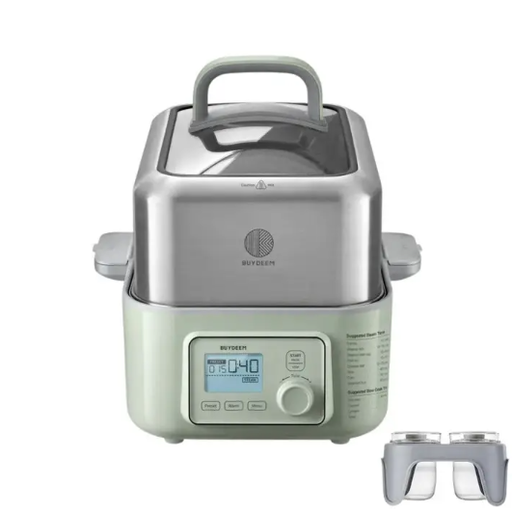
Why This Fits Their Persona: This model is ideal for families looking for an all-in-one solution. With a 5-litre capacity and functions for steaming, stewing, making yoghurt, and defrosting, it covers daily needs and saves kitchen space.
It bypasses the pitfall of limited versatility by integrating five appliances into one. The ceramic-coated inserts and the glass pot are also robust and easy to clean.
Multifunctionality (5-in-1 design) and a large 5-litre capacity, ideal for preparing complete family meals.
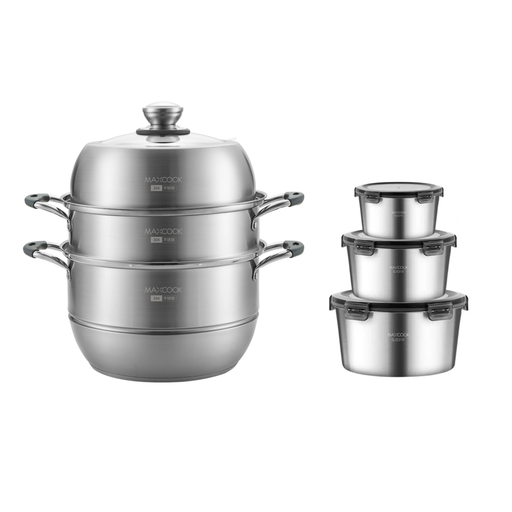
Why This Fits Their Persona: This set is perfect for students or shared living situations. The 3-tier pot allows for cooking large quantities at once, and the included stainless steel containers are ideal for storage and meal prepping.
The set is made of durable 304 and 316 stainless steel, thus avoiding the pitfall of inferior materials. It's a well-designed, long-lasting solution for intensive use.
Efficient cooking on three levels and a complete system for preparation and storage. Compatible with all hob types, including induction.
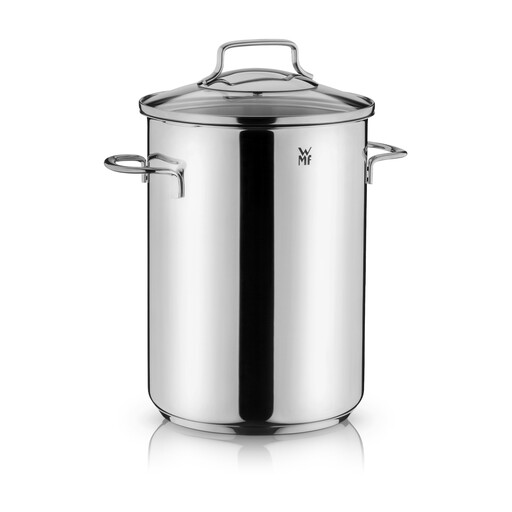
Why This Fits Their Persona: For cooks who appreciate the right tool for a specific job. The tall, narrow shape is optimal for cooking asparagus or pasta upright, allowing the delicate tips to cook gently in the steam without breaking.
This is not a compromise, but a specialist. The material (Cromargan stainless steel) and craftsmanship are designed for durability and optimal function, rather than trying to do everything mediocrely.
Perfect cooking results for asparagus and long vegetables. The TransTherm universal base ensures even heat distribution on all hob types, including induction.
We've compiled a complete, up-to-date list of products that fully meet these strict selection criteria and German safety regulations.
Cleaning depends on the model. For stainless steel pot systems, the inserts and the pot are usually dishwasher-safe. For electric appliances, the removable parts (steaming containers, lid, drip tray) should also be dishwasher-safe. The base with the heating unit must never be immersed in water; it should be wiped with a damp cloth. Regular descaling with vinegar essence or a special descaler is crucial for longevity and hygiene.
No. Only steamer pots or pressure cookers with a ferromagnetic base are suitable for induction hobs. Look for the coil symbol (induction coil) on the packaging or in the product description. Electric steamers are not affected by this restriction as they have their own heating element.
For durability, heat resistance, and hygiene, a stainless steel steamer is often the more solid choice. It does not discolour and does not release any substances into the food. High-quality, BPA-free plastic can be a lighter and often cheaper alternative, but it is more susceptible to wear and staining. The decision depends on your budget and priorities.