
Lieferung heute & morgen

Qualitätsgarantie

Willkommens-Angebote freischalten: KOSTENLOSE Lieferung | Bis zu 80 % RABATT | Kostenlose 30-Tage-JoyPlus-Testphase
App herunterladen
A well-organised kitchen not only makes daily life easier but also helps reduce food waste. Wilted lettuce in the fridge, dry pasta in torn packaging, or general chaos in the pantry are common problems. The right food storage containers and pantry organisers can solve these issues. They protect food from air, moisture, and loss of flavour while keeping everything tidy.
This article serves as your guide. It outlines objective criteria to help you choose the right kitchen storage boxes and presents a selection of models for various needs.
To find the perfect containers for your needs, several functional features are crucial.
The material is a key factor. Most modern food storage containers are made of plastic. When choosing, look for the BPA-free label. BPA (Bisphenol A) is a chemical compound found in some plastics, and its use in food contact materials is regulated. BPA-free products offer a safer foundation for storing your food. High-quality plastic like polypropylene (PP) is also durable, lightweight, and often suitable for a wide range of temperatures.
An airtight seal is the core feature of a good food storage container. It prevents oxygen from reaching the food, which slows down spoilage and preserves flavours. Silicone gaskets and clip-on lids are common and reliable systems for this purpose. A stackable design is equally practical. Square or rectangular containers use space in the fridge, freezer, or pantry much more efficiently than round ones.
For easy everyday use, the containers should be dishwasher-safe. This saves time and ensures hygienic cleaning. Also, check if they are suitable for the microwave and freezer, especially if you plan to meal prep, freeze leftovers, or reheat meals. A versatile storage container set usually covers most of these requirements.
Here is a selection of containers that stand out for their specific features and are suited for different purposes.

Why it stands out: This container is specifically designed for storing fruits and vegetables. According to the manufacturer, LocknLock, its "Breath Care Fresh Solution" with ethylene absorption keeps food fresh for up to 31 days longer. The double-seal closure blocks odours and protects the contents.
Advantages:
Who it's for: For those who want to keep fresh fruits and vegetables crisp for as long as possible and minimise food waste.
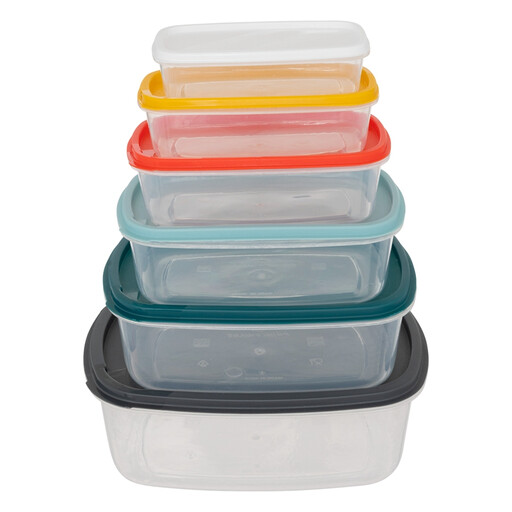
Why it stands out: With six different sizes (from 0.3 L to 2.8 L), this storage container set offers great flexibility for a wide range of storage needs. The colour-coded lids make it easy to stay organised and quickly find what you're looking for.
Advantages:
Who it's for: For households looking for a flexible and versatile starter set for organisation. Ideal for storing leftovers, dry ingredients, or even small items outside the kitchen.
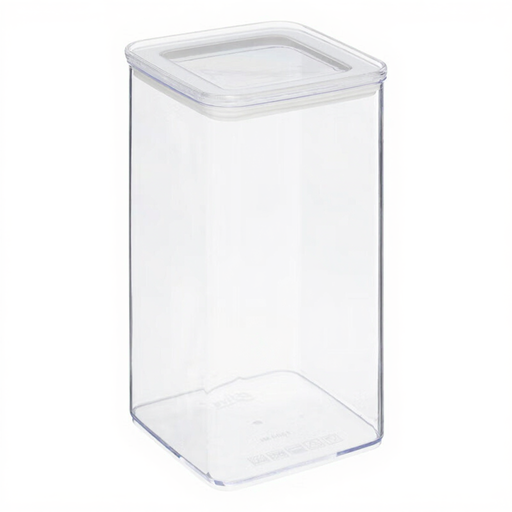
Why it stands out: With its square shape and transparent body, the Eske storage container is designed for the space-saving organisation of dry goods. The silicone seal in the lid ensures a tight closure that keeps the contents fresh.
Advantages:
Who it's for: For anyone looking to equip their pantry cupboards and drawers with uniform, efficient pantry containers for dry goods like pasta, rice, or coffee.
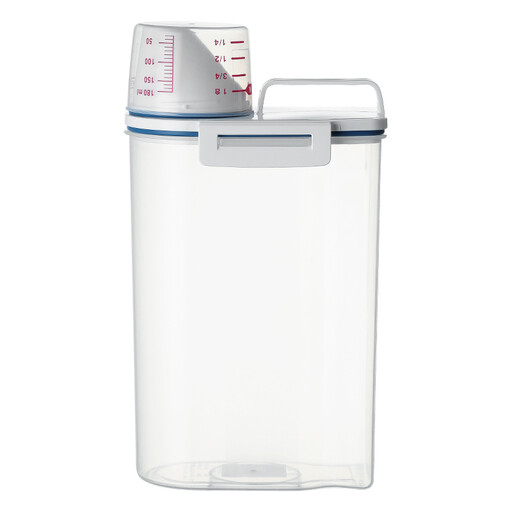
Why it stands out: With a 2.5-litre capacity, this container is specifically designed for storing larger quantities. The airtight and moisture-proof design protects grains, rice, or pet food. A handy detail is the included measuring cup.
Advantages:
Who it's for: For families or individuals who buy pantry staples like rice, flour, cereal, or pet food in bulk and need a reliable, large storage solution.
The products featured here cover many common use cases. However, if you are looking for other sizes, shapes, or special solutions for your home and hobbies, you can find more models in our range.
? Discover more plastic storage boxes with lids here
BPA (Bisphenol A) is an industrial chemical used to make certain plastics. For food containers, "BPA-free" means that this substance was not used in the production of the plastic. This is preferred by many consumers as a safety feature for food storage.
No, not all plastic containers are suitable for the microwave. Look for the corresponding symbol (often stylised waves) on the product or in the product description. It is also important to remove or at least open the lid before heating to allow steam to escape. Do not heat foods high in oil or fat, as they can reach very high temperatures and damage the plastic.
Despite thorough cleaning, some foods, like onions or heavily spiced sauces, can leave odours in the plastic. A proven method is to fill the container with a mixture of warm water and vinegar or baking soda and let it sit for a few hours. Then rinse thoroughly. Airing it out in the fresh air can also help.