
Lieferung heute & morgen

Qualitätsgarantie

Willkommens-Angebote freischalten: KOSTENLOSE Lieferung | Bis zu 80 % RABATT | Kostenlose 30-Tage-JoyPlus-Testphase
App herunterladen
The right food storage containers can make daily life significantly easier—whether for meal prepping, organising pantry staples, or keeping leftovers fresh. But the market is overwhelming, and not every product delivers on its promise. A poor choice of material or an inadequate seal can quickly lead to disappointment. This guide will help you identify the crucial features and avoid common purchasing mistakes.
Before you invest, it's wise to understand the typical weaknesses of low-quality products that often only become apparent with use.
To avoid these problems, you should focus on three core parameters before buying. These define the quality and longevity of food storage containers.
Most high-quality food containers today are made of Polypropylene (PP), a robust and food-grade plastic. Always look for the BPA-free label. Bisphenol A (BPA) is a chemical compound found in some plastics whose health effects are debated. BPA-free products provide a safe foundation for storing food. A good material is also characterised by high temperature resistance, ideally from -40°C to +110°C, making it both freezer-safe and microwave-safe.
An airtight lid is crucial to protect food from oxidation and loss of flavour. In the freezer, it also prevents freezer burn. The most reliable systems combine a robust clip or snap-lock mechanism with a firmly integrated silicone seal. Unlike loose gasket rings, which can trap moisture and germs, firmly integrated or specially moulded seals offer a more hygienic and durable solution. For transporting liquids, such a seal is essential to make the container truly leak-proof.
A thoughtful design is evident in the details. Ensure that both the containers and the lids can be stacked within and on top of each other. This creates order and saves space. Also, check the manufacturer's specifications for dishwasher, microwave, and freezer suitability. When using in the microwave, the lid should generally be opened or placed loosely on top to allow steam to escape. A storage container set with various coordinated sizes offers the greatest flexibility for different uses, from small snacks to large family-sized portions.
Depending on their intended use, users have different requirements for their food storage containers. Here are some recommendations tailored to specific profiles.
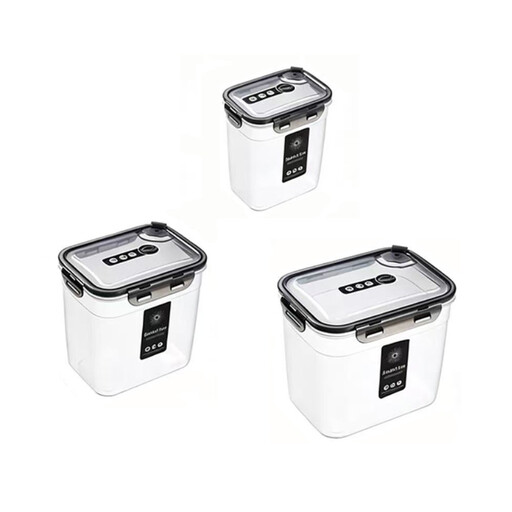
Why this model is a great fit: Ideal for anyone looking to organise their pantry or kitchen cupboards. The set, featuring three different sizes, is perfect for storing dry goods like cereal, pasta, rice, or flour.
This set is primarily designed for storing dry goods, thus bypassing the pitfall of false leak-proof claims for liquids. Its focus is on an efficient, stackable design for maximum space-saving.
The set offers three coordinated sizes (1.4L, 2.5L, 3.8L). The transparent material allows for a quick overview of the contents without opening the containers.
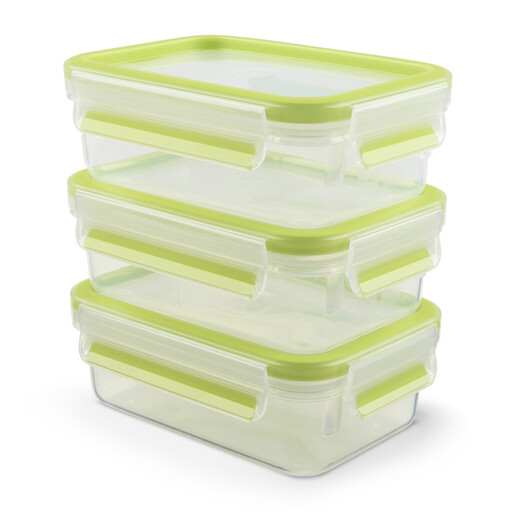
Why this model is a great fit: Perfect for anyone who wants to safely transport pre-prepared meals, including soups, to work or on the go. These meal prep containers are designed for absolute leak-proof performance.
It directly addresses the pitfall of leaky containers with a patented freshness seal that is seamlessly integrated into the lid. This ensures a demonstrably high level of leak resistance.
According to the manufacturer, the containers are 100% leak-proof, hygienic, and germ-free. The wide temperature range of -40°C to +110°C makes them highly versatile.
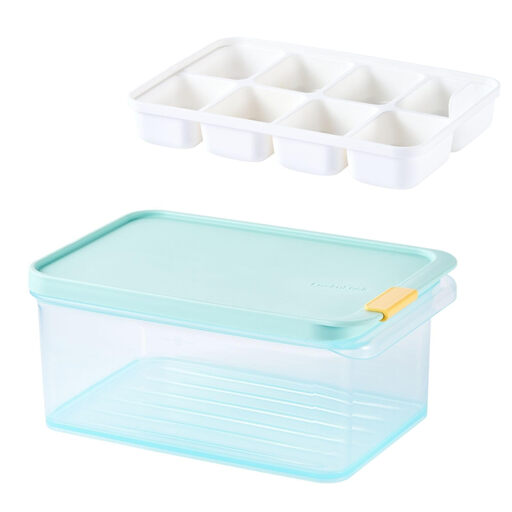
Why this model is a great fit: A robust all-rounder for families. The 1.65-litre size is ideal for leftovers, salads, or freezing larger portions. Its proven locking system is easy to handle.
This model tackles the problem of material fatigue with a durable, odour-resistant, and BPA-free polypropylene. It is designed for repeated use in the microwave, freezer, and dishwasher.
The four-sided locking system provides a reliably airtight and leak-proof seal. The design is also efficiently stackable, which simplifies organisation in the fridge or freezer.
We have compiled a complete, up-to-date list of products that fully meet these strict selection criteria and German safety regulations.
Rinse the containers with cold water immediately after use before putting them in the dishwasher. This helps minimise the absorption of pigments from foods like tomatoes or carrots. For stubborn odours, it can help to fill the container with a mixture of water and vinegar or baking soda and let it sit for a few hours.
The "BPA-free" label means that the specific chemical Bisphenol A was not used. Reputable manufacturers instead use materials like Polypropylene (PP) or Tritan, which are considered food-grade and approved for contact with food. It is advisable to choose products from established brands that provide clear information about the materials used.
Most manufacturers recommend removing the lid or at least placing it loosely on top when heating in the microwave. A tightly sealed lid can lead to warping or, in the worst case, the container bursting due to the resulting steam pressure. Always check the manufacturer's specific instructions on the product or its packaging.