
Lieferung heute & morgen

Qualitätsgarantie

Willkommens-Angebote freischalten: KOSTENLOSE Lieferung | Bis zu 80 % RABATT | Kostenlose 30-Tage-JoyPlus-Testphase
App herunterladen
A well-organised kitchen and fresh meals on the go don't just happen. Unsuitable containers often lead to sauces leaking in your bag, soggy salads at lunchtime, or a cluttered pantry. Choosing the right food storage containers is crucial to keep food fresh for longer, transport it safely, and maintain order in your fridge and cupboards.
This article serves as your guide. We will introduce different types of storage containers and explain which features are most important for various uses. Our goal is to provide you with an informed basis for your next purchase.
Before you decide on a model, several fundamental criteria should be considered. These will help you find a container that withstands the demands of daily use and offers a durable solution.
Food safety is the top priority. High-quality plastic food storage containers should be explicitly labelled as BPA-free (Bisphenol-A-free). This feature ensures that no unwanted chemical substances leach into your food. Also, pay attention to the material's versatility. Containers made from polypropylene (PP) are typically robust and suitable for use in the microwave (without the lid), freezer, and dishwasher, which makes everyday handling much easier.
A reliable seal is the core feature of a good food storage box. An airtight lid protects the contents from air and moisture, which is proven to extend freshness and preserve aromas. For transporting soups, sauces, or dressings, a guaranteed leak-proof seal is essential. Systems with special silicone gaskets and multi-sided clip-locks, like those found on LocknLock storage containers, offer a high level of security.
The intended use determines the ideal shape and size. A compact lunch box is perfect for your daily lunch. A lunch box with dividers is practical for keeping different components like bread, vegetables, and dips separate to prevent them from getting soggy. For cereal with yoghurt or milk, a special cereal-to-go cup with two separate chambers is the right choice. For storing flour, pasta, or large quantities of leftovers, large-volume, stackable boxes are ideal.
Based on the criteria mentioned, we have compiled a selection of functional containers for various needs.
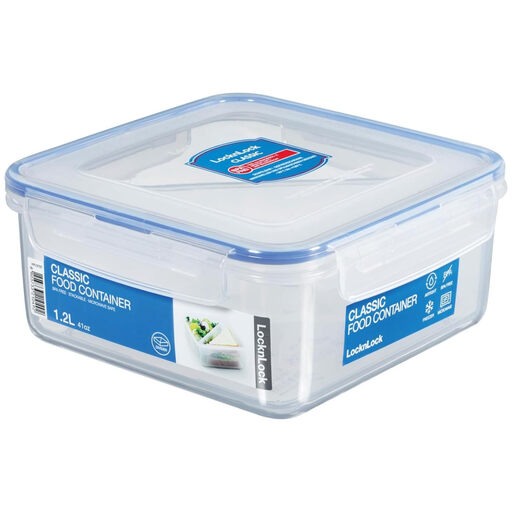
Why this product stands out: This container is specifically designed for carrying sandwiches and filled rolls. The integrated divider ensures that moist ingredients like tomatoes or cucumbers don't make the bread soggy. Its square shape makes efficient use of space in bags and backpacks.
Benefits:
Who is this product for? Ideal for professionals, students, and anyone looking for a reliable lunch box with a divider for their daily lunch.
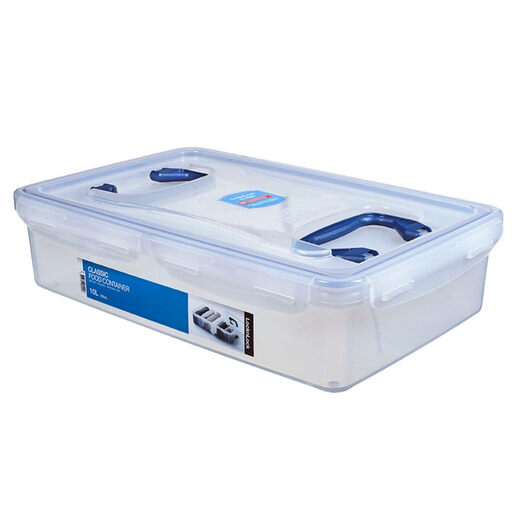
Why this product stands out: With a 10-litre capacity, this box is a solution for storing large quantities. Whether for leftovers from a family gathering, freezing bulk foods, or organising dry goods, the two fold-down carrying handles make it easy to transport, even when full.
Benefits:
Who is this product for? An excellent choice for households that need a large and robust food storage box to create order and keep large quantities fresh.
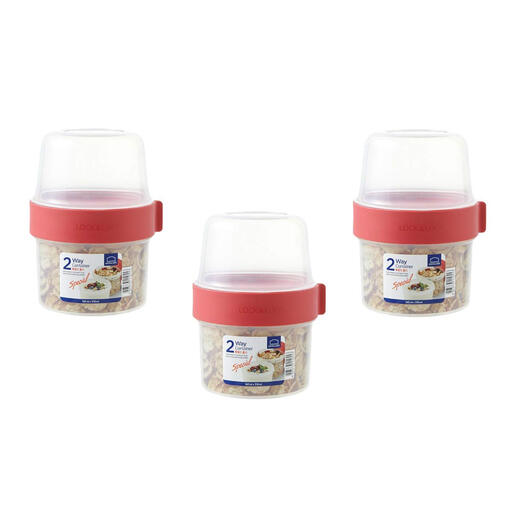
Why this product stands out: This food storage container set consists of three containers, each featuring a two-chamber system. A lower container (360 ml) and an upper container (310 ml) are separated by a dividing insert in the screw-on lid. This allows you to transport cereal and milk, yoghurt and fruit, or salad and dressing without the ingredients mixing.
Benefits:
Who is this product for? Suitable for health-conscious individuals, commuters, and parents looking for a flexible solution for snacks and small meals on the go.
The products presented here cover common use cases, but every household has unique needs. Sometimes you might need an especially flat container for the fridge, a set of various-sized containers, or a specific shape.
Discover our entire range of plastic containers with lids and find the perfect solution for your kitchen.
Yes, as long as they are made from food-grade materials. Look for the BPA-free label. High-quality polypropylene (PP), as used in the featured products, is considered safe for food contact and does not release harmful substances with proper use.
Airtight means the container is sealed in a way that prevents any air exchange. This slows down oxidation processes and keeps food fresh for longer. Leak-proof means the container remains completely sealed even when transporting liquids like soups or sauces. This is usually achieved through a combination of a precise locking system and a flexible seal.
Clean the containers and lids as soon as possible after use with warm water and mild dish soap, or in the dishwasher (usually on the top rack). To prevent odour build-up, store the containers dry and with the lid slightly ajar or loosely placed on top. For stubborn odours or stains, a paste of baking soda and water can help if left to sit in the container for a few hours.