
Lieferung heute & morgen

Qualitätsgarantie

Willkommens-Angebote freischalten: KOSTENLOSE Lieferung | Bis zu 80 % RABATT | Kostenlose 30-Tage-JoyPlus-Testphase
App herunterladen
By: Joybuy Product Recommendation Officer
Choosing a new freestanding fridge-freezer can be a daunting task given the vast array of models and technical specifications. This guide is designed to provide clarity and give you an objective foundation for your purchasing decision. We'll highlight the most important criteria and present a selection of appliances for different needs and household sizes.
To find the right appliance for your kitchen or household, three key aspects should be considered: energy efficiency, useful technologies, and the right size.
Since March 2021, the new EU energy label with classes from A to G has been in effect. A high energy efficiency class A signifies the lowest power consumption. Appliances in this class often have a higher initial purchase price but can pay for themselves over the years through lower electricity costs. Pay attention to the annual consumption in kilowatt-hours (kWh/a) indicated on the label to better estimate long-term operating costs.
No Frost technology is a common feature today. A circulating air system wicks moisture away from the freezer compartment, preventing the formation of ice and frost. This completely eliminates the need for manual defrosting. Another important factor, especially in open-plan kitchens, is the operating noise level. An appliance classified as quiet operates at a sound level below 40 decibels (dB), which is roughly equivalent to the volume of a whisper.
Dimensions are crucial. Measure the available space precisely before deciding on a model. A fridge-freezer with a 55 cm width is a common solution for smaller kitchens or single-person households. Families, on the other hand, often need a large model with over 300 litres of usable capacity. If the appliance won't be placed in the kitchen, check if it is suitable for a cellar or an unheated garage. Some models are specifically designed to operate reliably even at low ambient temperatures.
Here you'll find a curated selection of models that cater to different needs—from compact solutions to high-capacity appliances with advanced technology.
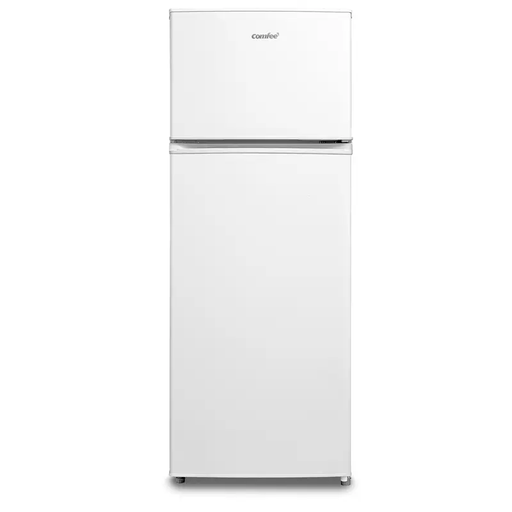
Comfee RCT284WH2A Fridge-Freezer, 176 kWh/year, 143 cm Height, 55 cm Width
Why it stands out: This model from Comfee is a compact and functional solution. With a width of just 55 cm and a height of 143 cm, it fits easily into smaller kitchens, offices, or holiday homes without sacrificing essential features.
Pros:
Who is it for? This appliance is a great choice for individuals, couples, or as a second unit. It offers a solid set of basic features for anyone looking for a reliable and space-saving fridge-freezer.
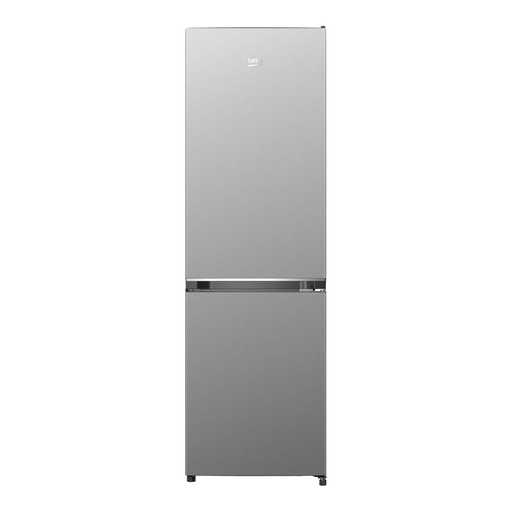
Beko B3RCNO255XB Freestanding Fridge-Freezer, 250L, No Frost, Stainless Steel Look
Why it stands out: The Beko B3RCNO255XB combines low-maintenance No Frost technology with special suitability for cool environments. Its stainless steel look and external display also give it a modern appearance.
Pros:
Who is it for? Ideal for households looking for a maintenance-free solution and needing flexibility in where to place it. Its suitability for unheated rooms makes it a versatile option.
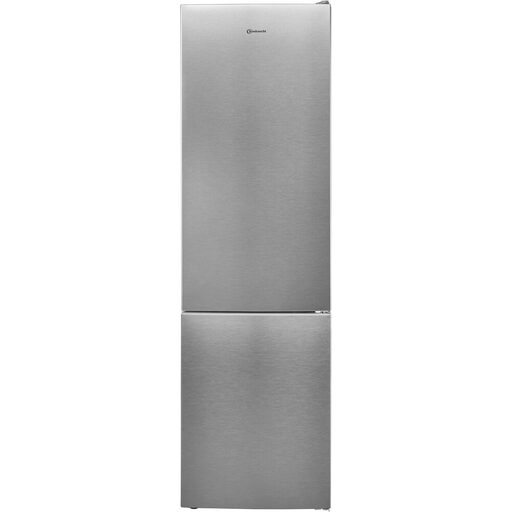
Bauknecht KGDNF 203 A Multi Zone NoFrost Fridge-Freezer, 355L, Energy Efficiency Class A
Why it stands out: This model from Bauknecht sets new standards in terms of energy efficiency and flexibility. With energy efficiency class A and a very large usable capacity of 355 litres, it is designed for demanding and larger households.
Pros:
Who is it for? Perfect for families and eco-conscious households that need maximum storage space, top-tier energy efficiency, and flexible usage options. Its extremely quiet operation also makes it a top choice for open-plan kitchens.
Haven't found the right model for your needs yet? In our comprehensive category for refrigeration appliances, you'll find a wider selection of units with different specifications and sizes.
Discover more refrigeration appliances here
No Frost is a system that reduces the humidity in the freezer compartment and directs it outside via an evaporator. This prevents ice from forming on the interior walls or on the frozen food itself. The main advantage is that manual defrosting of the freezer is no longer necessary, which saves time and effort.
The noise level is measured in decibels (dB). A value below 40 dB is considered quiet and is well-suited for most living environments, including open-plan kitchens. Appliances with values around 35 dB or lower are extremely quiet and barely perceptible.