
Lieferung heute & morgen

Qualitätsgarantie

Willkommens-Angebote freischalten: KOSTENLOSE Lieferung | Bis zu 80 % RABATT | Kostenlose 30-Tage-JoyPlus-Testphase
App herunterladen
Choosing a new freestanding fridge freezer can be more complex than it first appears. The market is filled with appliances that boast numerous features and technical specs. But not every innovation adds real value, and some marketing promises turn out to be costly disadvantages in daily life. As your Joybuy Product Recommendation Officer, I'll help you identify the crucial criteria and avoid common purchasing traps.
Before we dive into the important features, let's look at the three most common mistakes that lead to dissatisfaction and unnecessary expense.
To make an informed decision, focus on the following three core aspects. These determine the efficiency, convenience, and long-term costs of your appliance.
Since 2021, a new EU energy label with classes from A (very efficient) to G (less efficient) has been in effect. A highly energy-efficient fridge freezer in classes A, B, or C may be more expensive to purchase, but it pays for itself over the years through significantly lower electricity costs. The key comparative value is the annual energy consumption in kilowatt-hours (kWh/a), which is stated on every energy label. A low value means direct savings on your electricity bill.
A No-Frost fridge freezer is now an indispensable feature for many. A circulating air system wicks moisture out of the freezer compartment, preventing ice from forming on the walls or on your food.
Models with "Low-Frost" or manual defrosting are often cheaper but require regular maintenance to maintain efficiency.
The right size is crucial to avoid wasting both space and energy. As a rule of thumb:
A freestanding fridge freezer also offers a flexible alternative to a built-in fridge, as it doesn't need to be integrated perfectly into a kitchen unit and can easily be taken with you when you move.
Here are some models that represent a considered choice for different needs, based on objective criteria.
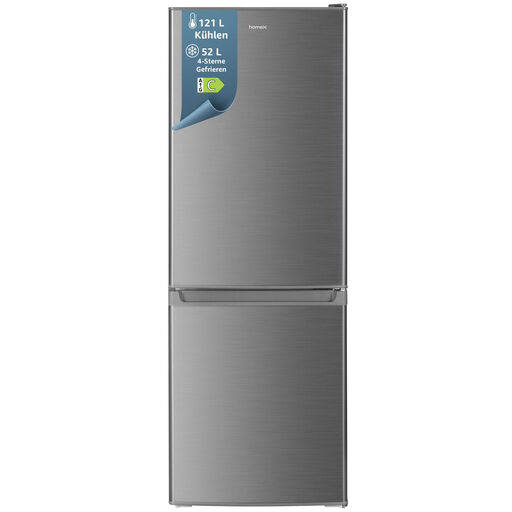
Why This Fits Their Persona: With its narrow width of 49.5 cm, this model is ideal for small kitchens or single-person households. The 173-litre usable capacity is well-sized for daily needs, and energy efficiency class C ensures manageable running costs.
The appliance deliberately avoids expensive smart features, focusing instead on efficient cooling and freezing performance. The interior is clearly structured and utilises space without bulky fixtures.
Energy efficiency class C in a compact form factor. The reversible door hinge offers additional flexibility for placement.
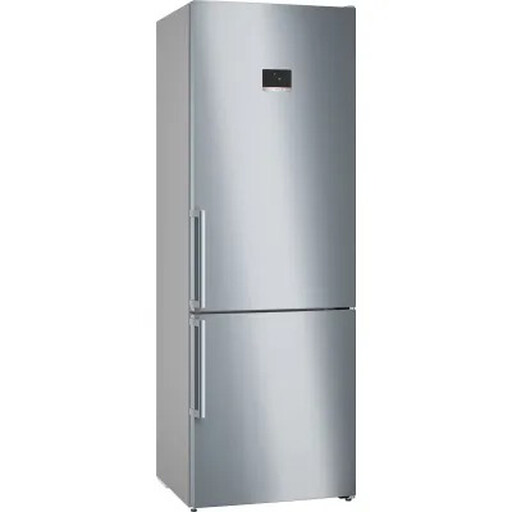
Why This Fits Their Persona: With 440 litres of usable capacity, this Bosch fridge offers ample space for a family's weekly shop. The VitaFresh XXL system is proven to keep fruit, vegetables, fish, and meat fresh for longer, which reduces food waste. Its B-class energy efficiency is a strong argument for long-term cost savings.
This appliance directly addresses the noise issue with a very quiet operation at just 35 dB. The VitaFresh technology is a practical feature with real added value, not a gimmick. Total NoFrost ensures it's maintenance-free.
Outstanding B-class energy efficiency and very quiet operation. The VitaFresh XXL system extends the shelf life of delicate foods.

Why This Fits Their Persona: With a massive 621 litres of usable capacity, this XXL model is perfect for large families or anyone who likes to buy in bulk. The design in brushed black steel (an elegant black fridge) makes a visual statement in any modern kitchen.
Despite its size, the appliance is extremely quiet at 35 dB and very efficient with an B energy rating. It refutes the prejudice that large appliances must be loud and power-hungry. The Flex function, which allows the freezer to become a fridge compartment, is a true innovation.
Enormous XXL usable capacity of 621 litres combined with excellent B-class energy efficiency and a flexible interior concept (Flex Cool & Freeze).
We've compiled a full, up-to-date list of products that fully meet these strict selection criteria and UK safety regulations.
For optimal air circulation and efficiency, it is recommended to leave a gap of about 5 to 10 cm at the sides and back of the appliance from any walls or furniture. This prevents heat build-up and ensures the compressor does not get overloaded. Always refer to the specific instructions in the manufacturer's user manual.
The climate class indicates the ambient temperature range in which the appliance will function correctly. For UK households, appliances with classes SN-T (suitable for +10°C to +43°C) or N-ST (+16°C to +38°C) are generally the right choice, as they work reliably in both cooler cellars and warm summer kitchens.
A quiet fridge is characterised by a low decibel (dB) rating. Appliances with a value below 40 dB are considered quiet. Models around 35 dB or lower are exceptionally quiet and barely perceptible, making them ideal for open-plan living spaces. Don't rely on advertising claims; check the dB value specified on the energy label.