
Lieferung heute & morgen

Qualitätsgarantie

Willkommens-Angebote freischalten: KOSTENLOSE Lieferung | Bis zu 80 % RABATT | Kostenlose 30-Tage-JoyPlus-Testphase
App herunterladen
By a Joybuy Product Recommendation Officer, July 28, 2026
Freezing food is a convenient method to extend its shelf life and for meal prepping. But choosing the wrong bag can quickly lead to disappointment: freezer burn, loss of flavour, or leaky seals not only ruin your food but also your trust in the product. Many manufacturers advertise features that don't live up to their promises in practice. This guide will help you identify the essential quality features and find the right freezer bag for your needs.
A common problem is bags made from material that is too thin, which can tear during filling or become brittle in the freezer. Another nuisance is unreliable seals that open on their own or fail to keep liquids securely inside. Such defects lead directly to freezer burn—the unsightly, dried-out spots on frozen goods—and make the food inedible.
To keep food safe and fresh, you should pay attention to a few fundamental parameters before buying. These objective criteria are more important than any marketing message.
The quality of a freezer bag depends heavily on its material. Simple, single-layer bags often provide inadequate protection. A multi-layer film, such as a 3-layer film, is significantly more resistant to tears and effectively protects frozen goods from drying out. This structure forms a stronger barrier against oxygen, which greatly improves the preservation of flavour, vitamins, and texture when storing food and for freezing. Pay attention to the material description to assess the bag's durability.
The seal is the critical weak point of many products. While simple tie-clips may suffice for solid foods, they are often unsuitable for liquids or for bags that are opened and closed frequently. A resealable press-lock seal, also known as a zipper bag, offers more security. Models with a double zipper are especially leak-proof and keep the contents hermetically sealed. This is ideal for soups, marinades, or preserving the aroma of herbs and coffee.
Freezer bags are available in various sizes, typically from 1 litre to 6 litres or more.
For regular use, a bulk pack can be an economical choice. For other purposes, such as covering bowls or wrapping sandwiches, alternatives like plastic wrap or aluminium foil are often more suitable.
Based on objective product features, we have selected a few models for different user profiles.
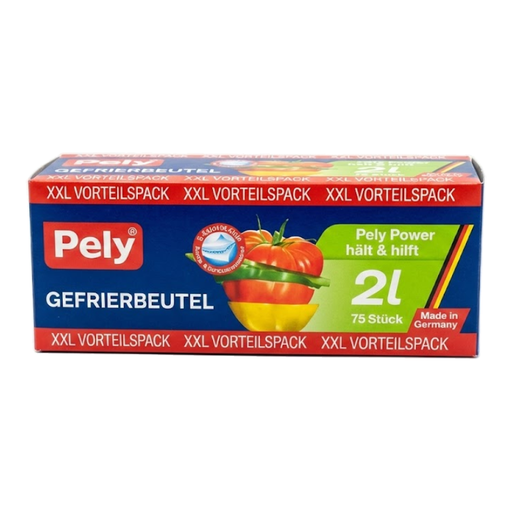
Why This Fits Their Persona: Perfect for families and avid meal preppers who freeze food in large batches and seek excellent value. This XXL value pack ensures you're well-stocked for the long haul.
Unlike cheap but thin bags, this model features a 3-layer film that reliably protects against freezer burn and offers high tear resistance.
Bulk pack of 75 bags for great economy; robust 3-layer film for secure flavour protection.
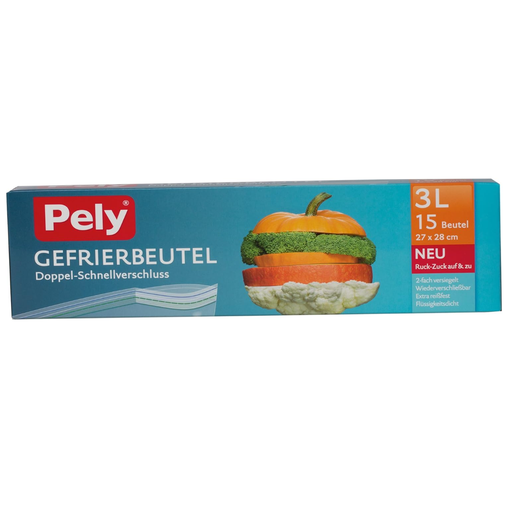
Why This Fits Their Persona: Perfect for home chefs who freeze soups, sauces, or marinated foods. An absolutely tight seal is crucial here to prevent leaks and flavour loss.
The double zip-lock provides twice the security against leaks. Unlike simple press-to-close seals, this system ensures an airtight and watertight closure.
Double sealing strip for maximum leak protection; large 3-litre capacity for family-sized portions.
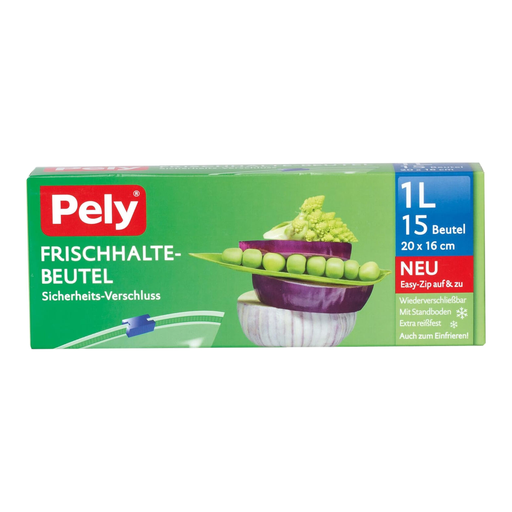
Why This Fits Their Persona: For users seeking a versatile bag for the kitchen and on the go. Ideal for freezing, keeping liquids fresh, or as a flight-safe bag for cosmetics in your carry-on luggage.
The integrated stand-up base makes filling easy without the bag tipping over. The security zipper and extra-strong film make the bag completely leak-proof.
Practical stand-up base for easy filling; secure zipper that is also suitable for liquids and air travel.
We have compiled a complete, up-to-date list of products that fully meet these strict selection criteria and safety standards.
Freezer burn occurs when air comes into contact with frozen food, drawing out its moisture. To prevent this, you should use a high-quality freezer bag made of multi-layered material. Squeeze out as much air as possible from the bag before sealing it. A tight seal, like a double zipper bag, is especially helpful for this.
Reusability depends on the bag and its previous contents. Bags that held dry foods like bread or vegetables can often be reused after a thorough cleaning. For hygiene reasons, it is not recommended to reuse bags that contained raw meat, fish, or poultry. Make sure to let the bag dry completely to prevent mould growth. However, many bags are designed for single use.
The main difference lies in the material. Freezer bags are made of a thicker, more durable film specifically designed to remain flexible and tear-resistant even at very low temperatures (-18°C and colder). Food storage bags are often thinner and are primarily suitable for short-term storage of food in the refrigerator or at room temperature. They do not offer adequate protection against freezer burn.