
Lieferung heute & morgen

Qualitätsgarantie

Willkommens-Angebote freischalten: KOSTENLOSE Lieferung | Bis zu 80 % RABATT | Kostenlose 30-Tage-JoyPlus-Testphase
App herunterladen
A good freezer bag is an unsung hero in the kitchen, but a bad one can quickly lead to frustration and food waste. We’ve all been there: you want to safely freeze food like leftovers from Sunday's roast or freshly picked berries from the garden, only to find them weeks later covered in freezer burn or sitting in a pool of ice. The selection in stores is vast, but not every product delivers on its promise. Often, it's the small but crucial flaws that make the difference between a useful kitchen storage bag and a complete nuisance.
Before you buy your next pack, you should know the three most common pitfalls that lead to leaky bags, spoiled food, and unnecessary expense:
Making a conscious choice based on clear criteria not only saves you money but also preserves the quality of your food.
To avoid the problems mentioned above, you should check three key features before making a purchase. These define the functionality and reliability of a freezer bag in everyday use.
A tear-resistant freezer bag is typically made of polyethylene (PE), a plastic that remains flexible even at low temperatures. Look for information on material thickness or notes like "extra tear-resistant." A robust film is the basic requirement to avoid freezer burn. It reliably protects the contents from drying out and preserves texture and flavour. Additionally, the material should be rated for a temperature range of at least -40°C to prevent it from becoming brittle during deep-freeze storage.
The seal is the most critical component for airtight storage. While simple tie-clips or bands are a basic solution, integrated systems often offer more security. A freezer bag with a zip-lock closure (also called a press-seal or slider seal) allows for reliable, repeated opening and closing. This mechanism presses two plastic profiles firmly together, creating a barrier that effectively prevents liquids from leaking and odours from transferring.
The right size is crucial for efficient organisation and storage. Common sizes like 1L freezer bags, 3L freezer bags, or even 6-litre bags cover different needs:
Some models, like the Jeden Tag freezer bags, also offer a practical write-on panel to note the contents and freezing date.
Based on these objective criteria, we have compiled a selection of products that offer a well-designed solution for specific use cases in UK households.
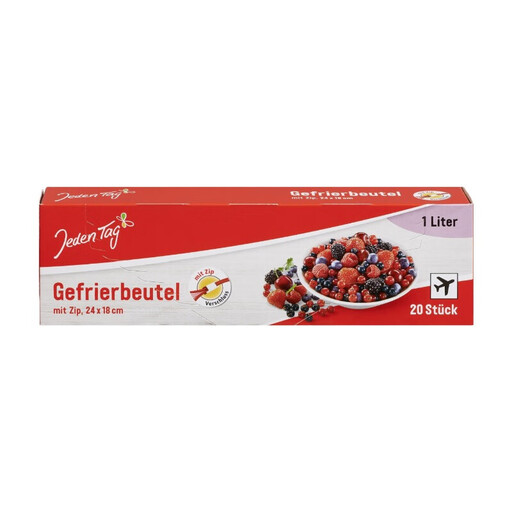
Why it's a great fit: Perfect for individuals or couples who regularly portion leftovers or freeze small amounts of fruit and vegetables. The compact size prevents wasted space in the freezer.
The integrated zip-lock closure provides a secure and airtight seal, bypassing the problem of unreliable clip or knot closures.
The 1-litre format is optimal for portion control and organising smaller food items.
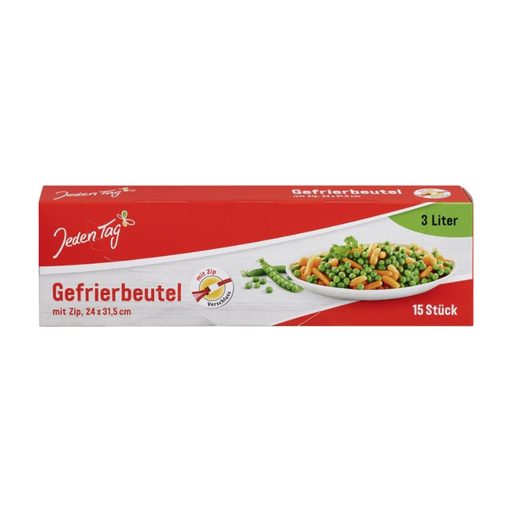
Why it's a great fit: With a 3-litre capacity, this bag is ideal for families who meal prep or want to store larger quantities of soups, stews, and vegetables.
The size is tailored to the needs of multi-person households, avoiding the pitfall of using ill-fitting, one-size-fits-all bags. The slider closure ensures secure handling.
The integrated write-on panel simplifies organisation and helps you keep track of contents and freezing dates.
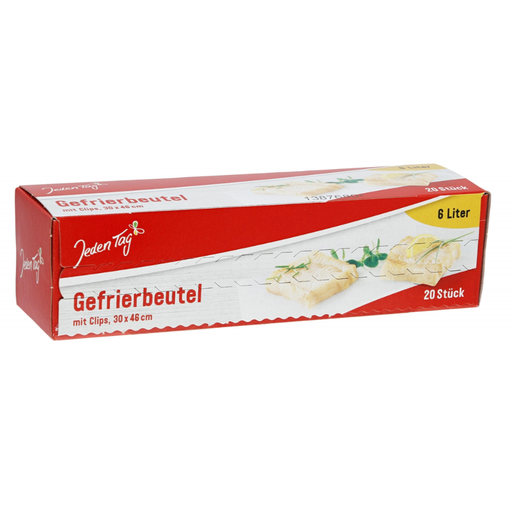
Why it's a great fit: Indispensable for freezing large roasts, whole loaves of bread, poultry, or a bountiful harvest from your own garden. The large volume provides ample space for bulky foods.
The material, described as "strong and tear-resistant," is designed for heavier weights and volumes, tackling the problem of thin, unsuitable films. The included clips ensure a secure closure.
The high temperature resistance from -40°C to +115°C makes the bag versatile, even for briefly heating food.
We've compiled a complete, up-to-date list of products that fully meet these strict selection criteria and UK safety regulations, including other essential kitchen helpers.
Freezer burn occurs when food dries out on the surface because it comes into contact with the cold, dry air in the freezer. To prevent this, as much air as possible should be removed from the freezer bag before it is sealed. An airtight seal is crucial. A freezer bag with a zip-lock closure is particularly suitable for this, as it forms a reliable barrier.
Reusability depends on what was previously stored in the bag. For hygiene reasons, bags that contained raw meat, fish, or poultry should not be reused to avoid cross-contamination. Bags that held bread, fruit, or vegetables can be reused after a thorough cleaning with hot water and washing-up liquid. Check the bag for any damage or holes before using it again.
The main difference lies in the material. Freezer bags are made of a thicker, more durable plastic film specifically designed to withstand the extremely low temperatures in a freezer without becoming brittle. They provide a better barrier against air and moisture than conventional food storage bags. The latter are thinner and do not adequately protect food from freezer burn during long-term storage in the freezer.