
Lieferung heute & morgen

Qualitätsgarantie

Willkommens-Angebote freischalten: KOSTENLOSE Lieferung | Bis zu 80 % RABATT | Kostenlose 30-Tage-JoyPlus-Testphase
App herunterladen
Whether for bulk shopping, garden harvests, or simply to stock up on supplies – an additional freezer creates valuable space. But the market can be confusing and is full of marketing promises that often obscure more than they clarify. Incorrect assumptions about capacity or technical features can quickly lead to an appliance that disappoints in daily use, results in high electricity bills, or doesn't even function correctly in the wrong location.
As your Joybuy Product Recommendation Officer, I'll help you avoid these pitfalls. We will focus on the facts that truly matter so you can make an informed decision.
The 2 Most Common Traps When Buying a Freezer:
To avoid a bad buy, you should focus on three objective criteria. These determine whether an appliance fits your needs, your location, and your budget.
The first decision concerns the form factor. Both have specific advantages and disadvantages:
As a rule of thumb for usable capacity: plan for about 50 to 80 litres per person in the household. If you regularly do bulk shopping or freeze a lot, plan for more accordingly. A mini freezer with under 100 litres is suitable for singles or as a supplement.
Since 2021, the new EU energy label with classes from A (very efficient) to G (less efficient) has been in effect. A freezer runs 24 hours a day, 365 days a year. Energy costs, therefore, make up a significant portion of the total cost over its lifespan.
Modern features can make daily life easier, but they aren't necessary for everyone.
Here are some models that represent a considered choice for specific user profiles, based on objective criteria.

Why this model fits: With 60 litres of usable capacity and compact dimensions, this freestanding freezer is ideal for singles, couples, or as an additional unit in the office. It fits under most standard worktops and offers good organisation in a small space with its three compartments.
The appliance is clearly positioned as a compact model, avoiding the capacity trap by precisely meeting the needs of smaller households without taking up unnecessary space.
The reversible door hinge and adjustable feet allow for flexible and stable installation, even in tight spaces or on uneven floors.
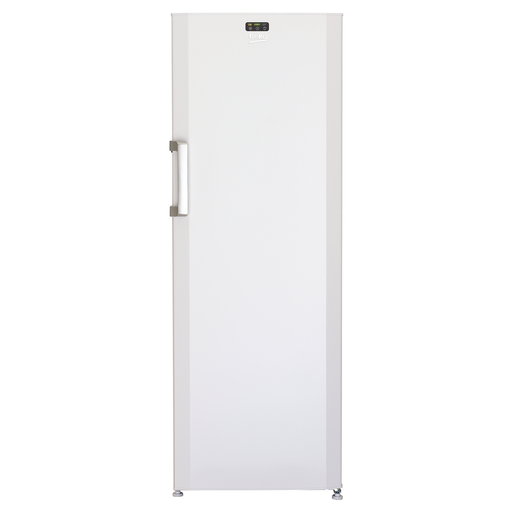
Why this model fits: With 244 litres of usable capacity, this freezer offers plenty of space for a family's supplies. The combination of five drawers and two flap compartments ensures good organisation. At 36 dB, it is also a very quiet appliance.
This model is suitable for operation in unheated rooms down to -15°C, thereby avoiding the location trap. The MinFrost technology reduces ice build-up without the drawbacks of a full No Frost function.
The fast freeze function and temperature alarm are practical features that enhance food safety – especially when storing large quantities of fresh food.

Why this model fits: As a chest freezer with 198 litres of volume, it is ideal for bulky frozen goods. The WinterProof technology guarantees reliable operation even in cold environments, making it the optimal choice for the basement.
The explicit "WinterProof" function for operation down to -15°C directly solves the location trap. You don't have to worry about the appliance failing in winter.
The high Energy Efficiency Class C is remarkable for a chest freezer of this size and helps to keep operating costs low. The Multi-Zone function offers additional flexibility.
We have compiled a complete, up-to-date list of products that fully meet these strict selection criteria and UK safety regulations.
Manual defrosting is generally recommended once or twice a year, or as soon as the ice layer reaches a thickness of about one centimetre. A thick layer of ice acts as an insulator, forcing the compressor to work harder, which significantly increases electricity consumption.
The climate class indicates the ambient temperature range in which the manufacturer guarantees the proper operation of the appliance. Class SN (Subnormal) is suitable for cooler locations like basements with temperatures from +10°C to +32°C. Class N (Normal) is designed for normal living spaces (approx. +16°C to +32°C). It is essential to pay attention to this detail if the appliance is not to be placed in a heated part of the home.
Consumption depends heavily on size and design. For reference: a compact freezer with energy efficiency class D and approx. 85 litres of usable capacity, like the model from Gorenje, has an annual consumption of about 131 kWh according to the manufacturer. A larger appliance will consume correspondingly more. The exact value is always stated on the EU energy label of the respective product and provides the most reliable basis for comparison.