
Lieferung heute & morgen

Qualitätsgarantie

Willkommens-Angebote freischalten: KOSTENLOSE Lieferung | Bis zu 80 % RABATT | Kostenlose 30-Tage-JoyPlus-Testphase
App herunterladen
Purchasing a new fridge-freezer is a major decision for any household. The appliance runs around the clock, affecting not only the freshness of your food but also your electricity bill. However, the market is saturated with marketing promises and technical data that often confuse more than they clarify. Many buyers only realise months later that their new appliance is louder than expected, the actual storage space is disappointing, or expensive extra features go unused. This guide will help you navigate these pitfalls and make an informed decision.
Before we dive into the key selection criteria, let's look at the typical mistakes that often lead to dissatisfaction:
To find the right fridge-freezer, focus on the following objective criteria. These determine the efficiency, convenience, and long-term running costs of your appliance.
Since 2021, the new EU energy label with a scale from A (very efficient) to G (less efficient) has been in effect. The old plus classes (A+++, etc.) are no longer valid. Under the new standard, an appliance with energy efficiency class C is already considered very economical.
More important than the class itself, however, is the annual energy consumption in kilowatt-hours (kWh/annum) indicated on the label. This value allows for a direct cost comparison between different models. An appliance with a slightly lower efficiency class but smaller net capacity may, in some cases, consume less power than a very large Class C appliance.
The right size is crucial. A rule of thumb is:
Also, consider your shopping habits. If you shop less frequently and store more supplies, you'll need more space. There are several options when it comes to form factors:
Two technological features have a direct impact on your convenience:
Here are some models that represent a considered choice for different household types, based on objective criteria.
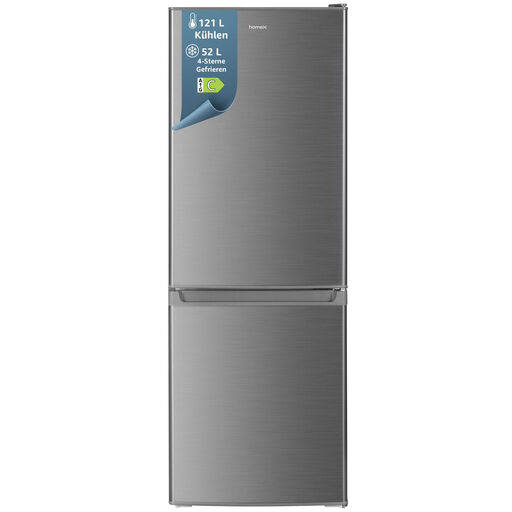
Why it's a good fit: With a total net capacity of 173 litres (121 L fridge, 52 L freezer), this appliance is ideal for singles or couples. It combines a compact design with a very good Energy Class C rating for its price range.
The model focuses on the core functions of cooling and freezing without expensive extras. The stated net capacity is transparent and practical for its size.
Energy Class C with a consumption of only 124 kWh/year. The reversible door hinge offers flexibility in placement.
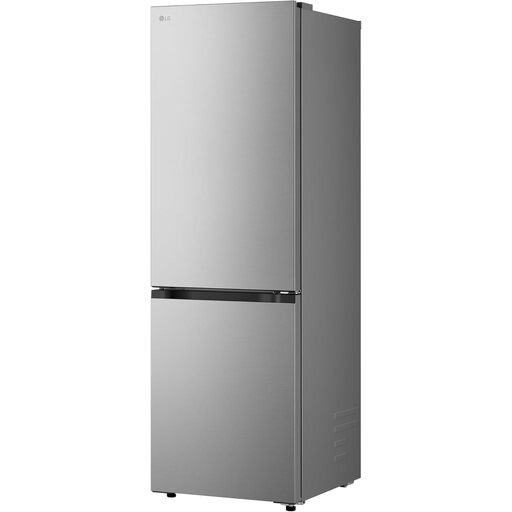
Why it's a good fit: With 333 litres of net capacity, Total No Frost, and advanced cooling technologies like DoorCooling+, this appliance is tailored to the needs of families who value freshness and convenience.
This model directly addresses the noise issue with an extremely quiet operation of just 34 dB. Its smart functions (ThinQ) are practical and serve to increase efficiency, not just for the sake of it.
Total No Frost eliminates the need for defrosting. LinearCooling and DoorCooling+ ensure an even temperature and are proven to keep food fresher for longer.
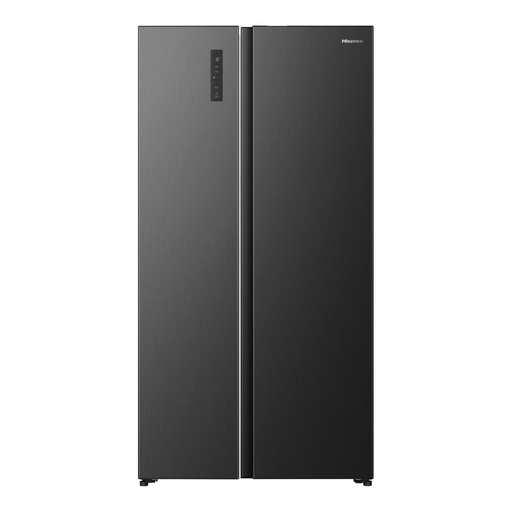
Why it's a good fit: As a side-by-side fridge with 544 litres of net capacity, this model offers enormous storage for large families or shared homes. Its elegant PureFlat Black design makes it a statement piece in any modern kitchen.
Despite its size, the appliance is exceptionally quiet at 35 dB, making it suitable for open-plan living areas. It offers clear, useful features like Total No Frost and Super Cool instead of unnecessary gimmicks.
Total No Frost in both the fridge and freezer sections. The Multi-Airflow System ensures even cold distribution, protecting food quality.
We have compiled a complete, up-to-date list of products that fully meet these strict selection criteria and safety standards.
Consumption heavily depends on size and features. A typical Energy Class C model with around 300 litres of net capacity uses approximately 140–170 kWh per year. A smaller appliance with about 170 litres can manage with as little as 120–130 kWh. Always compare the annual consumption (kWh/annum) on the energy label for an accurate estimate.
No Frost technology is a circulation system that circulates cold, dry air within the freezer compartment. Moisture is drawn out of the interior before it can settle as ice on the walls or on frozen goods. This not only saves you the hassle of manual defrosting but also ensures consistent freezing performance and permanently low energy consumption, as thick layers of ice no longer impair efficiency.
For an open-plan kitchen where you also live, relax, or work, the noise level should be as low as possible. A low-noise fridge with a rating of 38 dB or less is a good choice here. Models at 35 dB or below are barely audible and blend seamlessly into the living space. Pay attention to the official noise emission class (A-D) and the dB value on the energy label.