
Lieferung heute & morgen

Qualitätsgarantie

Willkommens-Angebote freischalten: KOSTENLOSE Lieferung | Bis zu 80 % RABATT | Kostenlose 30-Tage-JoyPlus-Testphase
App herunterladen
Choosing the right oil for frying is a technical decision that hinges on a key physical parameter: the smoke point. This value indicates the temperature at which an oil begins to produce visible smoke and break down. Exceeding the smoke point not only compromises the flavour of your food but can also lead to the formation of undesirable substances. Therefore, for searing, deep-frying, or baking at high temperatures, a high-heat oil with a high smoke point is essential.
An oil's heat stability is determined by its fatty acid composition and degree of refinement. Refined oils, from which impurities have been removed, generally have a higher smoke point and a more neutral taste than cold-pressed, virgin oils.
When selecting an oil for frying, several objective factors must be considered to ensure its suitability for the specific culinary purpose.
The smoke point is the critical metric for heat stability. Oils can be broadly divided into three categories:
The choice of oil should be matched to the dish. For Asian wok dishes or deep-frying French fries, a neutral-tasting oil is advantageous so as not to mask the natural flavour of the ingredients. For Mediterranean dishes, a heat-resistant oil with a light olive note, such as a special olive oil for frying, may be the better choice.
Based on technical specifications and intended use, we present a selection of products here.
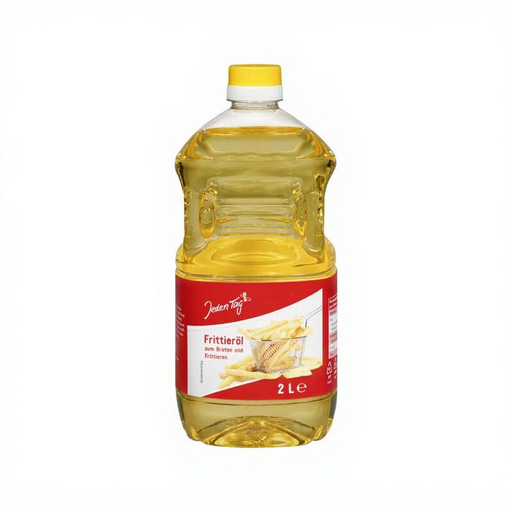
Why we recommend this product: The Jeden Tag Frying Oil is a blend of various vegetable oils specifically designed for use at high temperatures. According to the manufacturer, the optimal frying temperature is 175°C, making it a reliable deep-frying oil. Its liquid consistency at room temperature simplifies handling, especially when filling and emptying a deep fryer.
Pros:
Best for: Users who frequently fry or operate a deep fryer and are looking for a functional, neutral-tasting, and economical vegetable oil for frying.
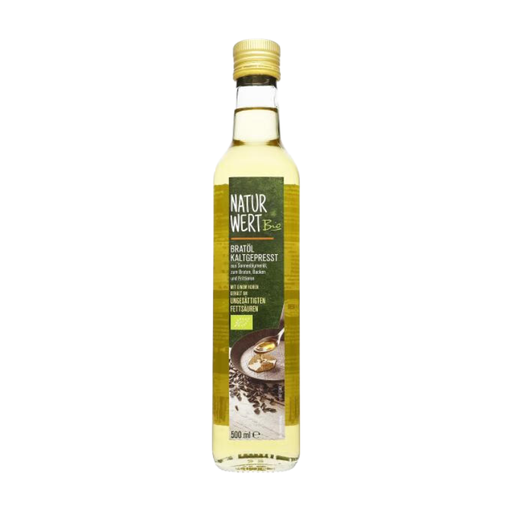
Why we recommend this product: This organic cooking oil resolves the conflict between cold-pressing and heat stability. It is based on a special "high-oleic" sunflower variety, which naturally has a high content of heat-stable oleic acid. The oil is cold-pressed and then gently deodorised with steam to achieve a neutral taste. According to the manufacturer, it can be heated up to 210°C.
Pros:
Best for: Consumers who value organic agriculture and nutrient-preserving processing but require a heat-resistant oil for high temperatures.
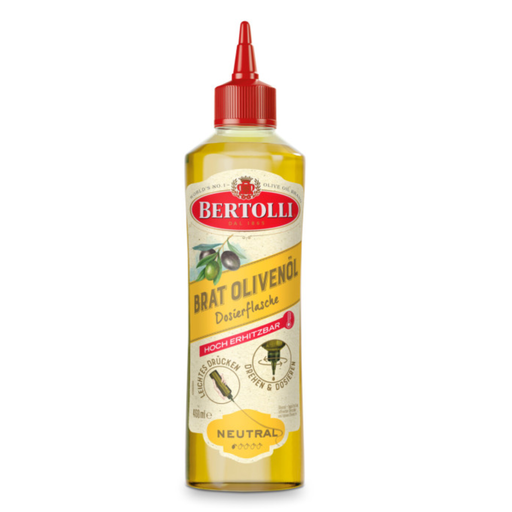
Why we recommend this product: This product is a blend of refined and virgin olive oils. This combination was specifically developed to maximise heat stability while retaining a mild olive aroma. According to the manufacturer, it can be heated up to 195°C, making it well-suited as an olive oil for frying, grilling, and baking.
Pros:
Best for: Cooks who appreciate the flavour of olive oil and are looking for a heat-stable version for frying meat, fish, or vegetables at higher temperatures.
If you haven't found the right product for your specific needs in this selection, or if you'd like to compare more alternatives, you can find a wider range of products in our Deep-Frying Oil category.
1. What is the best oil for high-heat searing? For high-heat searing, oils with a smoke point above 200°C are required. These include refined vegetable oils like rapeseed or sunflower oil, as well as special "high-oleic" frying oils. They ensure the oil remains stable and does not develop unwanted flavours.
2. Can you use extra virgin olive oil for frying? Extra virgin olive oil has a relatively low smoke point (approx. 160–180°C) and is therefore primarily suitable for gentle frying or sautéing at low to medium temperatures. For high-heat searing, refined blends specifically labelled as "frying olive oil," like the featured Bertolli product, are the technically safer choice.
3. What does "deodorised" oil mean? Deodorisation is a processing step where intense flavours and odours are removed from the oil using steam under a vacuum. The result is a neutral-tasting oil. This process is often used for cooking oils to avoid altering the natural taste of the prepared food.
Written by: Joybuy Product Recommendation Officer