
Lieferung heute & morgen

Qualitätsgarantie

Willkommens-Angebote freischalten: KOSTENLOSE Lieferung | Bis zu 80 % RABATT | Kostenlose 30-Tage-JoyPlus-Testphase
App herunterladen
By: Joybuy Product Recommendation OfficerDate: July 18, 2026
Designing a gaming room goes far beyond just choosing a PC and peripherals. The right gaming lighting is crucial for creating an immersive atmosphere that deepens the gameplay experience and adds a personal touch to your space. However, with the vast array of options—from flexible LED strips to modular wall panels—the choice can be overwhelming.
This guide is designed to bring clarity. We'll introduce different types of lighting solutions and explain the key features to consider when building your setup. Our goal is to provide you with an informed basis for your decision.
Before making a decision, several technical and functional aspects should be considered. These criteria will help you find the right solution for your needs.
The form of the lighting significantly defines the aesthetic of your space.
Modern smart lights offer a variety of control options. Connection via Wi-Fi and Bluetooth is now standard, enabling control through a smartphone app. Look for compatibility with voice assistants like Google Assistant or Alexa for convenient operation. For future-proof integration into your smart home system, support for the Matter standard is a key factor, as it ensures cross-brand compatibility.
Beyond simple colour selection, many products offer special features that intensify the experience.
Based on the criteria mentioned, we have curated a selection of products that cater to different use cases and preferences.
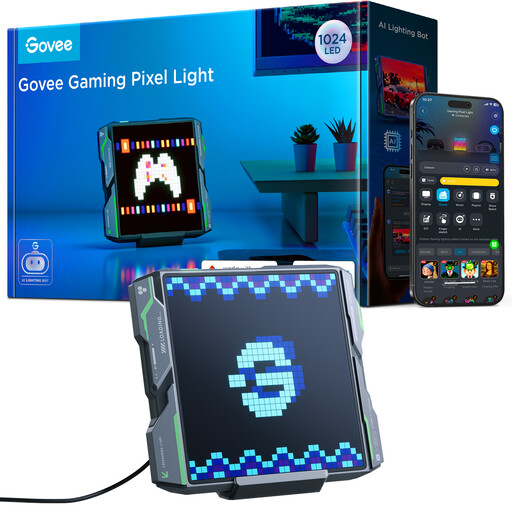
Why it stands out: The Govee Pixel Light is more than just a lamp; it's an interactive pixel art display. According to the manufacturer, it uses an AI-powered feature to generate pixel art designs. In addition to lighting, the display can also show useful information like the weather, sports scores, or stock prices. The design is inspired by a mechanical aesthetic and fits well into tech-focused setups.
Pros:
Who it's for: Gamers and creatives looking for a central, eye-catching element for their desk that serves as both mood lighting and a useful info display.
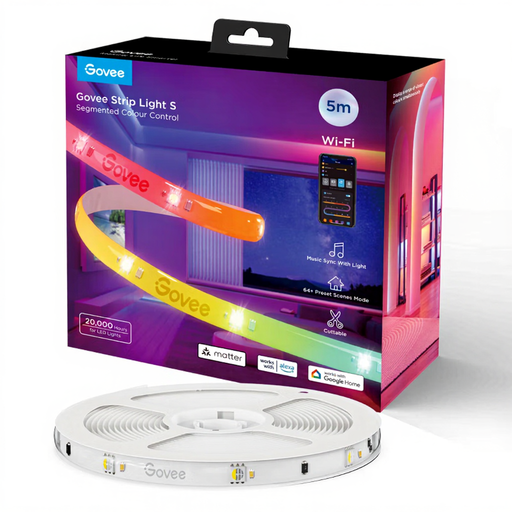
Why it stands out: This RGB LED strip stands out for two main features: RGBIC technology and Matter certification. Unlike traditional RGB strips that can only display one colour at a time, RGBIC allows for multiple colours to be shown on individual segments of the strip. This results in fluid colour gradients and dynamic effects. Matter support ensures hassle-free integration into all major smart home ecosystems, including Apple Home, Google Home, and Alexa.
Pros:
Who it's for: Users who want flexible and powerful backlighting for monitors, desks, or entire rooms and who value seamless smart home integration.
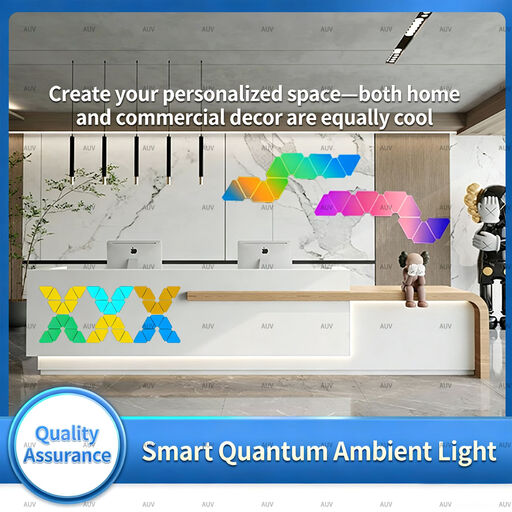
Why it stands out: These modular wall-mounted LED panels offer maximum creative freedom. The set consists of six triangular panels that can be arranged in any configuration to form custom patterns. They transform a blank wall into a dynamic work of art and are a key component for eye-catching gaming room decor. Control is managed via either a remote control or an app.
Pros:
Who it's for: Creative users who want to actively design their walls and create a large-scale, customisable light installation that serves as a focal point in the room.
The products featured cover a broad spectrum, but the market for smart lighting is even more diverse. If you're looking for other shapes, sizes, or specific features, you can find more solutions in our comprehensive category.
️ Discover more RGB lamp models here
1. What is the difference between RGB and RGBIC? Standard RGB LED strips can only display one colour at a time across their entire length. While they can change colour, the whole strip will be uniform. RGBIC (Independent Control) means the LED strip has an additional chip that allows individual segments of the strip to be controlled independently. This enables multiple colours to be displayed simultaneously, creating fluid colour gradients and dynamic effects like rainbow patterns.
2. How does music sync work on gaming lights?Music sync is typically achieved through a small microphone integrated into the control unit or the light strip itself. This microphone captures sound waves from music, movies, or games in the room. An internal processor analyses the frequency and volume of the audio signal in real time and converts this information into corresponding light commands. This allows the lights to pulse to the beat of the bass or change colour with high-pitched tones.
3. Do I need a separate smart hub for smart lights? It depends on the product. Many modern smart lights connect directly to your home network via Wi-Fi (2.4 GHz) and can then be controlled by an app or voice assistant without needing an additional hub. Products that support the Matter standard require a Matter-compatible hub (e.g., a newer Amazon Echo, Google Nest Hub, or Apple HomePod) to work across different brands. Bluetooth-controlled lights generally do not require a hub but have a more limited range.