
Lieferung heute & morgen

Qualitätsgarantie

Willkommens-Angebote freischalten: KOSTENLOSE Lieferung | Bis zu 80 % RABATT | Kostenlose 30-Tage-JoyPlus-Testphase
App herunterladen
A wrinkled shirt just before an important meeting or a creased dress in your holiday suitcase—these are situations many of us know all too well. There isn't always the time or space for a traditional ironing board and iron. A garment steamer, also known as a handheld steamer, offers a convenient alternative to quickly refresh clothes and remove wrinkles without ironing.
This article serves as a guide. It explains the key criteria to consider when choosing a clothes steamer and presents a selection of models with different features to help make your purchasing decision easier.
Choosing the right device depends on your individual needs. Whether for daily use at home, for business trips, or on holiday, the following three criteria will help you find the perfect garment steamer.
The power, measured in watts (W), is an indicator of a garment steamer's efficiency. Models with a higher wattage (e.g., 1500 W to 1800 W) generally heat up faster, often in under 30 seconds. They also produce a stronger, more consistent steam output, which makes smoothing out thicker fabrics like cotton or linen easier. For professionals who need to quickly refresh their clothes in the morning, a short heat-up time is a key advantage.
The size of the water tank determines how long you can steam continuously before needing to refill.
A detachable water tank also makes refilling and cleaning easier.
Modern garment steamers offer more than just vertical steaming. Some devices can also be used horizontally like a traditional iron, which is particularly useful for collars or cuffs. Look for the following features:
Based on the criteria mentioned, we have compiled a selection of devices suitable for various applications.
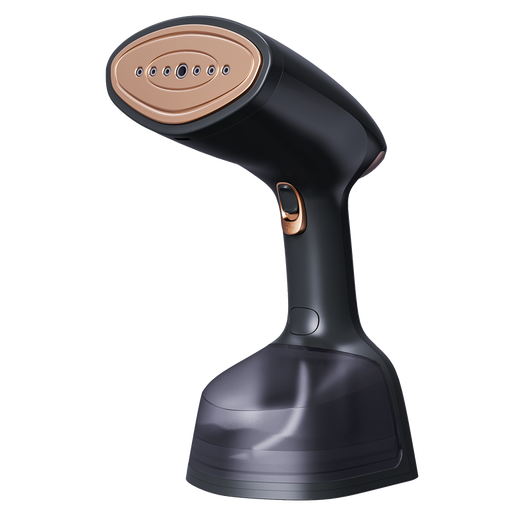
Why It Stands Out: With 1800 watts of power and a heat-up time of under 30 seconds, this model is particularly powerful. The large 260 ml water tank allows for 10 to 15 minutes of steaming, which is enough for several garments. A special feature is its leak-proof design, which permits both vertical and horizontal steaming. The lockable steam button also enables continuous steam output without having to hold the switch down permanently.
Pros:
Who It's For: This model is a great choice for home users looking for a powerful and versatile solution for regular use, who also want to process larger batches of laundry quickly.
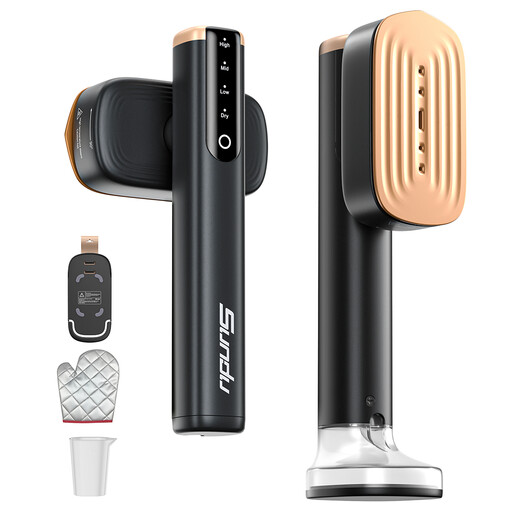
Why It Stands Out: The Sundu steamer combines the function of a handheld garment steamer with that of an iron. Its 90° rotating head allows for a seamless transition between vertical steaming and horizontal ironing. The device comes with two water tanks (100 ml + 180 ml), enabling flexible and extended use for up to 40 minutes. With 1200 watts, it heats up in just 15 seconds. It is controlled via an LED display with four steam modes.
Pros:
Who It's For: Perfect for business travellers and holidaymakers who need a compact yet feature-rich device. The 2-in-1 functionality without an ironing board is also practical for users in small apartments.
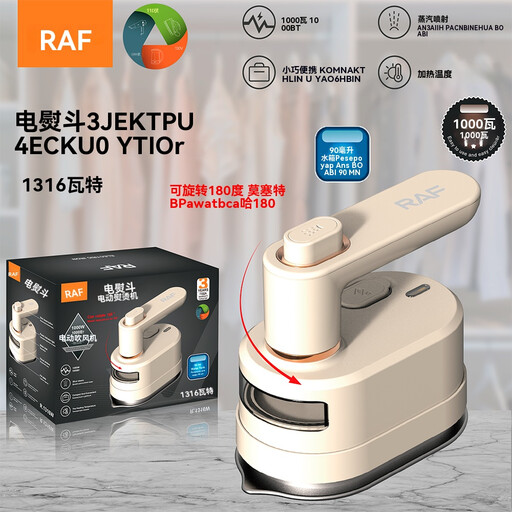
Why It Stands Out: This model from RAF is designed for maximum portability. With 1000 watts of power, a 180° rotating handle, and a weight of under one kilogram, it's an ideal travel companion. The 90 ml water tank is designed for quick touch-ups on individual garments. Another feature is its dual-voltage compatibility (110V-220V), which allows for use on international trips without a voltage converter.
Pros:
Who It's For: Ideal for students, minimalists, and frequent travellers looking for an extremely compact and lightweight solution to get clothes wrinkle-free quickly, whether on the road or in daily life.
The models presented already cover a wide range of needs. However, if you are looking for devices with different specifications or in another price range, you can find more alternatives in our collection.
Discover Our Entire Selection of Garment Steamers
A garment steamer is ideal for removing wrinkles from most clothes and refreshing textiles. It is particularly well-suited for delicate fabrics like silk or viscose. However, a traditional iron creates sharper creases, such as those on suit trousers or shirt collars, through pressure and high heat. For such tasks, an iron often remains the more precise choice. For everyday use, however, a handheld steamer is a sufficient and faster alternative for many.
Most common fabrics such as cotton, linen, wool, polyester, and silk can be safely treated with a garment steamer. Many devices offer different steam levels for various materials. However, it is always advisable to check the garment's care label before use and to start on an inconspicuous area with very delicate fabrics.
Limescale buildup can impair a garment steamer's performance. To prevent this, using distilled or demineralised water is recommended, especially in regions with hard tap water. To descale, fill the tank with a mixture of water and white vinegar (in a 2:1 ratio) and let the device run in a well-ventilated area until the tank is empty. Afterwards, repeat the process with clean water to remove any vinegar residue. Always follow the manufacturer's specific instructions in the user manual.