
Lieferung heute & morgen

Qualitätsgarantie

Willkommens-Angebote freischalten: KOSTENLOSE Lieferung | Bis zu 80 % RABATT | Kostenlose 30-Tage-JoyPlus-Testphase
App herunterladen
A good gel pen glides smoothly across the paper, leaving a crisp line and feeling comfortable in your hand. But the search for the right model can quickly become overwhelming. Many products promise a perfect writing experience, only to prove impractical in daily use. This guide will help you identify the key features and avoid making the wrong purchase.
Before choosing a model, it's helpful to know the typical pitfalls that often only become apparent after purchase.
A closer look at the product specifications can prevent these problems from the start.
To find the right gel pen for your needs, you should check three core features. These are the primary determinants of quality and writing feel.
The line width, specified in millimeters (mm), defines how fine or broad your stroke is. The choice heavily depends on the intended use:
The composition of the ink is crucial for the writing result. Look for the following properties:
The pen's construction affects its handling and durability:
Here are some recommendations tailored to specific user profiles and their requirements.
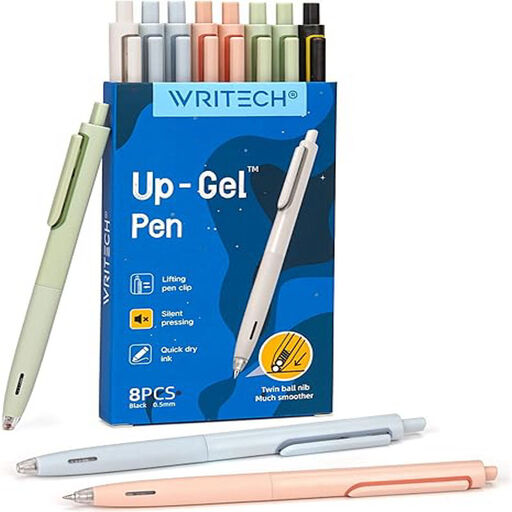
Why This Fits Their Persona: Ideal for environments where focus is key, like libraries or meetings. The silent click mechanism won't cause a disturbance, while the quick-drying ink allows for clean and rapid note-taking. The ergonomic shape supports long writing sessions without fatigue.
The quick-drying ink actively counteracts smudging. According to the manufacturer, the twin-ball tip technology ensures a smooth ink flow and prevents scratching or skipping.
Patented silent click mechanism. Ergonomic triangular barrel for a comfortable grip.
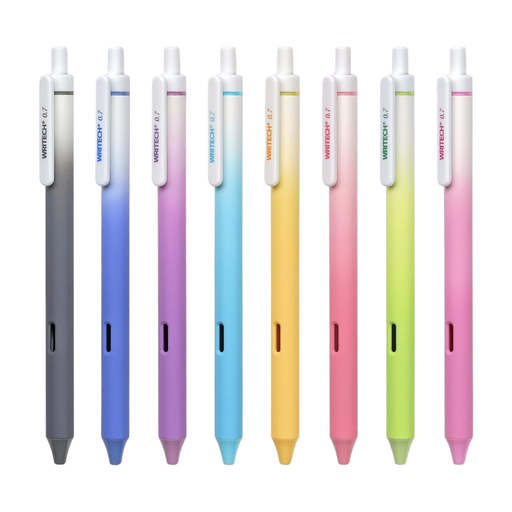
Why This Fits Their Persona: This set is designed for anyone who wants to color-code their notes, planners, or journals. The 8 vibrant colors provide a great foundation for creative work, while the 0.7mm tip ensures bold, highly visible lines.
The quick-drying ink prevents the different colors from smearing into each other during journaling. The consistent ink flow ensures clean lines without skipping, which is especially important for creative projects.
Set of 8 commonly used, vibrant colors. The manufacturer states the ink does not bleed through paper.
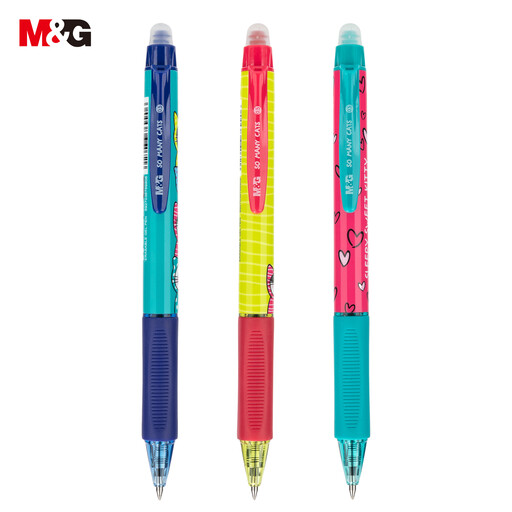
Why This Fits Their Persona: Perfect for students and anyone who likes to keep their notes error-free and tidy. The ability to cleanly erase what you've written, without cross-outs or correction fluid, offers maximum flexibility for homework, lectures, or scheduling.
This product solves the problem of messy corrections, which is a form of "smudging." The side-click mechanism is convenient and protects the tip from drying out, increasing the pen's lifespan.
Thermo-sensitive ink for clean corrections. Convenient side-click mechanism for one-handed operation.
We've compiled a complete, up-to-date list of products that meet these strict selection criteria and comply with current regulations.
1. How do I store gel pens correctly to prevent them from drying out? Most manufacturers recommend storing gel pens horizontally. This prevents air bubbles from forming in the ink cartridge or the ink from pooling at one end, which can affect ink flow. For pens with a cap, it should always be secured tightly. For retractable models, the tip should always be retracted.
2. Are erasable gel pens suitable for official documents? No, using erasable ink is not recommended for official or legal documents like contracts, deeds, or checks. Since the ink reacts to heat, it can become invisible when exposed to high temperatures (e.g., in a hot car or during lamination). For such purposes, you should always use permanent, archival-quality ink.
3. What is the difference between a gel pen and a fineliner? A gel pen uses a pigment-based gel ink, known for its rich colors and smooth glide. The tip is typically a rollerball. A classic fineliner, on the other hand, usually has a fiber or plastic-encased tip and uses water- or alcohol-based ink. However, there are also hybrid forms like 0.5mm fineliners with gel ink, which combine the precision of a fineliner with the writing feel of a gel pen.