
Lieferung heute & morgen

Qualitätsgarantie

Willkommens-Angebote freischalten: KOSTENLOSE Lieferung | Bis zu 80 % RABATT | Kostenlose 30-Tage-JoyPlus-Testphase
App herunterladen
Glass containers are a popular choice for the modern kitchen. They're hygienic, don't absorb odours, and let you see what's inside at a glance. However, there are several pitfalls that often only become apparent after purchase. A supposedly airtight lid that doesn't live up to its promise or glass that cracks during its first use in the oven are frustrating and avoidable problems. This guide will help you identify the crucial features and make an informed choice for your glass kitchen organisation.
Before you invest, you should be aware of three common defects that can severely limit the functionality of glass containers:
To avoid these problems, you should focus on three core parameters. These define the quality and longevity of your new glass containers.
The type of glass used is the deciding factor for its intended use.
A good seal is the heart of any storage container. Pay attention to the quality of the gasket, which is usually made of silicone. It should fit snugly in the lid but be removable for easy cleaning. Bail-and-trigger closures with rubber rings provide a very tight seal, while snap-lock systems on food storage containers offer practical handling. For an oil and vinegar dispenser or a glass oil bottle, a spout that allows for drip-free pouring is crucial.
A well-thought-out design significantly simplifies kitchen organisation. Square or rectangular containers use cupboard space more efficiently than round ones. Check whether the containers (especially sets) are designed to be stacked securely on top of each other. A wide opening not only makes it easier to fill and retrieve food but also simplifies cleaning by hand. For beverages, a glass carafe with a matching lid or drinking glasses with lids and straws are practical solutions.
Here are some recommendations tailored to different needs and use cases.
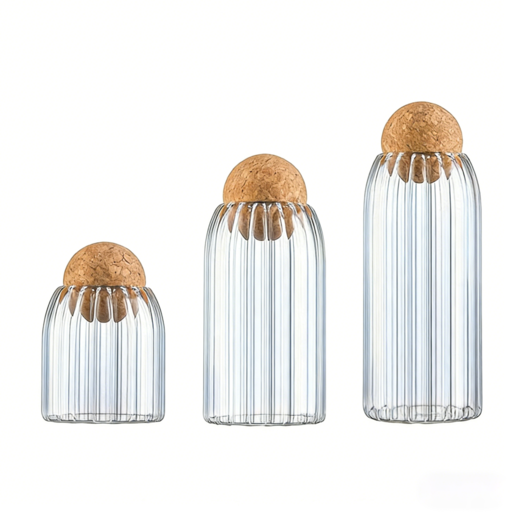
Why This Fits Their Persona: Ideal for stocking a basic pantry, keeping dry goods like pasta, rice, or cereal fresh. A straightforward and effective solution for a first kitchen.
The lid with its integrated gasket ensures a reliably airtight seal, protecting contents from moisture—unlike many loose-fitting lids in the lower price range.
A functional set of three jars that provides a solid foundation for organising dry goods. The transparent glass allows for a quick overview.
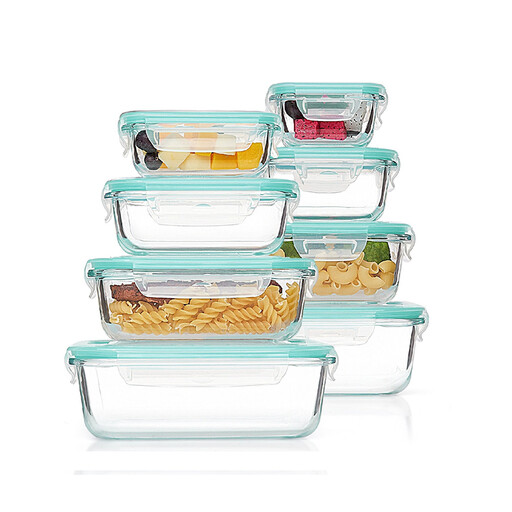
Why This Fits Their Persona: Perfect for meal prep and storing leftovers. The containers can go directly from the fridge to the microwave or oven (without the lid), simplifying daily cooking routines.
Made from borosilicate glass, it withstands thermal shock and prevents the glass from cracking during temperature changes—a common problem with lower-quality glass containers.
The set includes 8 different sizes (150 ml to 1040 ml) and is suitable for the freezer, microwave, and oven, offering maximum flexibility for cooking and storage.
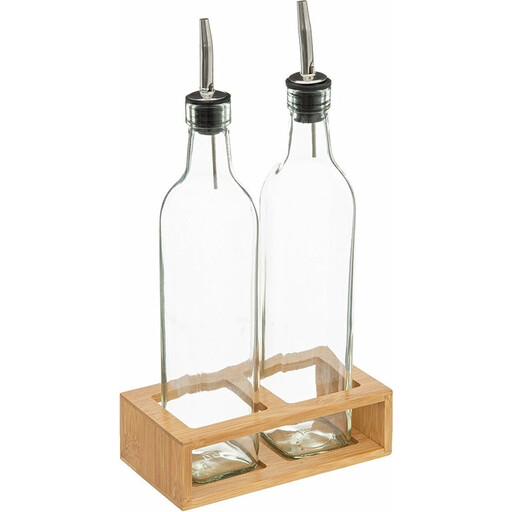
Why This Fits Their Persona: This set is designed for those who want to combine functionality with aesthetics on their kitchen countertop. It keeps oil and vinegar within easy reach while looking elegant.
Instead of mismatched bottles, this set offers a dedicated and stable storage solution. The bamboo stand prevents tipping, and the spouts allow for clean pouring.
A combination of a practical oil and vinegar dispenser and a decorative element that visibly enhances kitchen organisation. The FSC-certified bamboo wood underscores its sustainable character.
We have compiled a complete, real-time list of products that fully satisfy these strict selection criteria and UK safety regulations.
Wooden lids can be stylish, but they require special care. The key is a high-quality, removable silicone gasket. The lid itself should not go in the dishwasher and must air-dry completely after hand-washing to prevent potential mould growth. Regular inspection of the gasket and wood is advisable.
Heat resistance usually refers to the use of borosilicate glass. This material can withstand rapid temperature changes (thermal shock), for example, from the refrigerator to a preheated oven (without the lid). Standard soda-lime glass can crack under such stress. Always check the manufacturer's specifications on the product or packaging to see if a container is explicitly labelled as oven-safe or microwave-safe.
Clean the silicone gaskets regularly by hand with mild dish soap and warm water. Avoid harsh cleaners or abrasive sponges. Ensure that the gasket and the groove in the lid are completely dry and free of food residue before sealing. When storing the jars empty, it's best to place the lid on loosely instead of sealing it tightly to preserve the material.