
Lieferung heute & morgen

Qualitätsgarantie

Willkommens-Angebote freischalten: KOSTENLOSE Lieferung | Bis zu 80 % RABATT | Kostenlose 30-Tage-JoyPlus-Testphase
App herunterladen
Finding the right food storage solution can be a challenge. Stained plastic containers, leaky lids, or concerns about potentially harmful chemicals lead many to a more durable and versatile alternative: the glass food storage container. These containers resist odours and stains and often offer incredible flexibility—from freezing and reheating to serving at the table.
This article serves as your guide. It highlights the key features to consider when making your selection and presents a curated list of models with different strengths, empowering you to make an informed decision.
The market is vast, but not every glass container is suitable for every purpose. Three core criteria will help you find the perfect product for your needs.
The type of glass used is a critical factor. Many high-quality models are made from borosilicate glass. Unlike standard soda-lime glass, this material is distinguished by its high resistance to thermal shock. This means it can withstand significant temperature changes without cracking. An oven-safe glass food container is therefore almost always a borosilicate glass container. This property also makes it a practical glass casserole dish with a lid, as you can prep, store, and reheat meals all in the same dish.
A good glass container with a lid doesn't just cover—it seals. Look for locking systems with click mechanisms and an integrated silicone gasket. Such models are typically reliably leak-proof and keep food fresher for longer by minimising the entry of air and moisture. A leak-proof glass storage container is essential for transporting soups or sauces. Furthermore, well-designed lids often allow for secure stacking, bringing better organisation to your fridge or pantry.
Consider what you will primarily use the container for. A glass meal prep container, perhaps with dividers, is ideal for preparing meals and keeping components separate. If you plan to freeze leftovers or bake dishes in the oven, then freezer and oven-safe (without the lid) capabilities are a must. A versatile container not only saves cupboard space but also time and washing up in your daily kitchen routine.
Based on the criteria above, we have compiled a selection of food storage containers that stand out for their material quality and functionality.
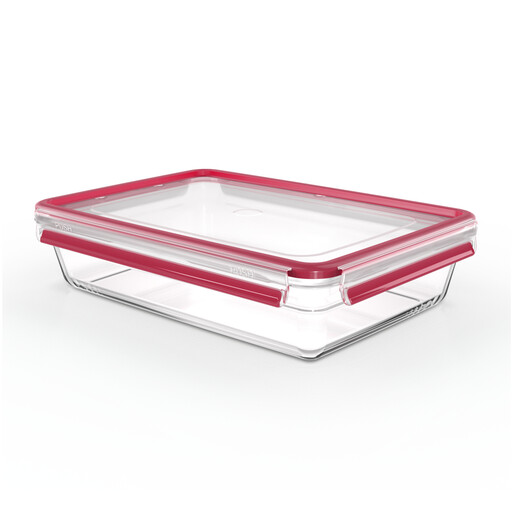
Why we love this model: The Emsa Clip & Close container is an all-rounder for the family kitchen. With a generous 3-litre capacity, it's perfect for large portions, salads, or as a casserole dish. According to the manufacturer, the robust glass is heat-resistant up to 420°C (without the lid). The patented clip-lock system with a gasket ensures a reliable seal. A reinforced rim allows for non-slip stacking of same-sized containers.
Pros:
Best for: Ideal for families and anyone who regularly cooks, bakes, or stores large quantities and needs a versatile, large-format dish.
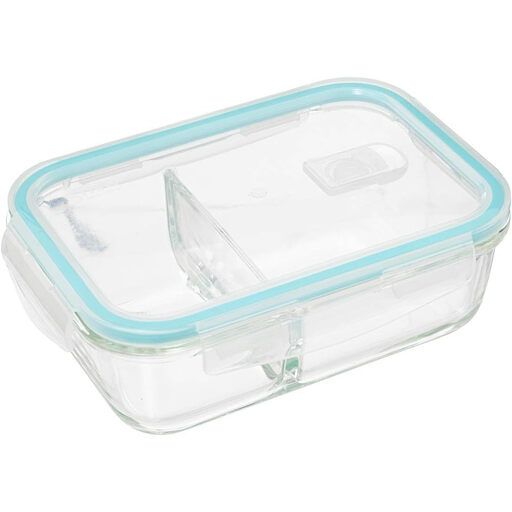
Why we love this model: This container from 5five is specifically designed for meal prep. The integrated compartments allow you to store and transport different components of a meal separately. The body, made of borosilicate glass, makes it robust and versatile, while the polypropylene and silicone lid ensures a secure closure.
Pros:
Best for: Perfect for professionals, students, and anyone who wants to prep and pack their lunch without the ingredients mixing together.
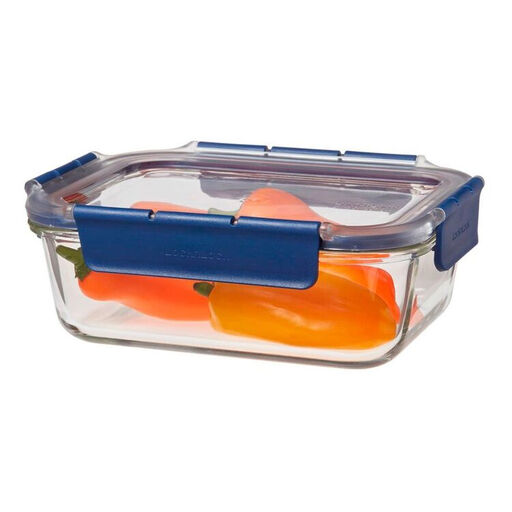
Why we love this model: The TOP Class series from Lock&Lock combines functionality with thoughtful design. The borosilicate glass container is oven-safe up to 400°C, according to the manufacturer. A standout feature is the lid, made from shatter-proof and stain-resistant Tritan plastic. The 4.8 mm raised lid edge enables exceptionally stable and space-saving stacking of multiple containers. The patented 4-hinge locking system ensures an airtight and watertight seal.
Pros:
Best for: A great choice for users who value ultra-organised, space-saving storage in their fridge and pantry and are looking for a durable system.
The models featured here cover many common use cases. However, sometimes specialised shapes are needed, such as for transporting cakes or pies. If you're looking for containers for baked goods, you can find more suitable solutions in our category.
Discover more cheesecake storage containers
Glass and plastic have different properties. Glass is non-porous, meaning it won't absorb odours, flavours, or stains from foods like tomato sauce. It is chemically inert and contains no BPA. Additionally, many glass containers are oven-safe. Plastic containers, on the other hand, are lighter and generally more shatter-resistant, which can make them more practical for certain uses, like being transported by children.
No. Only containers explicitly marked as oven-safe glass food containers should be used in the oven. These are typically models made from borosilicate glass. Always read the manufacturer's instructions. The lid, usually made of plastic or silicone, must always be removed before use in the oven or microwave.
Most glass containers and their lids are dishwasher-safe. For thorough hygiene, it is recommended to regularly remove the silicone gasket from the lid and clean it separately. This prevents the build-up of mould or bacteria in the crevices. Allow all parts to dry completely before reassembling and closing the container.