
Lieferung heute & morgen

Qualitätsgarantie

Willkommens-Angebote freischalten: KOSTENLOSE Lieferung | Bis zu 80 % RABATT | Kostenlose 30-Tage-JoyPlus-Testphase
App herunterladen
A grow-with-me high chair is an investment that should ideally accompany your child from infancy through to their school years. However, the market is overwhelming, and many products don't live up to their promises. As a Joybuy Product Recommendation Officer, I'll help you identify the crucial features and avoid common pitfalls, so you can make an informed and lasting choice for your family.
Many parents invest in a supposedly durable chair, only to find it impractical, unsafe, or uncomfortable after just a few months. Watch out for these three common problems:
To avoid the problems mentioned above, you should check three key aspects before buying. These define the quality, safety, and longevity of a grow-with-me high chair.
The material affects not only the appearance but also the stability and durability.
A truly adjustable child's high chair must do more than just change the seat height. Two separately adjustable elements are crucial:
Safety is the top priority. A reliable high chair should meet the European safety standard EN 14988. Other important features include:
Based on these objective criteria, we have identified some models that represent a considered choice for different needs and budgets.
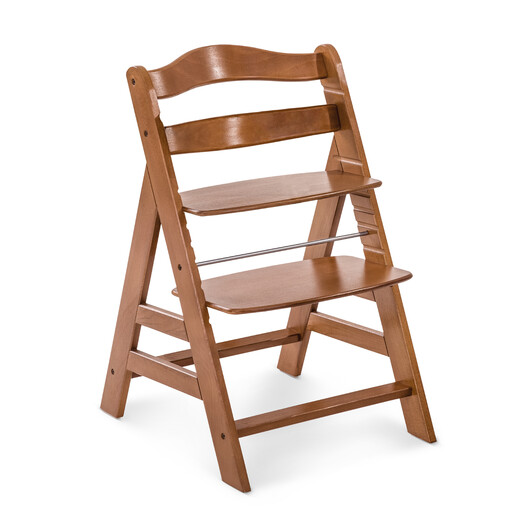
Why This Fits Their Persona: Ideal for parents seeking a one-time, long-lasting investment. Thanks to its high load capacity of 90 kg, the chair grows with the child from infancy to adulthood, later becoming a fully-fledged chair for a desk or dining table.
The construction from European beech wood is extremely stable and tip-resistant. The seat and foot plates are separate and precisely adjustable, ensuring a consistently ergonomic posture.
Sustainable Material: Made from FSC-certified beech wood. High Load Capacity: Usable up to 90 kg, promising an extremely long lifespan.
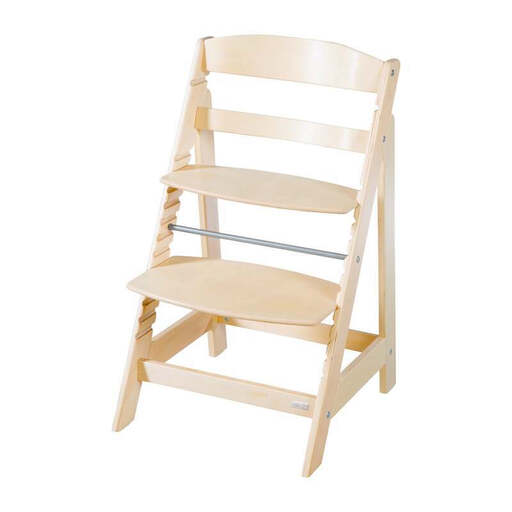
Why This Fits Their Persona: A solid and functional choice for parents looking for the proven stair-step high chair design at an accessible price. It offers the core features without costly extras and accompanies the child into their teenage years.
It provides the necessary separate height adjustment for the seat and footboard for good ergonomics. The safety bar and harness system are already included, so there are no hidden costs.
Good Value for Money: Offers the essential functions of a wooden grow-with-me high chair. Long-Term Use: Supports up to 50 kg, making it usable for many years.
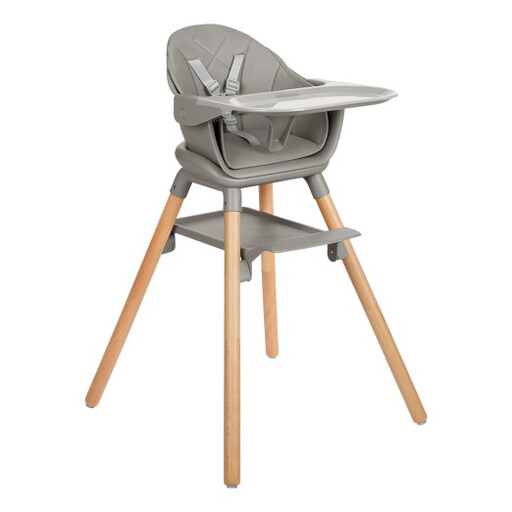
Why This Fits Their Persona: Perfect for families who value maximum versatility. This model transforms from a high chair into a small chair with a table or a stool, flexibly adapting to various everyday situations, from eating to playing.
The concept is designed for versatility from the outset, not just for growing with the child. All necessary parts for the different configurations, as well as the tray and 5-point harness, are included in the set.
6-in-1 Functionality: Converts into various seating options for different age groups and purposes. Easy to Clean: The wipeable leatherette cover and the removable double tray simplify daily cleaning.
We have compiled a complete, real-time list of products that fully satisfy these strict selection criteria and UK safety regulations.
1. When can a baby start sitting in a grow-with-me high chair? A baby should only be placed in a high chair once they can sit upright independently and stably without support. This is typically between the 6th and 9th month. The back and neck muscles must be strong enough to hold the head and upper body on their own.
2. Is a wooden high chair better than a plastic one? Both materials have their pros and cons. A wooden high chair is often more durable, sturdier, and scores points for sustainability, especially if it's FSC-certified. It can be used for generations. Plastic chairs are usually lighter, often easier to clean, and can be very flexible due to modular designs. The decision depends on your priorities: longevity and stability (wood) versus flexibility and ease of cleaning (plastic).
3. How do I adjust a stair-step high chair ergonomically? Correct adjustment is crucial for comfort and a healthy posture. Follow these three steps: