
Lieferung heute & morgen

Qualitätsgarantie
App herunterladen
Kategorien
Selecting the right at-home hair removal device means understanding the available technologies and how they align with your personal needs. The two primary methods used in devices for home use are light-based hair removal (IPL) and mechanical epilation. Each method operates on different physical principles and offers distinct advantages and disadvantages regarding treatment duration, results, and comfort. This article analyses the key technical features to help you make an informed decision.
Your choice of model should be based on an evaluation of objective parameters. The following criteria are relevant for your selection:
Based on an analysis of technical specifications and functional features, we present two models with distinct technological approaches.
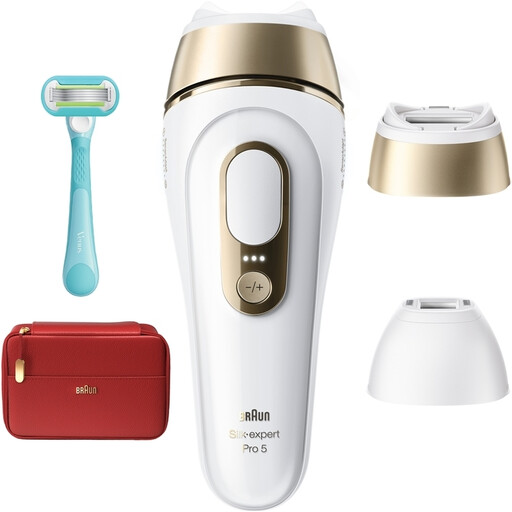
This device uses IPL technology for long-lasting hair growth reduction. It is designed for use on the body and face.
Why we recommend this product: This model stands out with its advanced skin tone sensor, which continuously reads your skin tone and automatically adapts the intensity of each flash. This maximises both the efficacy and safety of at-home hair removal. With a guaranteed 400,000 flashes, the device is engineered for a long service life. The high speed, which the manufacturer claims allows for a full-body treatment in about 10 minutes, offers a significant practical advantage.
Advantages:
Who it's for: Users seeking a method for long-term hair reduction at home whose skin and hair type are suitable for IPL technology. This device is ideal for individuals who value a safe, fast, and automated application.
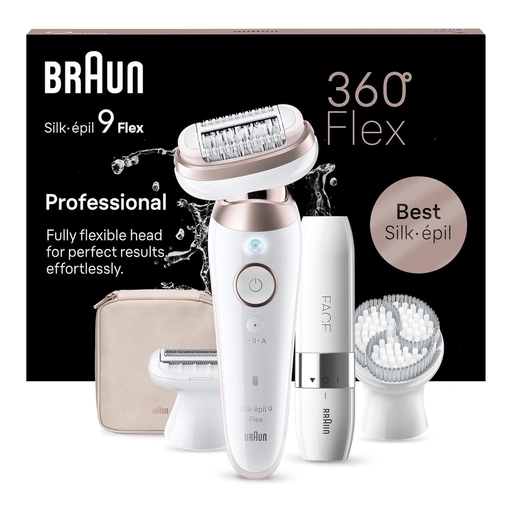
This kit is based on mechanical epilation and offers a high degree of versatility thanks to its flexible head and extensive range of accessories.
Why we recommend this product: The key feature of this epilator is its fully flexible head, which adapts to body contours to effectively treat even hard-to-reach areas. The Wet & Dry functionality allows for use in the bath or shower, which many users find reduces discomfort. The kit also includes various attachments, such as a shaver and trimmer head and an exfoliation brush, making it a comprehensive body care solution.
Advantages:
Who it's for: Users who prefer immediate results and flexible use (wet or dry). It is ideal for individuals looking for an all-in-one device for epilation, shaving, trimming, and skin care, who also value precise hair removal on difficult body areas.
If the models presented don't perfectly match your requirements, the market offers a wide variety of other options with different specifications. You can find a broader selection of devices covering various technological approaches and feature sets in our Hair Removal & Epilators category.
1. What is the difference between an IPL device and an epilator? An IPL device uses light pulses to deactivate the hair follicle, reducing hair growth over a prolonged period. The results are not immediate and require repeated treatments. An epilator mechanically removes hair by plucking it from the root. The result is instantly smooth skin that lasts for several weeks, but the hair does grow back.
2. Is at-home hair removal with an IPL device safe? Modern IPL devices for home use are equipped with safety mechanisms. A crucial feature is the skin tone sensor, which checks the skin colour before each flash and either adjusts the intensity or blocks the flash on unsuitable skin tones. It is essential to follow the manufacturer's instructions carefully and not use the device on tattooed, very dark, or broken skin.
3. How often do you need to use a hair removal device? The frequency of use depends on the technology. For IPL devices, an initial phase of one treatment every one to two weeks for several months is typically recommended until hair growth is significantly reduced. Afterwards, only occasional maintenance treatments (e.g., monthly) are necessary. Epilators are used every two to four weeks, depending on individual hair growth, to maintain smooth skin.