
Lieferung heute & morgen

Qualitätsgarantie

Willkommens-Angebote freischalten: KOSTENLOSE Lieferung | Bis zu 80 % RABATT | Kostenlose 30-Tage-JoyPlus-Testphase
App herunterladen
A hand blender, also known as an immersion or stick blender, is a versatile tool in the modern kitchen. Its primary function is to purée, mix, or emulsify ingredients directly in a pot, beaker, or bowl. This reduces clean-up compared to a traditional stand mixer and allows for quick processing. Choosing the right model depends on specific technical parameters and its intended use. This article breaks down the crucial criteria to consider when making a purchase.
A hand blender's functionality is determined by the interplay of motor power, material quality, accessories, and ergonomic design. An informed decision is based on weighing these technical factors against your individual needs.
The power of a hand blender is measured in watts (W) and indicates the motor's capability.
The durability and safety of a hand blender depend significantly on the materials used.
A hand blender set significantly expands the appliance's range of use. Typical hand blenders with accessories include:
Variable speed control, often managed by how hard you press the button, allows for precise control over the texture of your blend. An additional turbo button provides a short burst of maximum power. For straightforward cleaning, it's crucial that the blending shaft and most accessories are detachable and dishwasher-safe.
Based on the technical criteria above, here is a selection of models that cater to different user profiles.
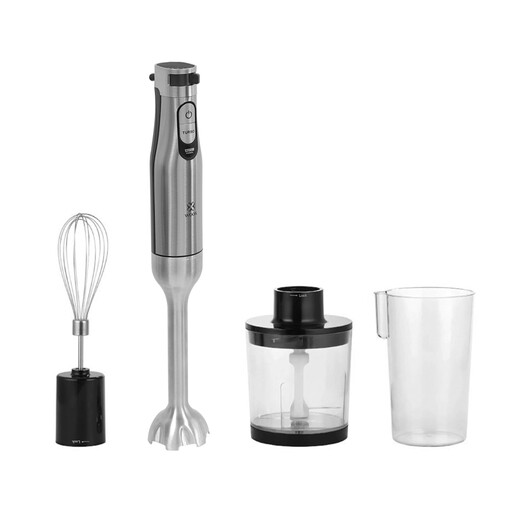
Why we're featuring this product: This model stands out with its high-powered 1200-watt motor and a maximum speed of 20,000 RPM. It's designed as a comprehensive immersion blender set that covers a wide range of kitchen tasks, from puréeing to chopping meat. The choice of stainless steel for the housing and blades underscores its focus on durability.
Technical Specifications:
Best for: Users looking for a powerful and versatile appliance for demanding tasks, such as making green smoothies with a hand blender, grinding harder ingredients, or processing small amounts of meat.

Why we're featuring this product: The Braun Hand Blender Multiquick 5 is a well-established model that focuses on core functionality with reliable performance. With 600 watts and two speed settings, it's designed for the most common daily kitchen tasks. The Braun-developed PowerBell technology, with its anti-splash design, is a notable feature for clean operation.
Technical Specifications:
Best for: Home cooks and households who need a solid, easy-to-use hand blender for standard applications like soups, sauces, and baby food.
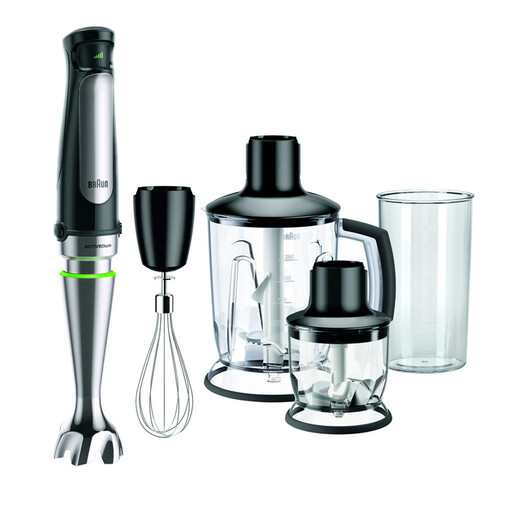
Why we're featuring this product: The MultiQuick 7 combines a high 1000-watt power output with advanced technologies. The ACTIVEBlade technology moves the blade up and down to blend even the hardest foods with less effort. The SmartSpeed function provides seamless variable speed control based on how hard you press the button. Its extensive accessory set, including a blender/chopper attachment with an ice-crushing blade, makes it a multifunctional system.
Technical Specifications:
Best for: Ambitious home cooks who require maximum control, high performance, and a wide range of accessories for complex preparations, including crushing ice.
A hand blender is an efficient solution for many blending and puréeing tasks. However, for jobs requiring larger volumes, kneading heavy dough, or specialised cutting functions, a different appliance may be more suitable. If your needs extend beyond the capabilities of a hand blender, explore our Food Processors category for appliances that cover an even wider range of kitchen tasks.
1. How many watts should a good hand blender have? The required wattage depends on its intended use. For soft, cooked ingredients and liquids, models up to 600 watts are sufficient. For regularly processing raw vegetables, nuts, or frozen fruits, a power rating of 800 to 1200 watts is recommended to avoid overloading the motor and to achieve smooth results.
2. What is the difference between an immersion blender and a hand mixer? An immersion blender (or hand blender) is equipped with a blade attachment and is primarily used for puréeing, chopping, and mixing ingredients, often directly in the pot. A hand mixer, on the other hand, uses two rotating beaters or dough hooks and is specialised for whipping cream or egg whites, as well as mixing and kneading dough.