
Lieferung heute & morgen

Qualitätsgarantie

Willkommens-Angebote freischalten: KOSTENLOSE Lieferung | Bis zu 80 % RABATT | Kostenlose 30-Tage-JoyPlus-Testphase
App herunterladen
A wrinkled shirt right before an important meeting or a blouse full of suitcase creases while travelling—situations like these demand a quick and simple solution. For anyone who lacks the time or space for a traditional ironing board, a practical alternative is essential. A handheld steamer, also known as a garment steamer, offers an efficient way to refresh and smooth clothes directly on the hanger.
This guide is designed to help you. We'll introduce various models and explain the key features to look for, enabling you to make an informed decision that fits your daily routine.
To find the right device for your needs, a few technical features are crucial. These factors determine how quickly and effectively you can smooth your clothes.
The power, measured in watts (W), is an indicator of steam production and how quickly the device is ready to use. A 1500W steamer typically generates steam that is hot and powerful enough to remove even deep wrinkles from thicker fabrics. A short heat-up time of under 45 seconds is a major advantage for quick use in the morning or on the go.
The size of the water tank, measured in millilitres (ml), determines how long you can steam continuously before needing to refill. A larger tank is suitable for multiple garments but also makes the device slightly heavier. For travel, a compact and portable steamer with a smaller tank is often more practical. Detachable water tanks also make refilling and cleaning easier.
Some models offer different steam settings, such as a continuous steam output for larger areas or a targeted steam burst for stubborn wrinkles. Useful accessories like a brush can help remove lint and hair from textiles and allow the steam to penetrate deeper into the fibres. Also, look for a leak-proof design that allows the device to be used both vertically and horizontally—a feature that is especially useful for smoothing tablecloths or curtains.
Based on objective product features, we have selected a few models that stand out for their functionality and user-friendliness.
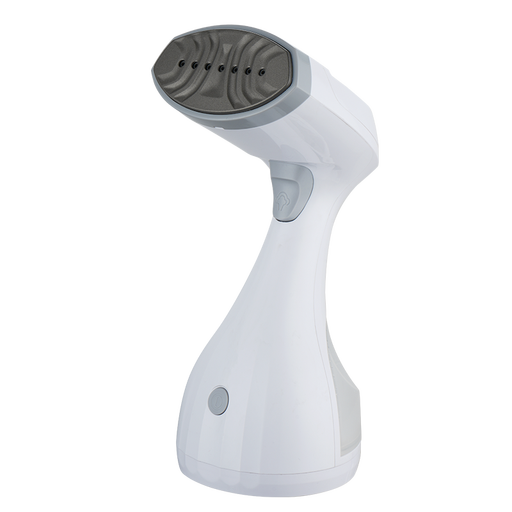
Aucma Handheld Garment Steamer, 1500W
Why it stands out: This model combines high power of 1500W with an extra-large 300 ml water tank. According to the manufacturer, this allows for up to 15 minutes of continuous steam. The heat-up time is only about 30 seconds.
Advantages:
Who is it for? Those who regularly need to steam multiple items of clothing or larger home textiles like curtains and tablecloths, and who value a long runtime per fill.

KONKA Handheld Garment Steamer, 1500W
Why it stands out: The KONKA garment steamer is notable for its extremely fast heat-up time of just 25 seconds and a triple safety system. With 1500W of power and a seven-hole stainless steel steam plate, it ensures powerful and even steam distribution.
Advantages:
Who is it for? Professionals and frequent travellers who prioritise speed, safety, and portability. Ideal for quickly refreshing a wardrobe in the morning or at a hotel.
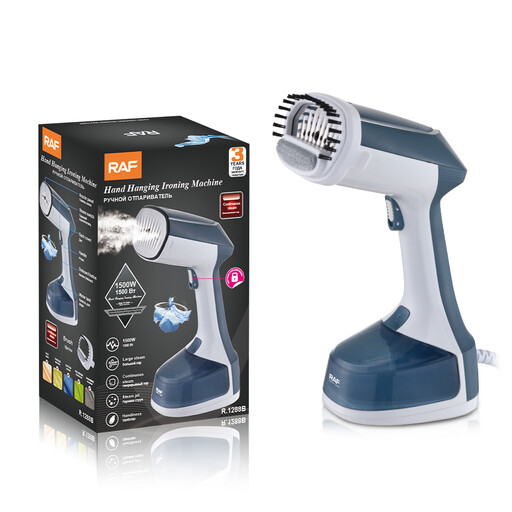
RAF 1500W Handheld Garment Steamer
Why it stands out: This device from RAF offers not only continuous steam with its 1500W of power but also a selectable steam boost function. This is particularly useful for targeting and treating stubborn wrinkles. The 300 ml water tank is detachable and provides a longer operating time.
Advantages:
Who is it for? Users looking for a versatile solution for different fabric types and wrinkle severities. The steam boost function is a plus for anyone who also wants to smooth thicker materials like denim or linen.
The models featured here provide a good overview of the available functions. However, if you'd like to compare more devices or explore a wider range of accessories and designs, you can find more alternatives in our category.
? Explore our entire selection of handheld steamers here
1. Can a handheld steamer completely replace an iron? For most everyday needs, like removing wrinkles from shirts, blouses, or dresses, a handheld steamer is a very effective and time-saving alternative. It's also excellent for refreshing blazers or delicate fabrics. However, a classic steam iron still has the edge when it comes to creating sharp creases on suit trousers or smoothing very thick fabrics like heavy cotton.
2. What kind of water should be used in a garment steamer? To prevent limescale build-up and extend the life of the device, it is generally recommended to use distilled or demineralised water. Some manufacturers state that a 1:1 mixture of tap water and distilled water is also acceptable. Be sure to check the instructions in your device's user manual.
3. How does a steamer work to smooth clothes without an iron? A garment steamer heats water until it produces hot steam. This steam is directed onto the fabric through nozzles. The heat and moisture from the steam relax the textile fibres, which causes wrinkles and creases to release. The garment is simply hung on a hanger and treated with the steam jet, making the process quick and straightforward.