
Lieferung heute & morgen

Qualitätsgarantie

Willkommens-Angebote freischalten: KOSTENLOSE Lieferung | Bis zu 80 % RABATT | Kostenlose 30-Tage-JoyPlus-Testphase
App herunterladen
A hanging chair serves as a suspended retreat, combining the relaxing motion of a swing with the comfort of an armchair. The selection of a suitable model depends on specific technical parameters, the intended location, and material properties. This guide analyses the crucial criteria to enable an informed decision, whether for use indoors, on a balcony, or in the garden.
The decision for a hanging chair or hanging basket chair should be based on an analysis of its material, construction, and the conditions of the installation site.
A frequently used material for the body of hanging chairs is polyrattan, also known as PE rattan. It consists of polyethylene fibres that mimic the look and feel of natural rattan but offer distinct technical advantages.
The suspension method is a fundamental distinguishing feature with direct implications for flexibility and installation effort.
The intended location defines the material requirements. For year-round outdoor use, a certified weatherproof model with high UV resistance and a corrosion-protected frame is essential. For an indoor hanging chair, these criteria are less critical, and design aspects like the Boho style often take precedence.
The maximum load capacity is a safety-critical manufacturer specification that must not be exceeded. It accounts for the user's weight as well as the dynamic loads generated by swinging movements.
The following models have been selected based on their technical specifications and practical benefits.
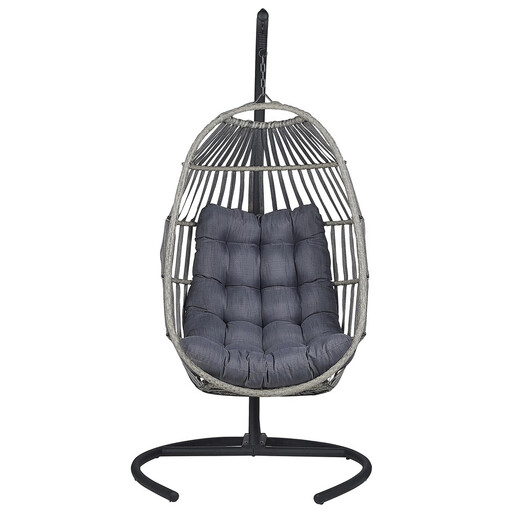
Why We Recommend This Product The SESIA model is an all-in-one solution that offers high placement flexibility thanks to its sturdy metal stand. The material combination of polyrattan and a powder-coated frame is designed for combined indoor and outdoor use. According to the manufacturer, its high UV resistance class ensures colour stability under sun exposure.
Pros
Who It's For This model is suitable for users looking for a hassle-free, flexible solution that requires no installation. It is ideal for gardens, large patios, or spacious living rooms where there is enough space for the stand (approx. 1.1 m²).
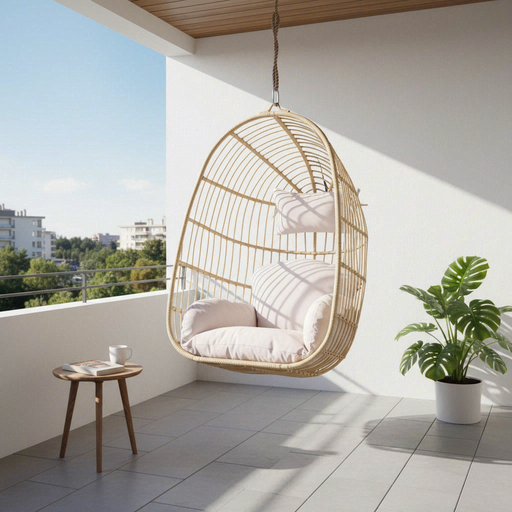
Why We Recommend This Product The CASOLI hanging basket chair is designed for ceiling or beam mounting and is distinguished by its more compact form. The design is inspired by the Boho style and integrates well into corresponding interior concepts. The synthetic rattan material is designed for outdoor use, making it a great option for a balcony hanging chair.
Pros
Who It's For This model is designed for users who prefer a permanent installation in a fixed location and appreciate the classic, floating look of a hanging basket chair. It is a fitting choice for covered balconies, conservatories, or living rooms with load-bearing ceilings. Mounting hardware, such as a chain or rope, must be purchased separately.
In addition to these specific hanging chair models, there is a wide range of garden furniture that uses similar materials and design principles. Polyrattan is also used for lounge sets, chairs, and tables, which are characterised by their durability and modern aesthetic. For a more comprehensive overview of weatherproof seating, take a look at the Outdoor Rattan Garden Furniture category.
1. How do you safely install a hanging chair without a stand? Installation must be done on a load-bearing structure, typically a concrete ceiling or a solid wooden beam. Use special heavy-duty anchors and hooks rated for the total weight (chair + person). It is recommended to have the installation performed or checked by a qualified professional.
2. Is polyrattan completely weatherproof? Polyrattan itself is water- and UV-resistant. To extend the lifespan of the entire piece of furniture, the included cushions should be stored in a dry place when not in use. For models with a metal stand, ensure the powder coating remains intact to prevent corrosion. A protective cover or storing the chair indoors during the winter months can further enhance its longevity.
3. How much space does a hanging chair with a stand require? In addition to the stand's actual footprint (often around 1 x 1 metre), plan for extra space to accommodate the swinging motion. A clear radius of at least 50 cm around the chair is advisable to avoid collisions with walls or other furniture.