
Lieferung heute & morgen

Qualitätsgarantie

Willkommens-Angebote freischalten: KOSTENLOSE Lieferung | Bis zu 80 % RABATT | Kostenlose 30-Tage-JoyPlus-Testphase
App herunterladen
Finding the right carry-on suitcase can be a challenge. It must comply with strict airline regulations, be robust enough for the rigours of travel, and also be lightweight and comfortable to transport. A hard-shell carry-on suitcase often strikes the perfect balance between protection and functionality.
This article serves as your guide. We will outline objective criteria for making your selection and present a curated list of models that are well-suited for different travel needs due to their specific features.
To make an informed decision, a few technical features are key. These criteria will help you objectively evaluate a suitcase's functionality.
Most airlines limit carry-on luggage to dimensions around 55 x 40 x 20 cm. A lightweight suitcase is crucial to avoid using up the airline's weight allowance with the suitcase itself. Hard-shell cases are primarily made from two materials:
A 4-wheel carry-on, also known as a spinner suitcase, offers 360-degree mobility. This allows you to effortlessly glide the suitcase alongside you instead of having to pull it. This is a significant advantage for comfort, especially in the narrow aisles of trains and planes or in long queues at the airport. Look for rubberised, quiet-gliding wheels for a pleasant user experience.
An integrated TSA lock is an important standard for travel to the USA and several other countries. It allows the Transportation Security Administration (TSA) to open the suitcase with a master key if necessary, without damaging the lock or the case. For international air travellers, this feature is a smart addition for securing your luggage.
Based on the criteria above, we have compiled a selection of models that stand out for their specific features.
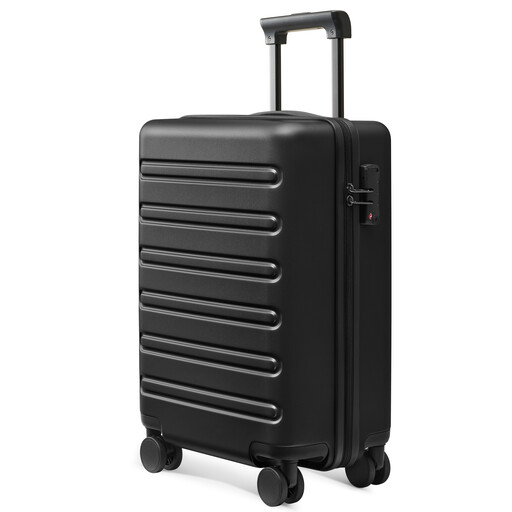
Why It Stands Out: This model emphasizes tested durability. According to the manufacturer, the suitcase has passed several tests, including for its handle, wheels, and zips, which points to a long-lasting construction. The PC and ABS material blend is designed to combine high elasticity with low weight.
Pros:
Who It's For: Frequent travellers looking for a reliable hard-shell cabin trolley built for durability.

Why It Stands Out: This cabin trolley is made of 100% polypropylene, a material known for its high impact and scratch resistance while remaining lightweight. Weighing only 2.41 kg and with dimensions of 55x40x20 cm, it meets the requirements of many airlines.
Pros:
Who It's For: Price- and quality-conscious travellers who prefer an extremely light, yet robust and scratch-resistant suitcase for regular short trips.

Why It Stands Out: This set offers an all-in-one solution for flexible travel. It consists of a 52 cm ABS hard-shell carry-on and an additional travel bag (40x20x25 cm), which meets the specifications of many budget airlines for a second, small personal item.
Pros:
Who It's For: Travellers looking for a versatile and cost-effective solution for various travel scenarios, especially for flights with low-cost carriers that have different baggage rules.
The models presented here cover common requirements. However, if you are looking for other sizes, materials, or designs, you can find more alternatives in our broader selection of travel luggage.
? Discover our entire range of Lightweight Luggage here.
1. What is the advantage of a hard-shell suitcase over a soft-shell one? A hard-shell suitcase offers better protection for fragile items inside and is generally more water-resistant than fabric models. Its surface is also easier to clean. Soft-shell suitcases, on the other hand, are often more flexible and feature convenient exterior pockets.
2. Is a 4-wheel suitcase (spinner) better than a 2-wheel one? A spinner suitcase with four wheels can be pushed upright and rotated 360 degrees, which significantly increases manoeuvrability in tight spaces and reduces strain on your arm and shoulder. A 2-wheel suitcase must be tilted and pulled, which can be more stable on uneven surfaces like cobblestones. For airports and train stations, a 4-wheel model is usually more comfortable.
3. How do I set the combination lock on my suitcase? Most TSA locks operate on a similar principle. The default combination is usually 0-0-0. To set a new combination, look for a small, often recessed button near the number dials. Press it with a pointed object (e.g., a pen), set your desired number combination, and confirm the setting by activating the main opening slider until the button pops back out. Please refer to the manufacturer's specific instructions for details.