
Lieferung heute & morgen

Qualitätsgarantie
App herunterladen
Kategorien
A heat pump dryer is an advanced evolution of the traditional condenser dryer. It operates using a closed-loop refrigeration circuit, which allows it to dry laundry at significantly lower temperatures. This results in lower energy consumption and gentler care for your textiles. When selecting the right model, objective criteria such as the energy efficiency class, capacity, noise level, and specific technological features are crucial.
Your choice of model should be based on a thorough analysis of its technical specifications. The following parameters are essential for making an informed comparison.
The energy efficiency class, indicated on the EU energy label, is a key indicator of running costs. The scale ranges from A (highest efficiency) to G (lowest efficiency). An A-class appliance consumes significantly less electricity than a model in the lower classes. Consumption is specified in kilowatt-hours (kWh) per 100 drying cycles, allowing for a direct cost comparison. An energy-efficient tumble dryer will pay for its potentially higher purchase price over its lifespan.
The capacity, measured in kilograms (kg) of dry laundry, should match the size of your household.
The noise level of a dryer is measured in decibels (dB). A quiet heat pump dryer is particularly advantageous in open-plan kitchens or for overnight operation. Models with noise levels below 65 dB are considered relatively quiet. Appliances with a Class A noise rating, like some modern models, can achieve levels below 60 dB.
Modern heat pump dryers offer a range of features that enhance convenience and efficiency.
Based on a detailed analysis of technical specifications and real-world utility, here are three standout models.
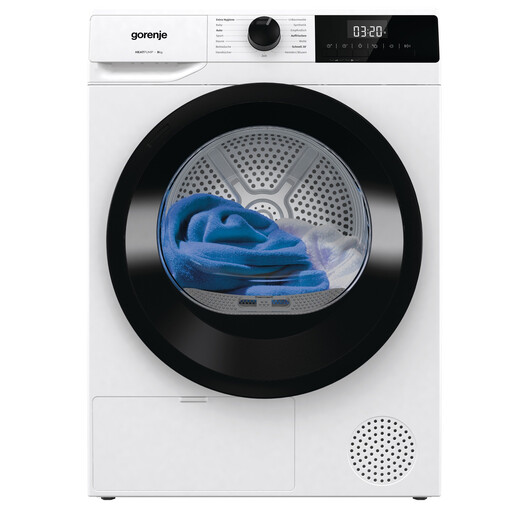
Why we recommend this product The Gorenje DHNE82 is a solid appliance for medium-sized households, focusing on core functionalities. With an 8 kg capacity and 15 special programmes, including ExtraHygiene and Baby, it covers a wide range of needs. The TwinAir air-flow system ensures even drying. Its AutoDry sensor technology prevents laundry from over-drying. With an energy consumption of 119 kWh per 100 cycles, it positions itself as an energy-conscious choice.
Pros:
Who it's for: This model is an excellent choice for families or couples looking for a reliable appliance with solid core features and a focus on gentle fabric care.
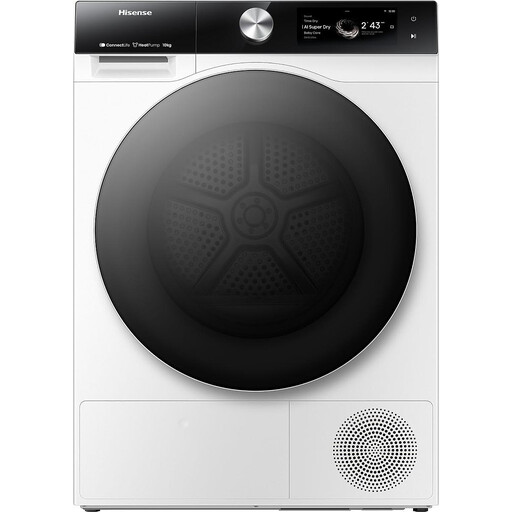
Why we recommend this product The Hisense DH7S107BW combines a large 10 kg capacity with smart features. Integration with the ConnectLife system via Wi-Fi allows for remote control and personalisation of drying programmes. With an energy consumption of 117 kWh per 100 cycles, it is highly efficient despite its size. Its noise level is 62 dB. Practical details like the drum light and a reversible door hinge simplify daily use.
Pros:
Who it's for: Ideal for large households or users who value high capacity and the convenience of smart appliance control.
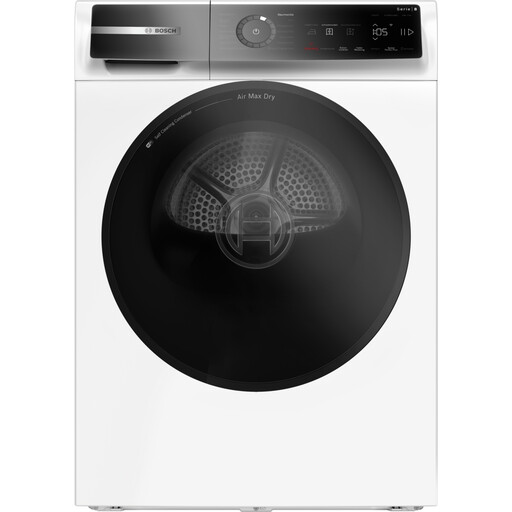
Why we recommend this product The Bosch WRB247C40 from the Serie 8 represents a high level of sophistication in terms of efficiency and convenience. With an A energy efficiency rating and a consumption of just 79 kWh per 100 cycles, it sets a new benchmark. Its noise level of 57 dB (Class A noise rating) is exceptionally low. Technological features like the self-cleaning condenser, Air Max Dry for optimised airflow, and Home Connect integration make it a highly functional appliance. The Sensitive Drying System, with its unique drum structure, dries laundry with exceptional care.
Pros:
Who it's for: This model is aimed at discerning households that prioritise maximum energy efficiency, ultra-quiet operation, and advanced convenience features like self-cleaning and smart control.
If the featured models don't perfectly match your requirements, you can find a broader selection in our main category. There, you can filter appliances by price, brand, and specific features to identify the perfect product for your household.
Discover more offers for a great value tumble dryer.
1. What is the advantage of a heat pump dryer over a condenser dryer? The main advantage lies in its energy consumption. A heat pump dryer reuses process heat instead of releasing it into the surrounding environment. As a result, it operates at lower temperatures (approx. 45-60°C) compared to condenser dryers (approx. 70-85°C). This leads to energy savings of up to 50% and is gentler on heat-sensitive textiles.
2. How important is a self-cleaning condenser? A self-cleaning condenser is an important feature for both convenience and efficiency. On appliances without this function, the condenser must be manually cleaned of lint on a regular basis. If this is neglected, drying performance decreases and energy consumption increases. The automatic cleaning process ensures the appliance operates at peak efficiency throughout its entire lifespan.
3. Can I install a heat pump dryer in a room without ventilation? Yes, that is one of its key advantages. Like a condenser dryer, a heat pump dryer collects moisture from the laundry in a condensation container or drains it directly into the wastewater system via a hose. No moist air is released into the room, so an external exhaust hose and special ventilation are not required.