
Lieferung heute & morgen

Qualitätsgarantie

Willkommens-Angebote freischalten: KOSTENLOSE Lieferung | Bis zu 80 % RABATT | Kostenlose 30-Tage-JoyPlus-Testphase
App herunterladen
When central heating falls short or certain rooms are only used temporarily, the question of a flexible and efficient heating solution often arises. A portable electric heater can be a practical addition, providing targeted warmth exactly where it's needed—whether in your home office, bathroom, or workshop.
This guide is designed to offer an objective overview. We'll explain the differences between the most common technologies, highlight key performance features, and present a selection of models to help you choose the perfect electric heater for your living spaces.
The range of portable heaters is vast. To find the right model, three criteria are particularly important: the heating technology, the power output relative to room size, and the features for comfort and safety.
The two most common types of portable electric heaters are oil-filled radiators and ceramic fan heaters. Each has specific characteristics that make them suitable for different applications.
Oil-Filled Radiator: This type works much like a traditional radiator. An internal thermal oil is electrically heated and releases warmth slowly and evenly into the room through its metal fins. An oil-filled radiator operates silently and retains heat for a while even after being turned off. It is well-suited for providing consistent heat in living rooms and bedrooms over extended periods. However, its warm-up time is longer than that of fan heaters.
Ceramic Fan Heater: Here, air is passed over a heated ceramic element and distributed throughout the room by a fan. The main advantage is extremely rapid heat generation. These units are often compact and lightweight, making them an ideal small room heater for spaces that need to be warmed up quickly. While modern models can be designed as a quiet fan heater, some fan noise is inherent to the technology.
The heating power, measured in watts (W), is crucial for determining how effectively a device can heat a room. As a rule of thumb for rooms with standard insulation and a ceiling height of about 2.5 metres (approx. 8.2 ft):
Therefore, for a 15 m? room, a heater with around 1200 to 1500 watts is a good benchmark. However, to operate as an energy-saving supplemental heater, wattage isn't the only factor. An electric heater with a thermostat is highly advantageous, as it maintains a constant room temperature and automatically shuts off once the desired level is reached. ECO modes further optimise energy consumption.
Modern electric heaters come with standardised safety mechanisms. The following are essential:
Additional convenience features like a remote control, a programmable timer, or an oscillation function (on fan heaters) for better heat distribution enhance user-friendliness.
Based on the criteria mentioned, we have compiled a selection of different models that cater to various needs.
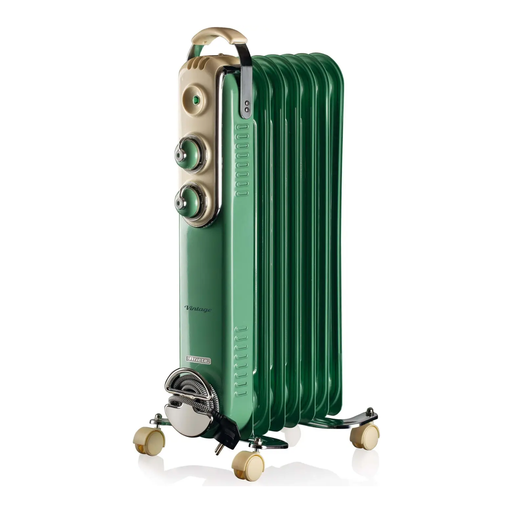
What makes it stand out: This model combines the proven technology of an oil-filled radiator with a striking retro design. It's not just a heat source, but also a decorative statement piece.
Advantages:
Who it's for: For design-conscious users looking for a functional yet aesthetically pleasing heating solution for their living or work spaces.
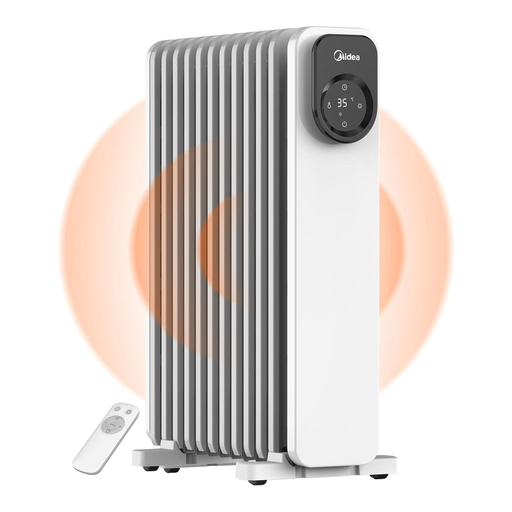
What makes it stand out: A modern portable electric radiator with high power output and smart control options for maximum comfort.
Advantages:
Who it's for: For users who need a powerful and easy-to-operate heater for living rooms, large offices, or well-insulated basements.
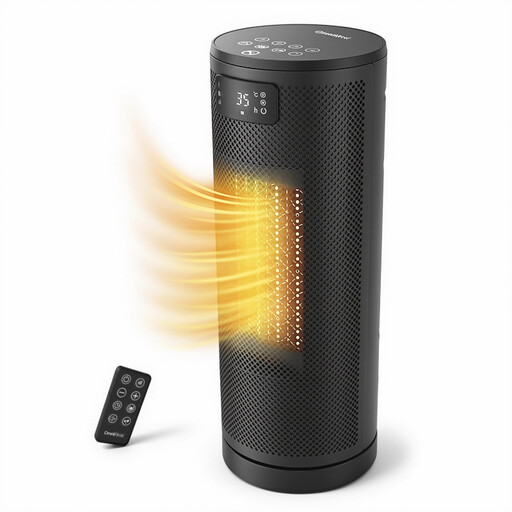
What makes it stand out: This ceramic fan heater combines rapid heating with precise temperature control and a quiet operating mode.
Advantages:
Who it's for: Ideal for the home office, bedroom, or bathroom where quick, targeted warmth is needed. The quiet mode also makes it suitable for overnight use.
The models presented here cover a wide range of needs. If you haven't found the perfect solution for your specific use case, there are many more options to explore. From infrared heaters to convectors, the market offers a variety of technologies.
Browse our wider selection to compare more models and heating technologies.
From a physics standpoint, both types of devices convert electrical energy into heat with nearly identical efficiency. The difference in consumption comes down to application. A ceramic fan heater is efficient for quickly heating a small area for a short time. An oil-filled radiator excels at maintaining a constant temperature over several hours because it retains heat. For energy-efficient operation, a precise thermostat is crucial for both types.
The required power depends on the room size, insulation, ceiling height, and outside temperature. The rule of thumb of 80–100 watts per square metre is a good guideline.
For poorly insulated rooms or rooms with high ceilings, a higher power output should be considered.
Yes, modern devices sold in the EU must meet strict safety standards. Features like overheat protection and tip-over protection are standard. For safe operation, always place the heater on a firm, level surface, do not cover it, and maintain a safe distance from flammable materials like curtains or furniture. It is recommended to plug the device directly into a wall outlet and avoid using extension cords.