
Lieferung heute & morgen

Qualitätsgarantie

Willkommens-Angebote freischalten: KOSTENLOSE Lieferung | Bis zu 80 % RABATT | Kostenlose 30-Tage-JoyPlus-Testphase
App herunterladen
Published on: 2026-07-18 By: Joybuy Product Recommendation Officer
Hanging pictures, organising cables, or attaching car accessories presents a recurring challenge for many: How can you securely mount items without drilling holes? Alternative solutions are especially sought after in rental properties, where permanent damage to walls must be avoided. Heavy-duty double-sided tape offers a practical solution for a strong and often residue-free installation.
This article serves as a guide. It explains the key features of different adhesive tapes and presents a selection of products suitable for various applications.
The choice of the right tape depends on several factors. To make an informed decision, you should consider the following aspects.
The composition of the tape largely determines its properties. Two common types are:
The holding power specified by the manufacturer usually refers to ideal conditions: a smooth, clean, and dry surface at room temperature. Rough, porous, or dirty surfaces (e.g., untreated wood, dusty walls) can significantly reduce adhesion. For a reliable bond, especially with a tape for walls, thoroughly cleaning and drying the surface before application is crucial. Always check the product specifications for maximum load capacity and plan for a safety margin.
Not every tape is suitable for every environment. For use in damp areas like bathrooms or outdoors, a product labelled as waterproof is required. For applications in cars or near heat-emitting devices, temperature resistance is also an important factor. A versatile fastening tape should therefore have specific properties for its intended location.
Based on the criteria mentioned, we have compiled a selection of products suitable for different projects.
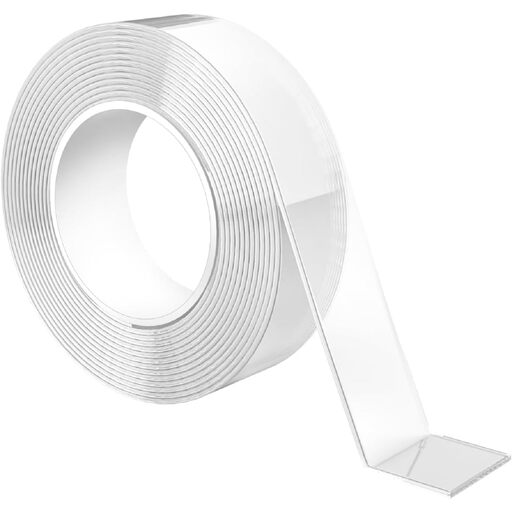
Why it stands out: This polyurethane tape is designed as a flexible and reusable solution. Its transparency makes it inconspicuous, and the ability to wash and reuse it offers practical value for temporary fixtures.
Pros:
Who is it for? For renters, crafters, and anyone looking for a flexible mounting solution for lighter objects on smooth surfaces who values traceless removal.

Why it stands out: According to the manufacturer, this nano gel tape uses an advanced gel-acrylic technology for strong adhesion. It was specially developed to combine high adhesive strength with the ability to be removed without residue and be washable.
Pros:
Who is it for? For users who need a reliable yet reversible mounting solution for decorations, photos, or cable management and want to avoid damaging walls or furniture.

Why it stands out: This product is an acrylic foam tape designed for more demanding and permanent installations. Its robustness, water resistance, and temperature resistance make it an option for use in cars, outdoors, or for heavier objects.
Pros:
Who is it for? For DIY enthusiasts and car owners who need a permanent and robust mounting solution for demanding conditions where reusability is not a priority.
The products presented cover common use cases. However, if you are looking for a solution for a very specific project or simply want to compare more alternatives, you may find the right product in our broader selection.
? Discover our entire range of Fabric Tape here.
The load capacity varies greatly depending on the product, surface, and environmental conditions. Nano gel tapes can often hold several kilograms per metre under ideal conditions, while extra-strong foam-based mounting tapes can be designed for even heavier loads. It is essential to check the manufacturer's specific information on the product packaging or data sheet and to plan for a safety margin for heavy or valuable items.
Great caution is advised here. Most strong adhesive tapes develop such high adhesion that they can damage the top layer of the wallpaper or even the underlying plaster upon removal. For use on delicate surfaces like woodchip or paper wallpapers, there are special, less adhesive products available. It is recommended to test the tape in an inconspicuous area before final application.
With reusable nano tapes, it is often enough to slowly and evenly peel the tape off from a corner or twist it slightly. For permanent foam tapes, heating the tape with a hairdryer can help soften the adhesive. The tape can then be carefully peeled off or removed with a plastic scraper. Any remaining adhesive residue can often be removed with special adhesive removers or rubbing alcohol, though testing in an inconspicuous area is also advisable here.