
Lieferung heute & morgen

Qualitätsgarantie

Willkommens-Angebote freischalten: KOSTENLOSE Lieferung | Bis zu 80 % RABATT | Kostenlose 30-Tage-JoyPlus-Testphase
App herunterladen
A well-manicured hedge is a point of pride for many garden owners, but achieving it with the wrong tool can be a chore. The market for hedge trimmers is overwhelming, and exaggerated marketing claims often lead to purchasing decisions you'll later regret. Before you invest, it's crucial to understand the common pitfalls that only become apparent during real-world use.
This guide will help you interpret technical specifications correctly and find a hedge trimmer that precisely matches your needs. We'll highlight the most common purchasing mistakes and show you which parameters truly matter.
The 3 Most Common Traps When Buying a Hedge Trimmer:
To avoid a bad purchase, you should focus on objective technical features. These three core parameters will determine if a hedge trimmer is right for your purposes.
Choosing the power source is the most fundamental decision and depends on your garden size, hedge type, and local conditions.
These two measurements define the tool's cutting performance and efficiency.
Specialised designs solve specific garden maintenance challenges.
Based on the criteria above, we have selected products for three typical user profiles.
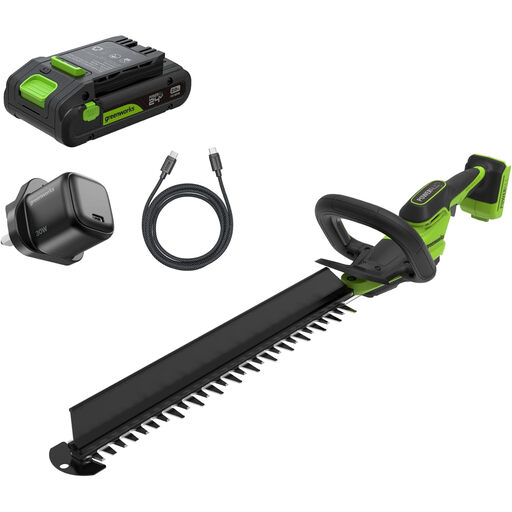
Why This Fits Their Persona: Perfect for the typical residential garden. It's quiet, emission-free, and offers total flexibility thanks to its battery power. Operation is straightforward and requires no prior experience with combustion engines.
Tackles the 'inadequate cutting capacity' pitfall with a 28 mm tooth gap, sufficient for most common hedge types. The brushless motor ensures efficient power usage, sidestepping the trap of unrealistic runtime claims found in cheaper models.
Efficient and durable brushless motor. The included 24V battery is compatible with other Greenworks garden tools.
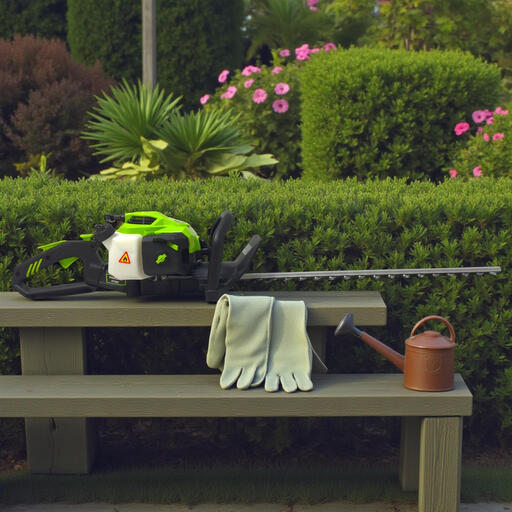
Why This Fits Their Persona: Designed for large properties, dense woody hedges, and professional use where maximum power and independence from power outlets are required. A classic petrol hedge trimmer for demanding tasks.
Solves the 'inadequate cutting capacity' problem with a powerful 0.7 kW motor and a large 35 mm tooth gap. The 90° rotating handle also addresses the ergonomics trap common with heavy tools, allowing for better control.
High cutting performance for thick branches and independence from the power grid. The adjustable handle improves handling during long work sessions.
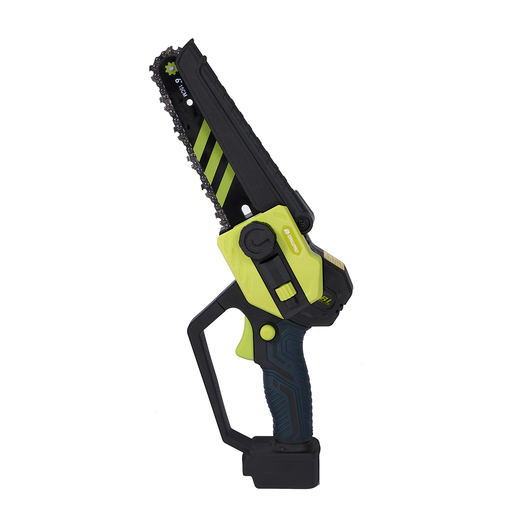
Why This Fits Their Persona: For users who need a versatile solution for safely trimming tall hedges and branches from the ground. The combination of a pole pruner and hedge trimmer in one device saves space and money.
Circumvents the 'poor ergonomics' trap of pole tools with its modular and lightweight design. Instead of a single heavy tool, it offers a flexible solution that enables work without unsafe ladders.
2-in-1 functionality with a telescopic pole for a reach of up to 2 metres. Compatibility with common battery systems (Worx 2.0 Ah, sold separately) offers flexibility.
We have compiled a complete, up-to-date list of products that fully meet these strict selection criteria and comply with German safety standards.
1. How often should you trim a hedge? As a rule, trimming once or twice a year is recommended. A more substantial shaping trim is best done in late winter (February), while a light maintenance trim can be done in late summer (August). Be sure to observe local wildlife protection laws (such as Germany's Federal Nature Conservation Act, § 39 BNatSchG), which prohibit drastic cutting back between March 1st and September 30th to protect nesting birds. However, gentle shaping and maintenance trims are permitted.
2. How do you properly maintain hedge trimmer blades? After each use, clean the blades of sap and debris, ideally with a resin solvent. Then, apply a thin layer of maintenance oil or penetrating oil to protect the blades from rust and keep them lubricated. This extends the sharpness and the lifespan of the entire tool.
3. What is the difference between a hedge trimmer and a shrub shear? A hedge trimmer, with its long blade, is designed for efficiently cutting large, flat surfaces typical of hedges. A shrub shear is significantly smaller, lighter, and more maneuverable. It is suitable for the precise shaping of individual shrubs, boxwoods, and for detail work where a large hedge trimmer would be too cumbersome.